Thumb Through My Digital Diary With Me

Sophia Evans

Wilderness Ranger Fellow

2025 Wilderness Ranger Fellowship Recap

I write this blog shortly after completing my final hitch of the 2025 Wilderness Ranger Fellowship season. It is hard to put into words what runs through my mind as I transition from life on the trail back into my “city” routine. 

It feels disingenuous to me to try and write about just this one hitch, as this one hitch was much more than 8 days of trail work. It was the culmination of many hard days and nights on the trail, and many pensive days thinking about my place in the world, the woods, and my path forward after the summer ends. 

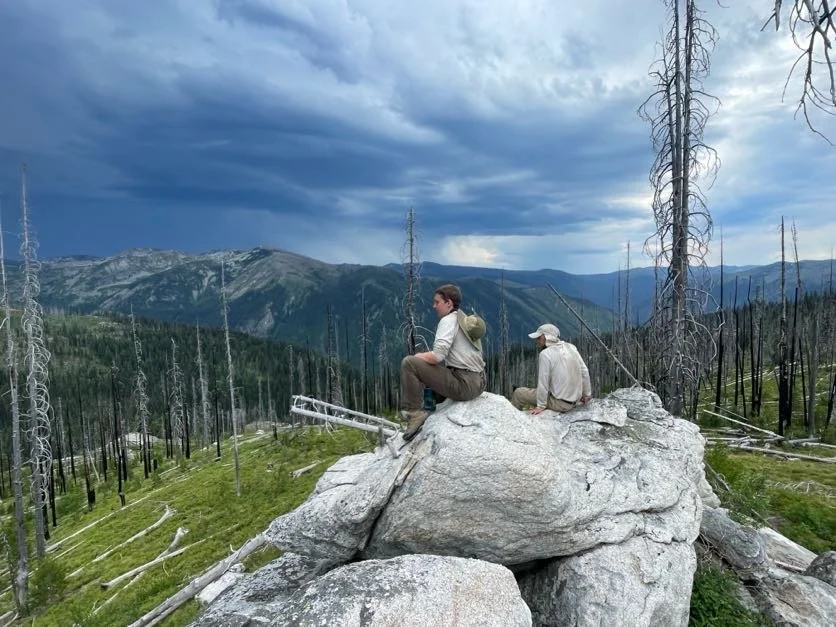
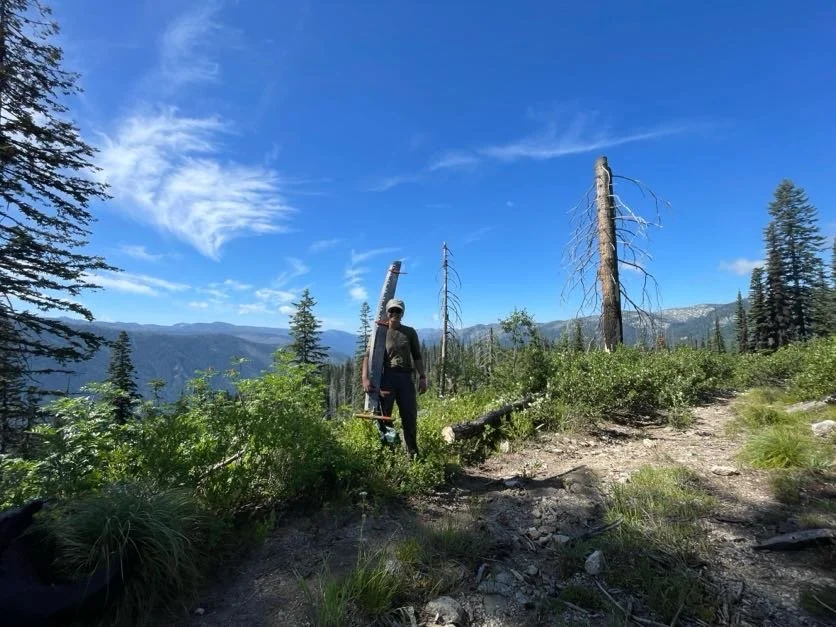
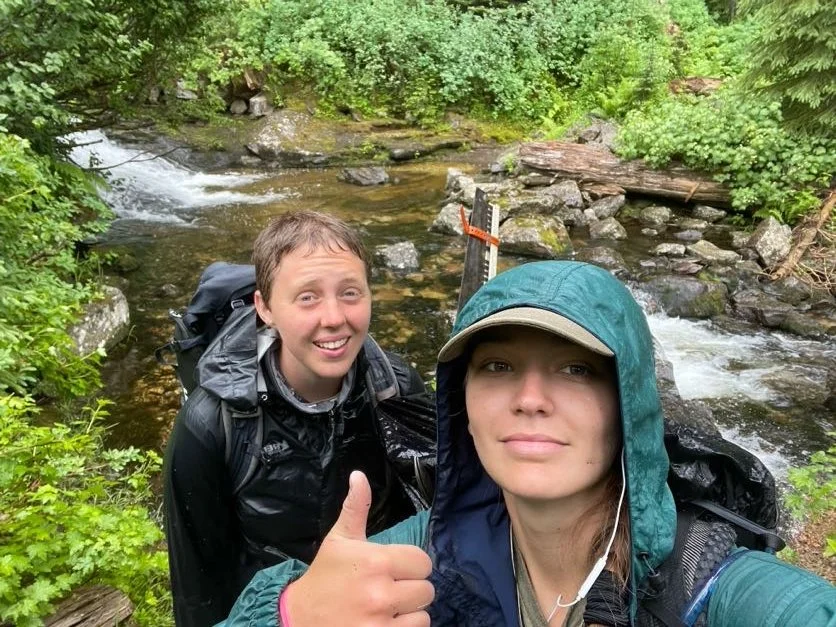
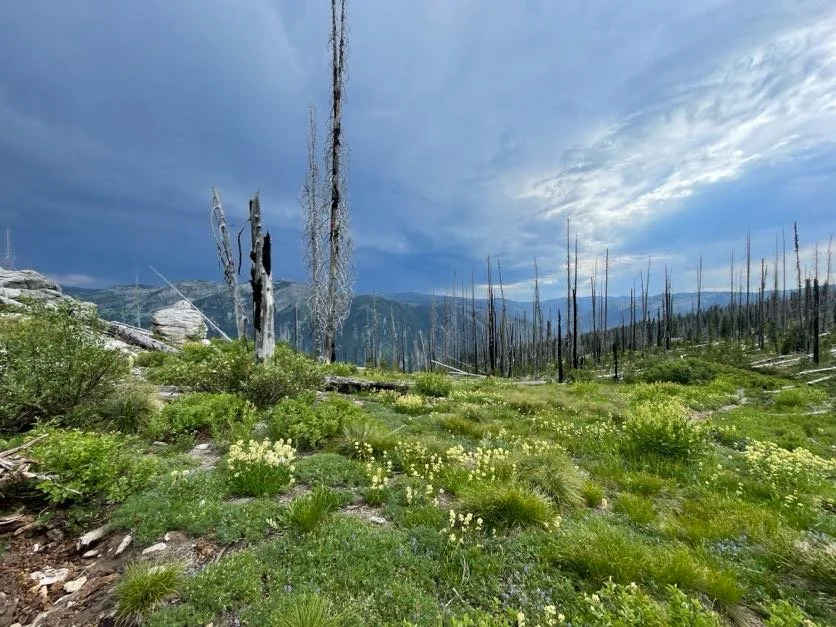
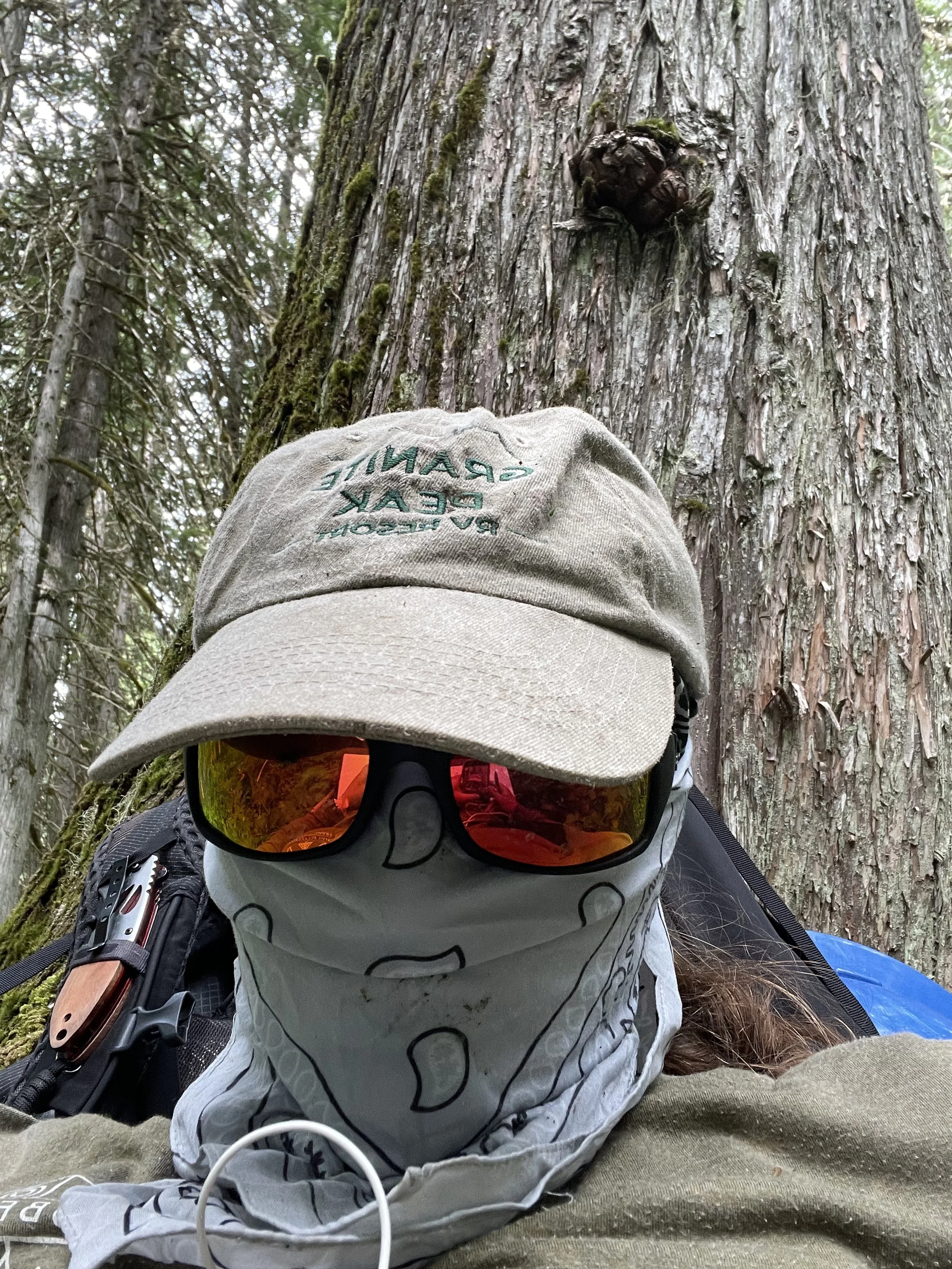
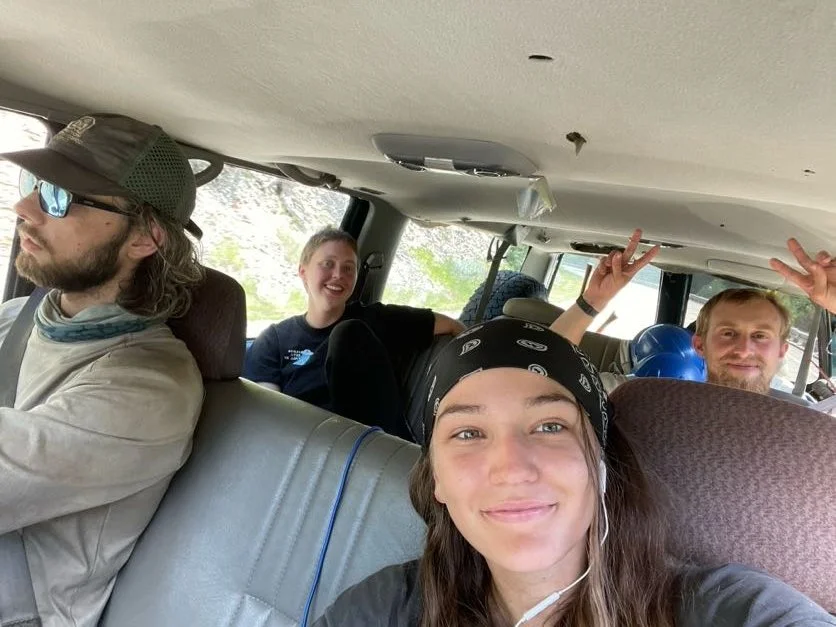
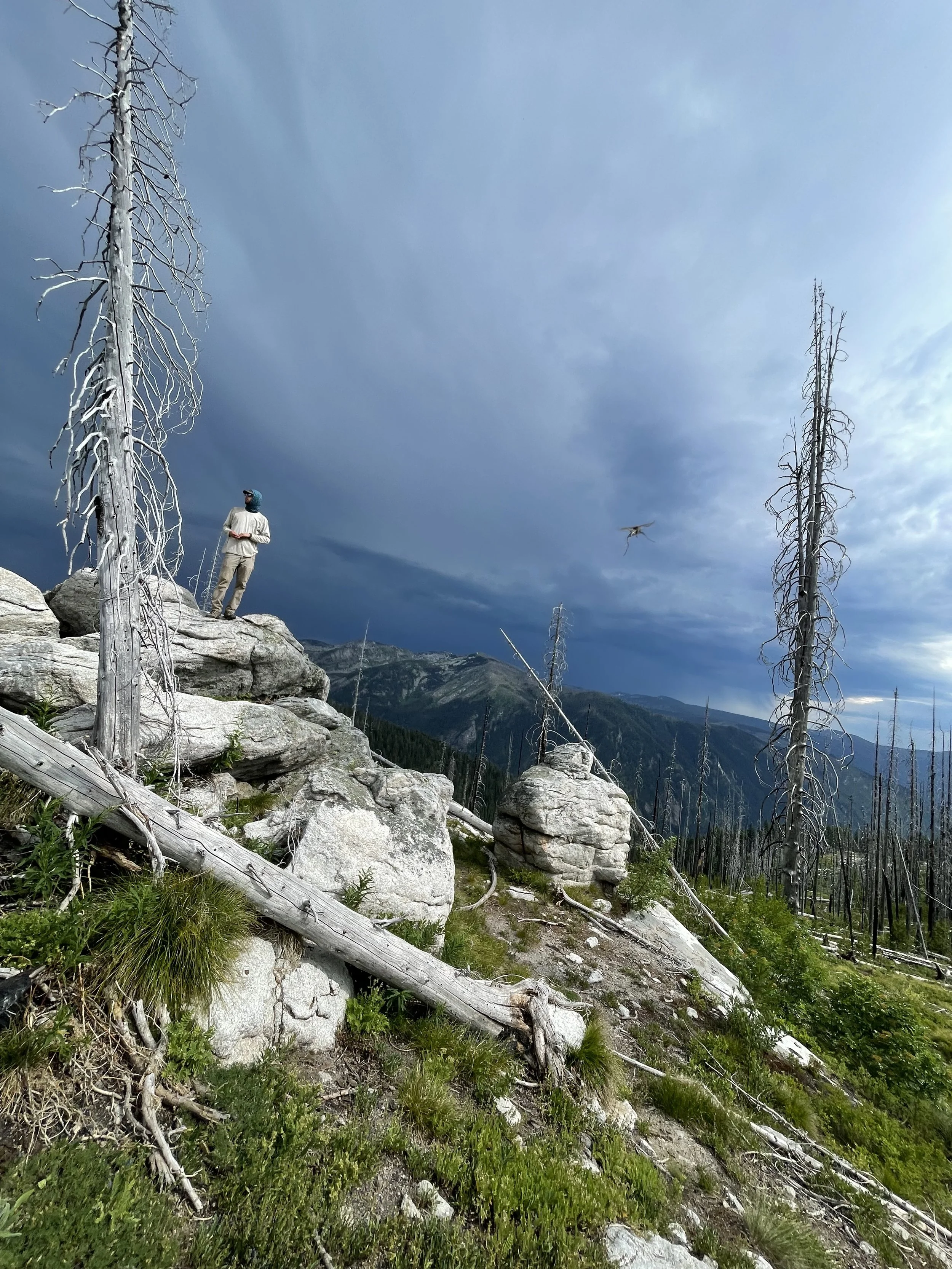
As a photojournalism student, I remember in photos, and inversely they help me remember as well. I would like to share some of my favorite photos of the summer with you all and relay anecdotes and musings along the way. Come along with me as I take you on a visual tour of my summer! 

Wilderness Skills Institute, Powell Ranger Station, Nez Perce-Clearwater National Forest, 5/19-5/23

After a week of getting to know each other and the organization we were about to start work for, my coworkers and I were finally released into the woods! We traveled about an hour out of town to spend a week at the Northern Rockies Wilderness Skills Institute. 

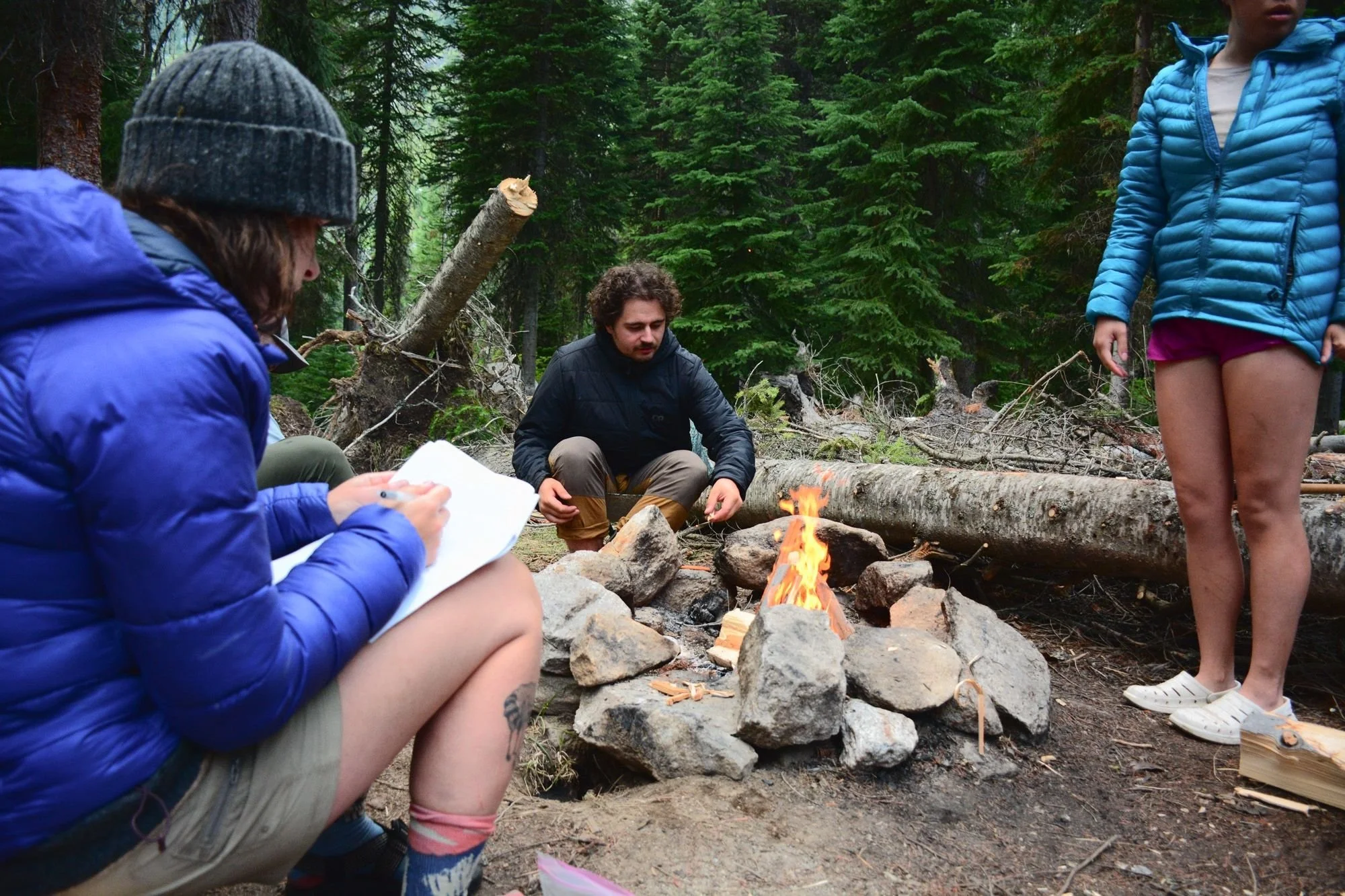
We took classes on trail work and crosscut fundamentals, working on local trails as part of our training. This really felt like adult summer camp though. We shared meals together and laughed late into the night as we got to know each other through storytelling and long walks along the Lochsa River, and I was lucky enough to run into folks I worked with during my Montana Conservation Corps season and learn from them further!

May 20- I stumbled upon Kara, Abe, Jack and Raegan all journaling simultaneously after work one evening in the yurt that functioned as our living and dining room. 

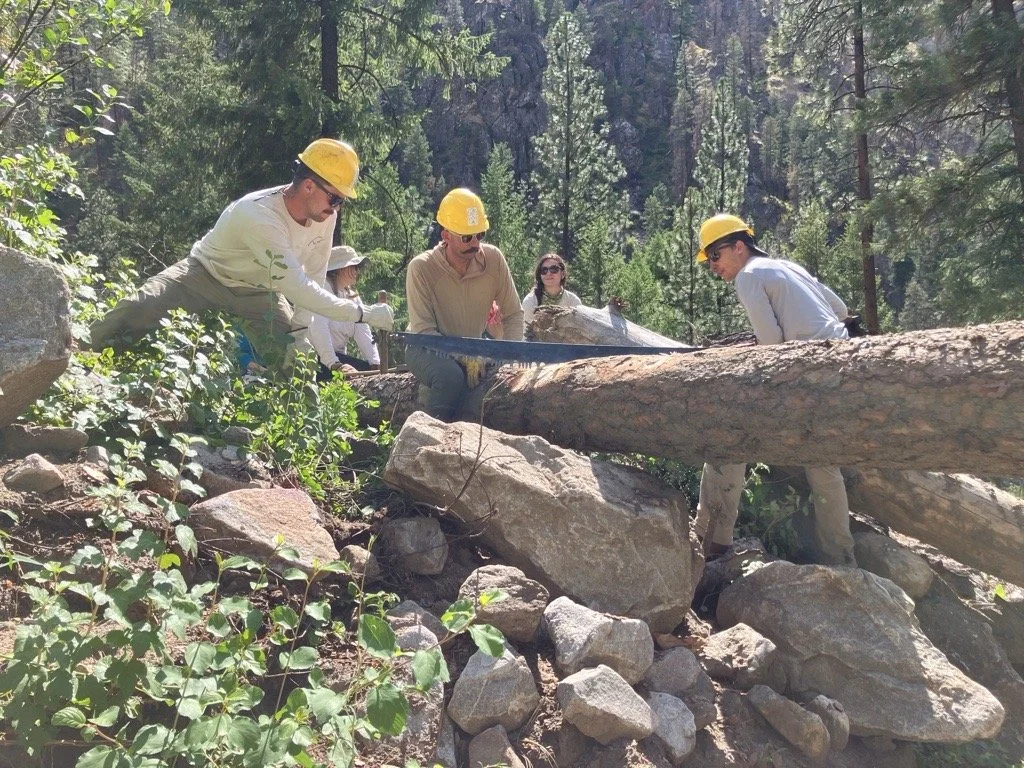
May 22- One of the first times I carried, and used, a crosscut saw. Look at how clean that work shirt was!

Hitch 0, Frank Church-River of No Return Wilderness, Salmon-Challis National Forest, Middle Fork of the Salmon River Trail, 5/26-5/31

Shortly after the skills institute, we geared up to be flown into the Frank Church-River of No Return Wilderness. I flew in the copilot's seat over the Big Horn crags and Salmon River, following the tiny shadow of the plane over the ridges and peaks in nervous anticipation of the week to come. After the short flight, we found ourselves deep in the Frank, hiking through the deepest canyon I had ever been in. This week challenged me mentally and physically in ways I had not prepared for. I lost my phone just a few days in and picked hundreds of ticks off my clothes. I felt weak and insecure in my abilities, as I had never done trail work while carrying all of my supporting gear on my back. 

These feelings of doubt quickly turned into feelings of pride and strength by the end of the week. I reveled in the fact that I completed something that felt so unattainable, and I can say that I thoroughly enjoyed myself and had a silly time with my crewmates, despite the pain and hardship. 

May 26 9 AM- Josie, Sam, Noah, Bryce and myself prepare to board our flight into the Frank Church-River of No Return Wilderness. 

May 26 10 AM- The crew shelters their faces and plugs their ears as the plane prepares for a dusty takeoff. We were dropped off at the Flying B ranch and then walked 20 miles to the airstrip we were picked up at. 

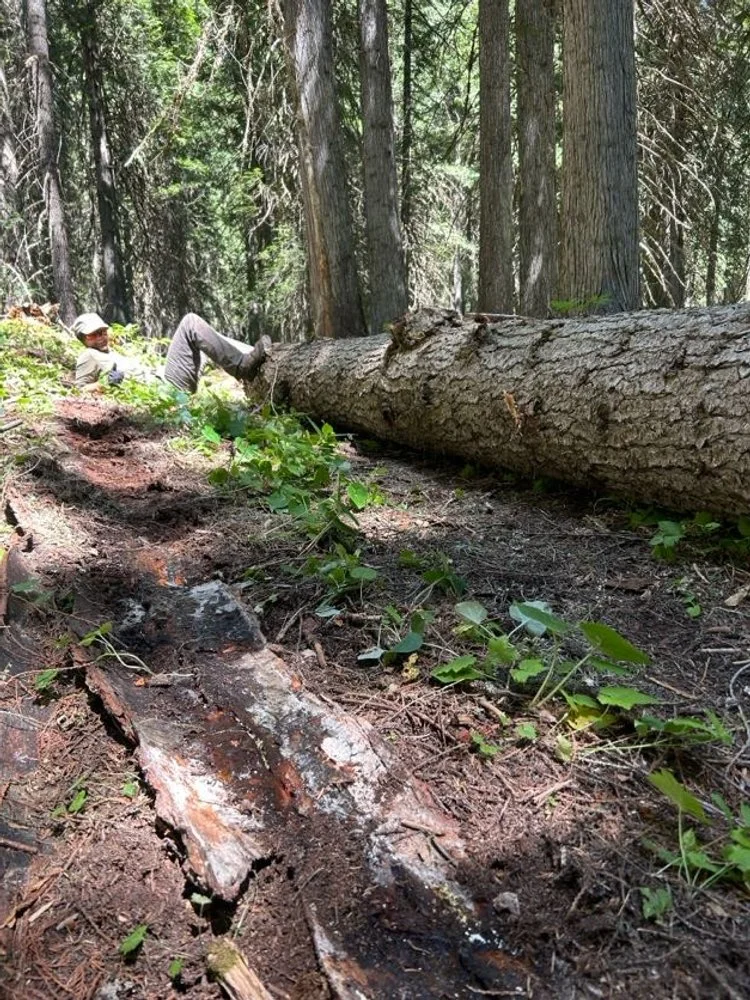
May 29- One of many, many dirt naps I took this summer. Again, admire how clean that work shirt is at this point in the season!

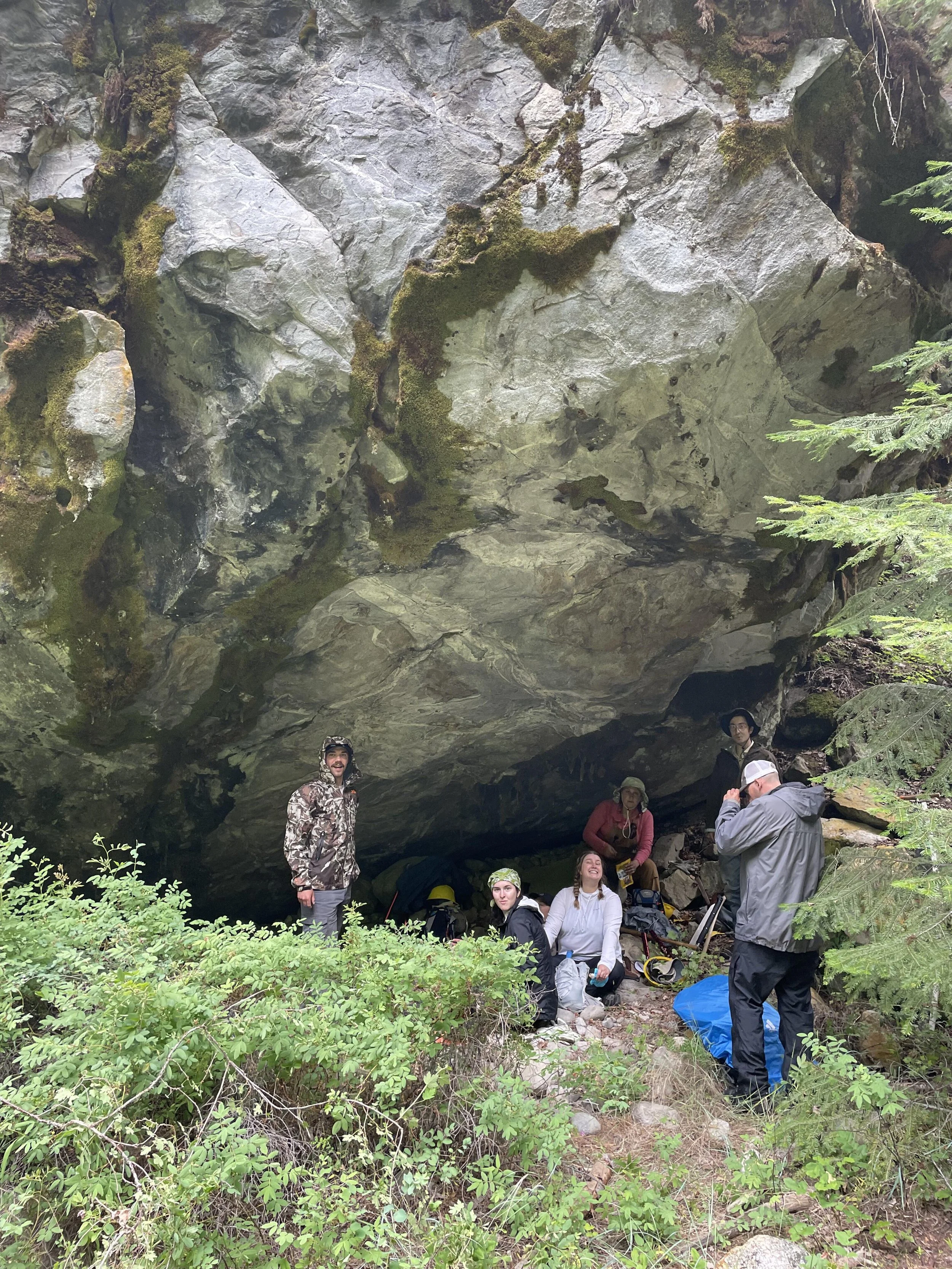
May 30- After a long, hot day on the trail we discovered that the camp we had planned on staying that night didn’t have enough room for our tents. Lucky for us, there was a cave a short distance down the trail that us fellows had dinner and cowboy camped in for the night! We were all in agreement that it was one of our best nights of sleep that hitch. 

Hitch 1, Frank Church-River of No Return Wilderness, Nez Perce-Clearwater National Forest, Main Salmon #96, 6/4-6/11

We traded in the airplane for a boat! From the skies to the river, the adventure continued. We were put on a jet boat and taken nearly 50 miles upstream to work again in the Frank. The boat rides there and back had us giddy with laughter like children while we clung onto the railings of the boat and “surfed” the rapids upstream. 

We were lucky enough to be joined by Josh Thompson from the Nez Perce-Clearwater National Forest to construct a rock wall along a section of trail that had been wiped out by a landslide post wildfire. Josh brought rigging equipment so we could more easily maneuver large rocks into the precise place we wanted them. Seems like all of our lego filled childhoods paid off! 

We were camped above a popular boater camp and were generously and kindly given a few dinners from different groups of rafters. Although, one night of copious amounts of lasagna and bread has some disaster consequences for a select few of us… 


We spent many nights giggling our hearts out after dinner, although at this point in the season I had a bad case of laryngitis, so my giggles were more like squeaks. It’s hard to stay on vocal rest when you have so many funny and entertaining folks on hitch with you. 

I spent nearly every night of this hitch trying to patch back together the seat of my only pants, which seemed to rip more and more everyday. In addition to these holes, I also lit my pants on fire with my pocket rocket and singed my hair off in a separate pocket rocket incident. I am happy to report those pants have been all put back together, with an awesome new addition of a lizard my crew lead, Berkeley, taught me to embroider! On the last day, we were picked up by the boat and spent the two hours back to the boat launch dancing and singing our hearts out to Weezer, courtesy of the boat's stereo system and bluetooth capabilities (again, not great for the laryngitis…)

June 6-  A highlight of this trip were the swarms of butterflies that would enjoy any remnant of salt, or stink, left behind on the trail, our backpacks, our dirty work shirts and our socks. 

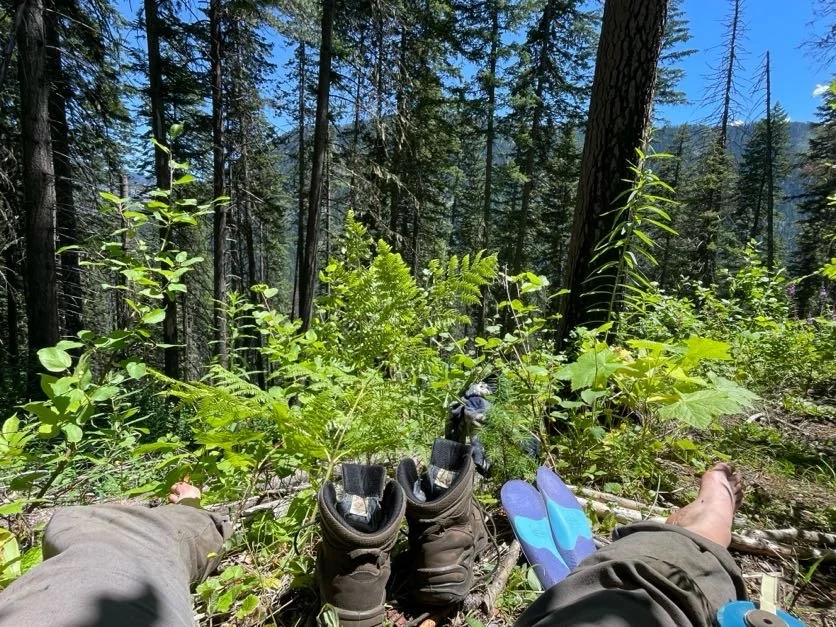
June 9 1PM- My crewmate Nick and our project partner Josh and myself enjoy a post-lunch siesta. 

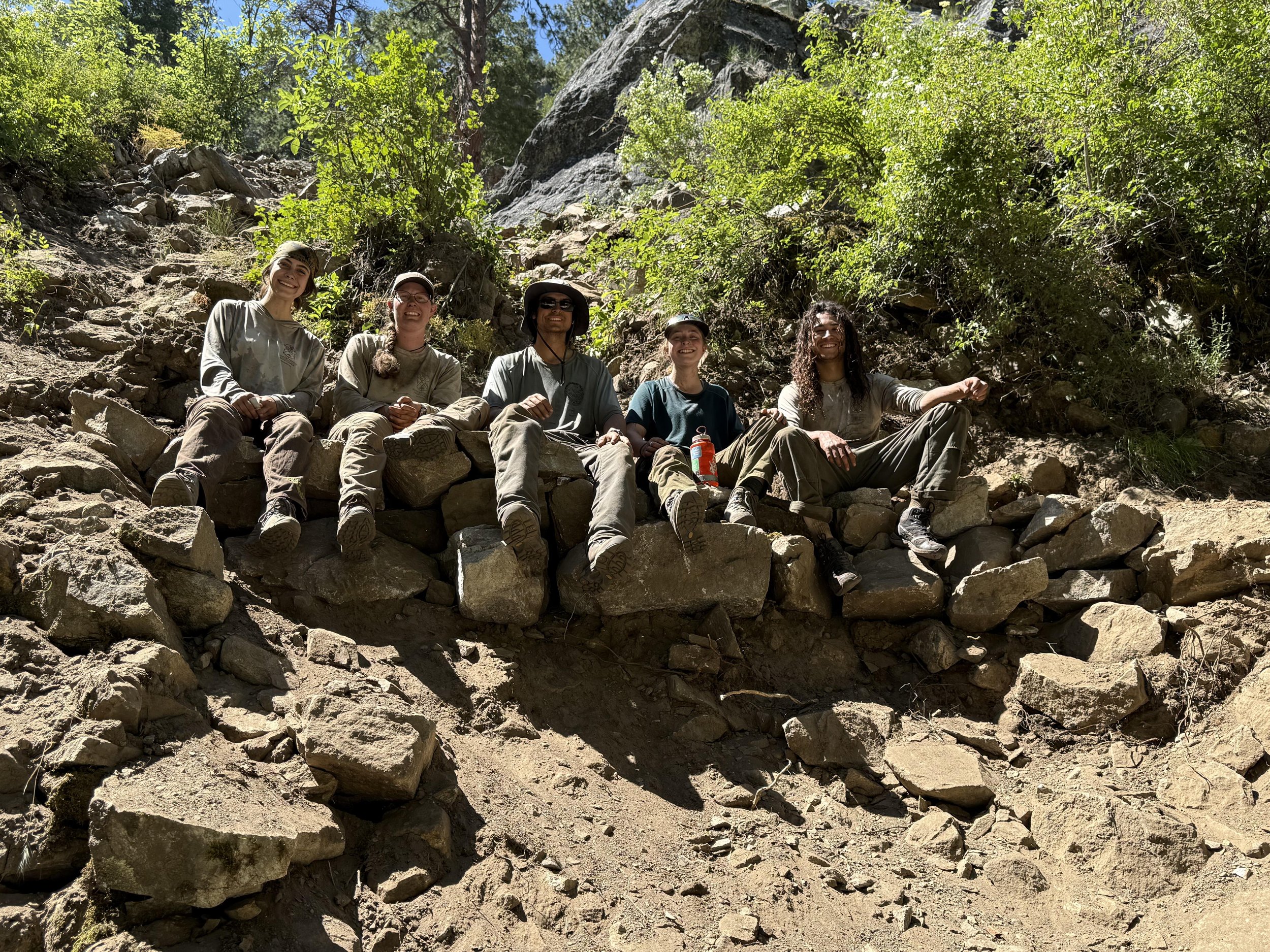
June 3 PM Myself, Serenade, Nick, Berkeley and Josh Mendoza sit atop our newly constructed rock wall at the end of the hitch. 

June 10 The last night the hitch we cowboy camped on the beach together. A millipede crawled across my face in the middle of the night, but it was well worth it to be greeted by the sunset over the canyon walls. 

June 11 Josh Mendoza and Berkeley are all smiles as we jet boat down the Salmon river and back to civilization. 

Hitch 2, Sawtooth Wilderness, Sawtooth National Forest, 6/18-6/25

I think it is safe to say we were enchanted by the people and places we visited in the Sawtooth National Recreation Area. SBFC was contracted to do burn area relief as a result of the 2024 Wapiti Fire. We spent a few days clearing out the burnt remnants of a punchin, which is similar to boardwalk and is used to keep hikers out of marshy areas, replacing signage that had burnt and installing check steps and drains. 

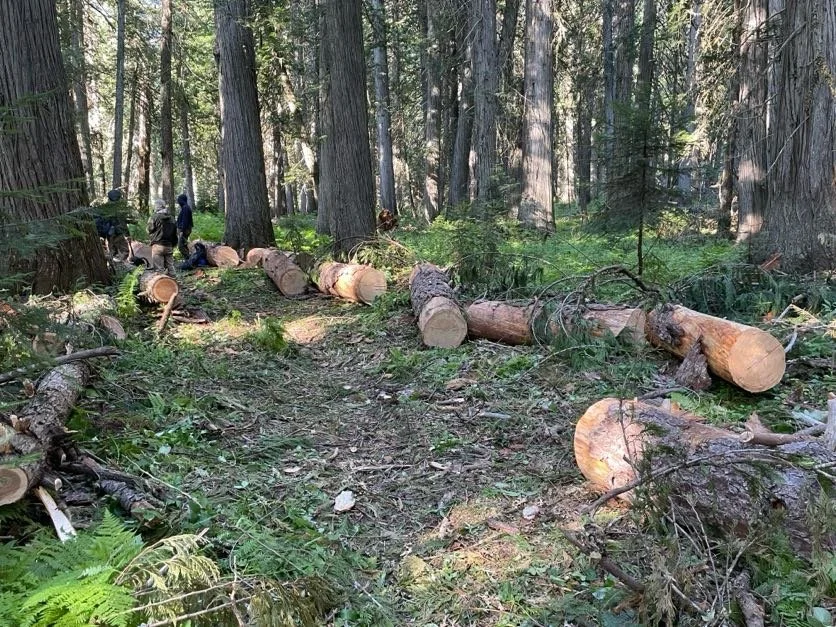
Later in the week, we worked to log out fallen burnt trees and widen tread for stock usage. We also rangered a few very popular backcountry lakes. 

Our biggest day of logout we did amongst 6 inches of fresh snow, a welcome sight for myself, as I am always enchanted by summer snow out west. Some of us spent the day chopping logs to stay warm, as opposed to cutting them, and we were joined later in the day by our new friends with the forest service and MCC’s individual placement program. 

We explored Stanley when we had down time, which led us to a long night at Redfish Lake, where we went for dinner and stayed for sunset due to some battery issues with our work rig. Despite this, we had a night full of impressions and giggles and were wooed by Sam’s juggling talent! By the time Berkeley, Emma and myself made it back to Stanley, John Craige had taken the stage at a music festival in town and we got to listen to part of his set from Berkeley’s car, a memory I will cherish for many years to come. 

We ended our hitch devouring breakfast sandwiches and pastries at Stanley Baking Co. with our Forest Service project partner Bryce, who we all became very fond of. 

Jun 22- Emma, Sam and myself on the trail during a small snowstorm! The forest was transformed into a winter wonderland for one day of the hitch. 

Jun 23 3:07 PM Emma and Sam pose for a photo during a hike up to Sawtooth Lake. We were on the lookout for fire rings to disperse, but the residual snowpack made it challenging to find anything at that elevation. 

Jun 23 3:59 PM A small portion of Sawtooth Lake. 

Jun 24 10 AM Berkeley and I working on clearing a large log from the end of a section of trail we were working. We had been looking forward to cutting this log, as it was the largest we cut on this hitch. 

Jun 24 12 PM A group of hikers passed us and informed us they had found an old crosscut saw along the trail. It turned out one of the hikers had been a wilderness ranger in the area in the 1970s. Here is our crew lead Berkeley posing with the weathered saw. 

Hitch 3, Frank Church-River of No Return Wilderness, Salmon-Challis National Forest, Langer Lake, 6/29-7/2 / Gospel Hump Wilderness, Nez Perce-Clearwater National Forest, Moores Lake 7/9-7/12 

Well this part of the summer was a blast from the past! This summer was my second season of trail work, because last summer I led youth trail crews for the Montana Conservation Corps. I was given the opportunity to work with SBFC’s budding youth program this summer, and it was an absolute delight to work alongside April for two mini youth hitches. 

The first took place in the Frank and we taught the youth how to cut and chop fallen trees out of the trail. We also took them up to Ruffneck Peak to see an old fire lookout tower, where we took time to enjoy the solitude of wilderness and journal. It was a joy to watch the youth overcome hardship on the trail and feel proud of themselves for harnessing their inner strength. They even, lovingly, gave April and I trail names. April’s was Ruffnut, from the movie How to Train your Dragon, and mine was “unc”, which I later learned means old (I was 23 at the time).

My second mini youth hitch was in the Gospel Hump Wilderness. We had the pleasure of cutting some big trees on this hitch. This hitch we also taught the youth how to brush, in addition to cutting. The scenery was beautiful and rugged, and there was no shortage of mosquitoes. However, the youth snapped branches off trees and used the leafy portions to swat at the pests, similar to a cow or a horse tail. 

The hike out was challenging, and I found myself nearly being overtaken by the youth’s speed and energy! It must have been the many packs of oreos consumed on this hitch. 

Jun 30 Two youth program participants, Wyatt and Hudson, admire their chopping skills. 

Jul 1 12PM The view on the way up to Ruffneck peak. 

Jul 1 1PM Our little crew, led by April and assisted by myself, celebrates making it to the top of Ruffneck Peak. This fire lookout was built in 1932 and was swarmed by ladybugs. 

Jul 11 3 PM April teaches our crew how to read a USFS map. 

Jul 11 4PM Our youth participants act out wildlife encounters after learning best practice for different animal encounters in the backcountry. Can you guess which animal they are practicing for here? 

Jul 12 7 AM April gives the crew a mini lesson on tying knots on the last day of the hitch. 

Hitch 4, Sawtooth Wilderness, Sawtooth National Forest, Baron Lakes, 7/16-7/23

 What a treat to be back in the Sawtooths! This was a really special hitch for me, as I turned 24 in the middle of it! We spent our first night of the hitch with many horses that got loose and trotted amongst us as we cowboy camped. I woke up the next morning to our crewmate Bryce wrangling them and tying them back to the hitching posts.

We had the pleasure of being packed in by Bryce, our beloved project partner, allowing us to stroll in the four miles to our basecamp. Many affectionate and grateful pets were given to the mules that carried our loads.  We were camped on a cool, rushing creek that provided ample opportunity to rinse our sooty faces and clothes throughout the week. On our first day of cutting up the trail, Emma, Kara, and myself worked as a saw team and cleared about 30 downed trees in one day. Kara and Emma inspired a lot of strength in myself, especially when Kara would suggest we “just move it,” when coming across large logs. 

The first portion of our hitch we worked seven miles up the trail to Baron Lake. We saw many thankful backpackers and outfitters along the way. On the day we reached the lake I turned 24 years old. I spent the morning collecting wildflowers on the outside of my backpack and ended the day with a warm beverage at camp, shared among my friends, but not before putting in 15 miles on the trail that day. 

We got jammed up by a few pinchy trees and a massive pileup to end the hitch, but we had a joy of a time solving binds and making jokes on the trail. We, of course, had to end this hitch one last bakery date with Bryce. 

Jul 18 Kara and Emma saw in a less than ideal position. 

Jul 19 Myself at Baron Lake. I turned 24 on this day!

Jul 21 Bryce, Brendan and Emma pose with a log that ended a section of a massive pileup we worked on for a couple days.

Hitch 5, Gospel Hump Wilderness, Nez Perce-Clearwater National Forest, Moores Trail #312, 7/30-8/6

We’ve come to the final hitch of my 2025 Wilderness Ranger Fellow season. I worked on the smallest crew I had been on this season, a grand total of four of us. We worked a 12 mile stretch of trail, ending at an unmanned lookout tower. 

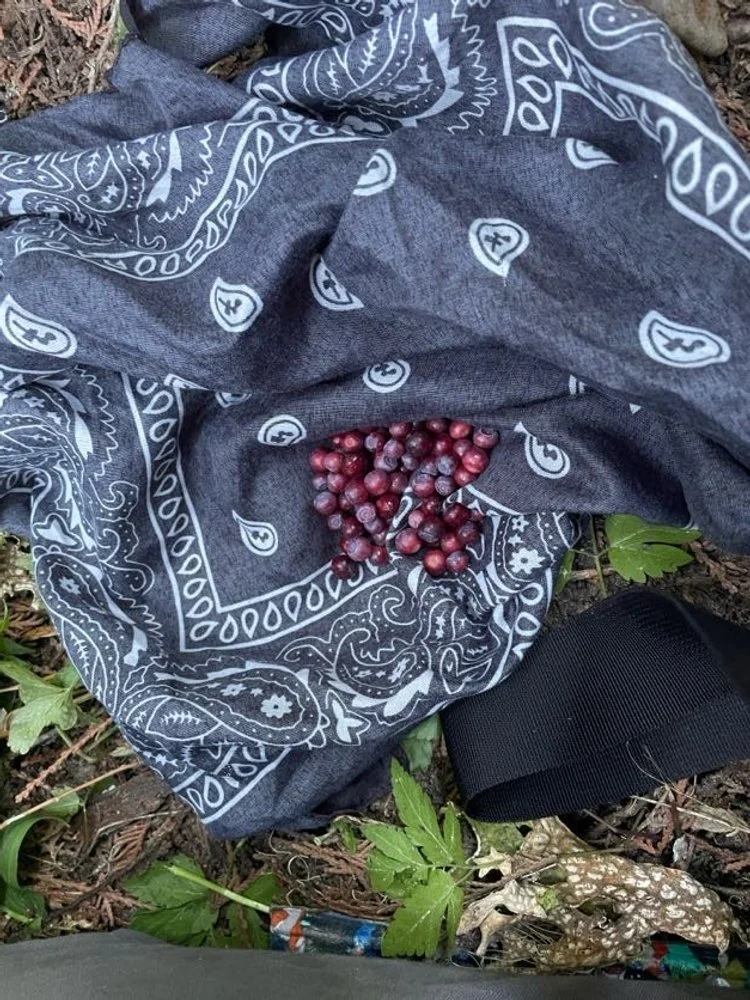
This hitch was mostly cut and run, and some days each saw team would clear 50 downed trees. We stumbled upon more huckleberries than I had ever seen, a welcome treat as I had yet to find any ripe ones all season. 

We had a few soggy days, but lucked out at the end, being far enough away from the weather to enjoy watching evening lightning storms amid the skies turning pink and orange. Our crew lead Enzo gave me my second trail name of the season, “stinkbug,” I’m sure you can use your imagination to find the origin of that one… 

Many nights were spent doing impressions and leaning hard into the bit, and I was grateful to end this season the way I started it: laughing. 

Aug 2 There was no shortage of huckleberries on this hitch. We would feast on them until our stomachs hurt.

Aug 3 Myself, Bryce and Jack taking a huckleberry break during a brushing session on the trail. If you look close enough you can see our lips turning purple. 

Aug 4 10 AM Our crew lead, Enzo, single bucked this leaner. 

Aug 4 4 PM The view from the end of the section of trail we worked. This was at the Black Butte lookout tower.

Aug 5 Bryce, Enzo, Jack and myself in front of the wilderness boundary on our way out of the Gospel Hump. 

As I end this blog I want to highlight why I chose to highlight so many photographs. This work may seem place based and focused, but more importantly, it’s people based. Every single person I had the pleasure of cutting and digging and brushing and giggling and sweating and crying with has a fire lit inside them, and they are hell bent on protecting and stewarding wild places. I am still in awe of all the brilliant, hilarious, strong and kind folks that SBFC found to staff their organization. I want to thank them for teaching and uplifting me through the hardest and the goofiest times. Now go forth and advocate for our public lands!

Sophia Evans

Missoula, MT

University of Montana - Journalism 

Sophia’s work in conservation began early in life, when she would volunteer with her dad on community trail builds. Growing up in Southern Illinois, the two were avid climbers, cyclists, and backpackers, leading Sophia to later move west to attend college and be closer to the mountains. After two years at the University of Northern Colorado, she left to pursue the seasonal work life in rural Montana and Utah. Now, Sophia attends the University of Montana School of Journalism, although education is her true passion. When she’s not chasing seasonal jobs, she is a preschool teacher at a Montessori school in Missoula, and has previously worked as a youth expedition leader with the Montana Conservation Corps. In her free time, she enjoys skiing, camping, hiking, climbing, and cycling.

Closing Out The Season

Jacquelyn Bouchard

Wilderness Ranger Fellow

Bighorn Crags | Frank Church-River of No Return Wilderness

July 30-August 6, 2025

My final hitch with SBFC took me to the Bighorn Crags in the Frank Church-River of No Return Wilderness, working alongside an all-women’s volunteer crew. It was the perfect way to close out my summer of trail work- sharing the wilderness with a group of people who poured their time and energy into caring for it.

Pack animals bringing our supplies to camp (Photo Credit: Shannon Anderson)

Our project focused on repairing a washed-out, rocky section of trail that challenged both hikers and pack animals. We built check steps and water bars, moved in loads of dirt, and crushed rock to fill and level the tread- turning a rough, uneven stretch into a safer, more accessible path.

With only a couple weeks of rock work experience under my belt, I’ll admit it was a little intimidating to give instruction and advice to the volunteers. Rock work can be slow and meticulous. It’s like a puzzle where each piece has to fit just right, and we were all figuring it out together. On the first day, I sensed a bit of discouragement from the group, but once we got the first check step in place, the energy shifted. They began to understand the rhythm and expectations, and soon we were working steadily, swapping stories, and soaking in the views.

Crew discussing course of action to build a check step (Photo credit: Samantha Birch)

There’s something special about being in the wilderness with people who haven’t spent the whole summer doing this kind of work. Coming from Florida, I’ve been surprised by how quickly I got a bit desensitized to the scenery here. For them, though, the mountains and forests were fresh, and seeing their excitement reminded me to slow down and appreciate it all over again.

On a typical hitch with the other fellows, everyone is on their own for meals. For me, that usually meant a steady rotation of beef jerky, lentils, and peanut butter. All summer, I’ve bounced between the backcountry and a campsite near town, and the most notable culinary upgrade was simple but glorious: eating my chicken from a can instead of a packet.

Volunteer hitches are different. Meals are shared, and fresh food in coolers rides in on pack animals. We happened to have a professional chef in the group, who casually mentioned cooking for Eddie Murphy and working with Martha Stewart. Needless to say, we ate well. Meals included risotto, pancakes, and curry. Everything tastes better in the woods, and as one volunteer put it, “the best seasoning is hunger.” Not that “seasoning” was needed- I would have happily eaten those meals in a house, unlike my usual cold-soaked lentils and chicken packets.

Ship Island Lake, only a short hike from our camp site. (Photo credit: Samantha Birch)

I was lucky to spend my last hitch with a great group, and knowing it was my final one, they kept asking about my season. I told them about my new backwoods routine of waking up early to enjoy my book for a while in my tent- something that my usual night-owl self would never do outside of the woods. I shared stories of hard work and quiet reflection, but I also confessed to the more unexpected ways my mind wandered- like hiking with one line of a song playing over and over in my head, lying in my tent staring at the bugs running around on the outside of the screen to distract myself from my own smell, wondering why my toenail is gone, or finding myself way too engrossed in the nutrition information on my protein bar at lunch.

Wrapping up my last hitch, I appreciated the work we did and the company I kept. It’s the small moments and the unexpected ways they have stuck with me that I will remember the most.


Jacquelyn Bouchard

Bradenton, FL

University of Florida- Natural Resource Conservation

Jacquelyn grew up with a strong connection to nature, spending her childhood camping, hiking, and exploring the outdoors. Her passion for conservation led her to work with the Virginia Youth Conservation Corps, where she gained hands-on experience in trail maintenance and park infrastructure projects. Jacquelyn further honed her skills during backpacking trips with the University of Montana, combining outdoor adventure with research. Her time as a raft guide on the Ocoee River taught her valuable leadership, communication, and problem-solving skills, while her training in fire ecology provided practical experience in high-stakes, physically demanding environments. These diverse experiences deepened her commitment to preserving natural spaces, which ultimately brought her to SBFC, where she will continue to grow and contribute to the protection of wilderness areas.

Shallow Waters and Towering Cliffs of the Upper Selway

Abram Wilkinson

Wilderness Ranger Fellow

Hitch 04: Selway River Trail South from Magruder Ranger Station

07/16/2025 – 07/23/2025

Bitterroot National Forest | Selway-Bitterroot Wilderness

Selway River Trail South was a unique hitch as it was a youth volunteer hitch, meaning that my crew included a crew leader, 4 youth volunteers, and myself. The first day consisted of picking up the youth volunteers and driving to Magruder Ranger Station along the Magruder road, which serves as the boundary between the Selway-Bitterroot and the Frank Church-River of No Return Wildernesses. The next day we set out along the Selway River Trail south towards our planned base camp five miles from the ranger station. Along the way, we cut out one tree along the trail, where we demonstrated how to use a crosscut saw. Upon our arrival at our campsite, we taught the youth how to filter water, set up a bear hang to keep our food away from animals, and dig a group latrine to minimize our impact throughout the hitch.

The next couple days were spent working on the Selway River Trail South from where we had set up our camp. The work on this stretch of trail required a lot of brushing, digging retread, rock removal, and clearing the occasional trees that had fallen across the trail. This trail section was beautiful and rugged, with jagged mountains and cliff faces that surrounded and towered over us. The Selway River below us was far shallower and smaller than I had expected. Along the trail there were plenty of opportunities to pick huckleberries, thimbleberries, and wild raspberries, which were an amazing treat after being out in the backcountry for so long. At one point along the trail, we spotted a small cave in the side of a mountain which we decided to explore on our way back to camp.

Most afternoons back at camp were spent swimming in the river, cooking dinner, building a fire, and playing cards. We also told stories around the fire about a large bull snake that had been spotted along the path to our group latrine. For the remainder of the hitch, we referred to the snake as “Big Latrina” or “Big L” for short. Big L became something of a legend among the group, to the point where everyone seemed to have some kind of story about her, though it quickly became hard to tell which stories were true or not. Personally, I never saw Big L and still wonder if she was ever real or if the youth were messing with me.

When it came time to pack up camp and go home, we had mixed feelings. We were excited to get home and shower, yet reluctant to say goodbye to one another and to the wilderness where we had spent so much time. Over the course of this fellowship, I have found that the hardest part of the job is having to leave the wild and untamed areas. It can feel like a shock to go from some of the most remote places back to civilization. Leaving a hitch often serves as a perfect reminder as to why Wilderness is important. In Wilderness you are completely dependent on the land, and you have to work hard for even some of the most basic things, whereas in civilization you can get almost anything you want with the push of a button. Wilderness serves as a break from the distractions of the modern world and gives us a place where we can disconnect from normal life and challenge ourselves to live life in the rawest way possible.

I am very thankful for the opportunities I have been given through this fellowship to work hard in areas like this, and I am very happy that I was able to share this unique experience with the youth volunteers on this hitch. It’s great getting to meet people who are also passionate about being outside, and I look forward to what comes next this summer!


Abram Wilkinson

Grangeville, ID

University of Idaho- Finance

Abram is a college student at the University of Idaho studying finance. He grew up in Grangeville, a small town in central Idaho where, in his free time, he regularly enjoyed swimming, skiing, and backpacking in the nearby Clearwater and Nez Perce National Forests, as well as the Gospel Hump and Selway Bitterroot Wilderness. Abram has always enjoyed the outdoors and spent a summer working as a Youth Conservation Corps crew member where he gained experience working on outdoor conservation projects. His experiences gave him a passion for wilderness conservation and has brought him to where he is now with SBFC, where he hopes to contribute towards giving others the opportunity to have the same experiences he had in the outdoors.

Youth Blog: Journal Entries from Big Creek

McKenna V. | Youth Wilderness Program Participant

June 7-11, 2025

Frank Church-River of No Return Wilderness


The following are excerpts directly from my trail journal over the course of the incredible 4-day trip I took with the SBFC Foundation: 

This is my THING. Dude, I was built for backpacking. Ok yes, I have it easy because I have guides and other people to split the load of things to carry (pulaskis, saws, etc.). However, this definitely is still my jam. 

We started off our day in McCall at Brown Park, where we packed all of our stuff as a group. This is where I found the first thing I love about backpacking—there’s no folding!! Everything just gets shoved where it fits, and you don’t have to worry about wrinkles or caring. It’s great! 

Anyway, after packing and saying goodbye to my worried parents (truthfully, I think they were glad to have me gone because I wouldn’t shut up about how happy I was to be wearing socks with my Chacos), we took a short drive up to the McCall airport, where we boarded by far the smallest aircraft I’ve ever been on. Honestly, I expected this part to be a lot sketchier than it was, but it was actually very relaxed and safe. 

I don’t think I am eloquent enough to express how beautiful our 20-minute plane ride into the Frank Church Wilderness was. If you’ve ever been on a commercial airline flight, imagine those views—but you can see out three sides of the aircraft and you’re smack dab between two mountains with only alpine lakes and no civilization in sight. The landing was even more stunning—a grass runway between two tree-covered mountains and a drop-off right at the trailhead. 

Once we had expressed our gratitude and said goodbye to our pilot, we discussed—intermittently, because you couldn’t hear anything over the aircrafts on the runway—our plans for the next four days. We would follow the road to a trail, hike that for four miles, and then camp at a Big Creek trail junction for the next two nights while we cleaned one of the trails that led away from the junction. 

I thought, “Four miles?! That’s nothing, right?” Wrong. It didn’t help that I hadn’t tightened my hip straps for the first mile of our trek, but turns out carrying 50 pounds on your back isn’t the greatest feeling! Ok, ok, I’m being dramatic; in reality, it wasn’t bad and I felt so cool with a Pulaski strapped to the side of my pack, but it definitely was more difficult than I expected. 

The trek was absolutely gorgeous though—we were surrounded by mountains and hiked by a creek the entire way. There was a snake, some stories, and a bee-moth hybrid looking thing that was trying to dig itself into a hole in the middle of a trailhead. There were creek crossings, side hills (Timothy wasn’t a fan), and history lessons. There were burnt trees, downed logs (pro tip: don’t jump off a two-foot-wide downed tree with a 50-pound backpack on if you want to have a painless backpacking experience). 

Eventually, we made it to our campsite—a grass clearing right beside the rapidly flowing creek. I didn’t think it was possible for the views to continue being as amazing as they were, but they did. I claimed some prime tent real estate right next to a little alcove in the creek (which I later learned is against wilderness rules… my bad) where the sun shone perfectly through tree branches during late afternoon. It was magical. 

Once we had gotten our bearings at the campground, we got to work with lessons on bear hangs, water filtering, and wilderness cooking. Once we completed these lessons, the six of us were tasked with building our own bear hang. It may have taken us 30 minutes and cost us a few skeptical glances from April and Ian, but we managed! 

Now that we had everything set up, we had an hour or so to kill before dinner, so a few of us played some card games. SO MANY CARD GAMES. There was Texas Hold ’Em, Gin, Lucky Unders—you name it. 

Our dinner was delicious. We had rice, beans, tomatoes, and onions. There was a little too much rice, which I was determined we could finish as a group, but nobody else was in on my mission. It was fair—there was over a half-gallon left… Safe to say we did not finish it. 

Anyway, after dinner we played a few games as a group, which got very chaotic. My favorite of which was “Yeehaw,” which involved lots of laughter and yelling. With that, the first night was over—and very successful. 
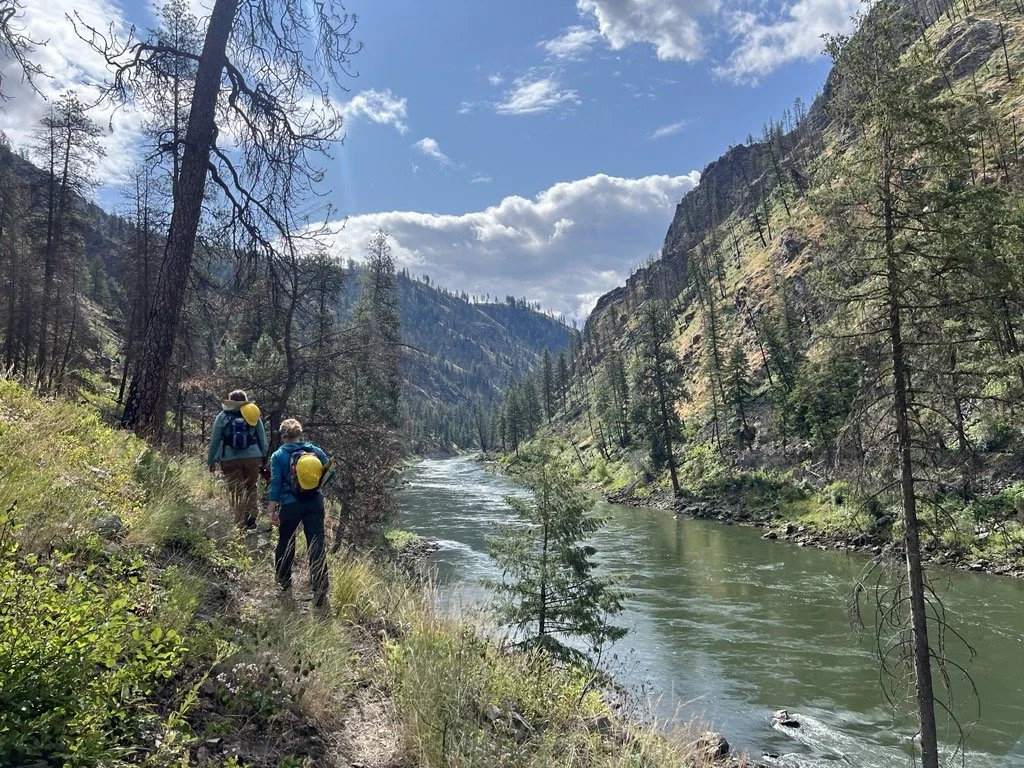

Day 2 began with creaky joints and a light chill in the air. It was a very relaxed morning with bagels and much-needed instant coffee. We were quick to get stuff done and pack our things, which meant we were on the trail in no time. 

Today was just a trail work day, and I think we were all thankful for the lighter loads in our packs. We were intercepted by our first downed tree pretty soon after we started on the trail and quickly got to work learning how to clear it. We were shown how to clear the area with loppers, how to make sure we’re safe during trail work, and—the most fun part—how to cut the tree away from the trail and roll it down the mountain. 

The first tree took a long time because everyone was getting the feel for using the crosscut and the KatanaBoy saw, but we eventually got the section that was blocking the trail cut loose. I was lucky enough to get to do the final cut, and it was such a fun and adrenaline-filled feeling when the entire middle section collapsed and was finally cut free. As a group, we got behind the log and rolled it off the trail with a feeling of satisfaction. 

However, not even 10 minutes later we heard a noise and looked over to watch as the top portion of the tree slid down to block the trail again. This was… unfortunate, but I was honestly just excited for the chance to use the saw again, so it was ok. 

At this point, we decided to split into two groups. April’s group would go work on cutting away smaller trees and lopping bushes from the trail up ahead, while Ian’s group (the one I was in) worked on cutting the larger logs from the trail.

Once April’s group left, we began to work on the tree that had slid back into the trail again, and got through it much faster the second time around. After a brief trek and lunch break overlooking the creek, we were quickly onto cutting more large logs that were blocking the trail. 

Turns out trail clearing is a very physically demanding and dirty process. By the time we had done two logs, my muscles ached and I was covered from head to toe in dirt, sweat, and residual burnt tree soot. However, never have I enjoyed manual labor more than on this day. I felt so empowered using the crosscut saw and rolling massive logs down the sides of hills. At one point, there was a four-tree pileup, and with one cut we were able to remove all the logs from blocking the trail. 

By the time we were done clearing trails, everyone was exhausted and their skin looked black from the amount of dirt that was caked on sweat. However, the feeling of fulfillment that came with this exhaustion was unmatched. I have never been so happy to be out on a trail with a group of people, and I have never felt as strong as I did today. 


Ok… when I said it came directly from my trail journal, I meant it. However, at this point in the trip I had reached a level of tiredness that left me with zero motivation to write anything down. It was nap time. 

So, I unfortunately don’t have any more trail journal excerpts. However, if I did, they would likely sound a lot like the ones you just read: yapping about beautiful nature, excitement over trail work, and uncomfortable descriptions of how dirty I was. So, I will spare you those details. 

In the end, the important thing that I took away from this incredible experience (and that you hopefully take away from this blog post) is that wilderness is amazing, and having the opportunity to protect it is a gift in so many ways. 

If you have the opportunity to explore the wilderness—whether it be through the SBFC Foundation or just on a family camping trip—I deeply encourage you to do so because I can promise you will not regret it. Additionally, if you are even considering applying for a trip with the SBFC Foundation, you absolutely should, because it is one of the most incredible, unique, and empowering opportunities that I have ever had the pleasure of being a part of, and I believe everyone should have the chance to experience it the way I did. April and Ian are some of the most welcoming individuals I have ever met, and you will not regret a chance to explore the beautiful outdoors with them as your guides.


The SBFC Youth Wilderness program is made possible by donors and sponsors, including: the National Forest Foundation, the Lightfoot Foundation, Boise Cascade , Bass Pro Shops Outdoor Fund, Weyerhaeuser, Laura Moore Cunningham Foundation, J.R. Simplot Company Foundation, Lamb Foundation, Blackfoot Communications, Ravalli Electric Co-op, May Hardware, Missoula Electric Cooperative, Missoula Sentinel Kiwainis, the River Network, the Rapp Family Foundation, the Montana Department of Natural Resources, the Connie Saylor Johnson Wilderness Education Grant, and private donors!

By the Waterside I Will Lay My Head

Nick Kivari

Wilderness Ranger Fellow

Moose Creek Mini Immersion | Selway-Bitterroot Wilderness

June 19-July 7, 2025

The Cook House at Moose Creek Ranger Station

When I first received an email from our Program Director, Josh Page, about an extended 19-day stay in the wilderness, I thought, “why the hell not?" and raised my hand that same day. I was seeking to test my limits in a backcountry setting and also share a whole bunch of laughs with some lovely people. The goal for this hitch was to hike in to Moose Creek Ranger Station along the Selway River Trail and from there work up the Bailey Mountain Trail. The 24 mile hike was a challenge that had to be faced head on and so it was. Split between two days, we made it to the Ranger Station with feelings of relief, accomplishment, and very very…wet feet. Once we had dried ourselves out and set up in the bunkhouse (what a treat) we had the chance to feel how special the place we had found ourselves in was. One can feel the history behind the cabins scattered throughout the station and the sheer amount of willpower needed to create this place. 

Bridge over Moose Creek

The main goal of this hitch was of course, Bailey Mountain. Bailey proved to be a worthy opponent for my highly capable crew consisting of crew leads: Enzo and Caleb, as well as fellows: Serenade, Raegan and myself. The trail, like many others, had recently had a fire and windstorm within the last three years. These two disasters combined led to hundreds of trees down on the trail that needed sawing. On top of this, the trail had not been maintained for an unspecified but clearly long time. This lack of maintenance led to brush so thick one had to press through with full force to continue on up the mountain. 
My campsite under the bridge at Moose Creek.

While working the Bailey Mountain Trail, the hardest thing came first thing in the morning. The hike up was ever climbing and being drenched in sweat by 7am is a new experience for me. Each day I could feel myself gaining strength to the point where the hike became less of a burden and more of a competition with myself. No matter what, at the completion of those morning hikes, I was exhausted. The beauty of a hard hike and work day to me is the feeling of cool creek water flowing over my body. Nothing compares to this. This is the feeling of ultimate freedom. Gently falling asleep (at 7pm) to the sound of Moose Creek rolling by. 
My guiding light throughout my time was the music of The Grateful Dead and the biography I was reading about the band. I hope to never find myself in a place where I cannot engage in song and dance. Even 30 miles deep into the wilderness I could have the experience of dancing in the field to the music. To me, the Dead and the natural world go hand in hand. This was most obvious during my time in the woods. 

These 19 days taught me confidence, rigidity, and simplicity. My crew made this extended stay easy, never failing to make me laugh up until the very last day.

Me and the crew!


Nick Kivari

East Aurora, NY

SUNY- Environmental Studies

Nick is from East Aurora, NY and found his love for nature in the Adirondack Mountains. At a young age he found a passion for the environment and climate change mitigation. When it came time for college, Nick attended SUNY College of Environmental Science and Forestry to study environmental studies. His passion for wilderness comes from a love for solitude as well as flora and fauna of all different kinds.

Bug Bites, Blooms, Boggy Boots, Big Sands, Berries, & a Birthday?

Josie Chaffin

Wilderness Ranger Fellow

Wye Fire/Elk Summit Trail, Nez Perce-Clearwater National Forest | Selway-Bitterroot Wilderness

7/2/25-7/9/25

Mary and Jack (day 1) at “Cache Rock” right after we finished up work for the day.

I’m not too sure where to even begin with this hitch- Let me first say I believe it to be my hardest one yet. I know, you’re probably thinking; “Oh no, something terrible must have happened for her to say that”. That’s a reasonable assumption, yes, but not actually entirely accurate. I think what made this particular hitch so hard was actually the mental aspect. I don’t think I have questioned myself or my ability quite this much on any hitch yet, and that is saying something since I backpacked almost every day of our training hitch (in the Frank), and removed over 100 ticks from my clothes over the course of 5 days. This outing was something else entirely- Something of a mental test. 

Me and crosscut 4A a few miles into the ridge trail.

We began our work from the trailhead of Elk Summit in the Nez Perce-Clearwater National Forest on 7/2/25. Upon arrival, we became breakfast for the mobs of mosquitoes who reside and rule over Hoodoo Lake. After rushing our setups to avoid being terrorized, work started immediately. Our initial tree was visible only a few feet into the trail. The first few miles of the trail were along the ridge, and not too impeded since it had been cleared the year prior. We moved through it pretty quickly, and were greeted promptly by some of the most beautiful views I’ve ever encountered (with only moderate effort) since we started our ordeal from the summit trailhead. We continued work as normal down the mountain, until the EOD on the 3rd, when we bumped all of our tools back to our trailhead camp after receiving a request in which we could not refuse: “You could be heroes.” 

I mean… What else can you say but “yes” to that? 

Mary and me, crossing the creek on July 4th on our Big Sands side quest.

So, on the morning of July 4th (happy belated independence day), we ventured into a side quest that had some unfortunate delays and consequences… but ultimately ended in a massive morale boost. We (the fellows) wandered upon a fork, and essentially climbed multiple miles towards Diablo Lookout, when in fact, we were meant to be climbing down into the trail known as Big Sand. That detour in of itself was a bit of a spirit breaker, when realizing the oatmeal you had for breakfast just went into climbing the wrong mountain trail. Once we were retrieved by a slightly distressed lead (sorry, Brendan) we got to work… just in time for the sky to open up on us. The first major tree my co-fellow Mary and I handled on this trail- dubbed Avocado- was massive. We weren’t at all sure how to clear the thing, which was basically vertical on a slope in a gullied trail- in the pouring rain, when Josh Page (the mythical SBFC Wilderness Program Director) arrived just in time. The three of us were able to slide multiple runners under the base of this 24”+ diameter log and essentially shove it off the side of the mountain (by the sheer power of Mr. Page’s ingenuity & some elbow grease). Multiple interesting trees followed, and as the day went on, the wetter and colder it got. By lunch, we were all huddled together on the damp remains of a broken bridge, soaked through, silently eating our wet, dirty tortillas. If I recall correctly, my toes were entirely numb. By the end of the work day, I felt a little delirious- certainly, it was the strangest Independence Day I had ever experienced. On the hike back out of Big Sands (which was back uphill), I fell approximately 4 times, one of which was directly and fully into a creek. By the time I arrived at the trailhead, I was shivering and the pinpricks of numbness had begun to travel from my fingers and toes further up my limbs. As the rig came into view, relief swept through me, but also a sense of dread at the fact that all of my belongings were soaked through and dripping, and that there was no way to actually  dry them before we returned to work the next day. 

The Selway giveth, and the Selway taketh away… and that day, it tooketh. At least, that’s what I was thinking at that moment. 

…Only…when I got to the rig, I noticed my crew sitting on the porch of the ranger station, laughing and smiling. One of them then came running, & told me to hop into the rig. It was a strange almost out-of-body moment, not at all the expectation for what I would encounter at the trailhead. 
The view from the Elk Summit ridge trail during a storm.

When we got in, they informed me that the man who was currently staying in the station had invited all of us in to dry ourselves and clothes by the woodstove, and to my later knowledge, even to make dinner there. Upon our return from our campsite where we retrieved our dry-ish spare clothes, we all huddled around the fire, chatting with the gentleman called “Jay” and his adorable companion, Shadow. It’s funny, as we sat there, wondering if the experience of the ranger station and the crackling woodstove were real, he thanked us for our work on the trails & what we were doing… when in fact, he was the one who ended up even making the next few days of work mentally possible. 

Turns out, all you need to make a wet fourth of July workday go from 0 to hero is a woodstove, a clothesline, a burner for hot dinner, and exactly 4 Walmart glowsticks. 

A tour of all the cuts on one big tree

Following that side quest, we were able to focus on the Elk Summit Trail once again. Although our boots, socks, and insoles were still mushy and boggy, everything else was dry enough to be functional (thank you, Jay). The next day (the 5th) we were able to make it to our campsite (after quite a while of searching) and get some work done. Brendan and I spent that afternoon and the next day working our way up the switchbacks, to work the saw down. By the 6th, boots were finally dry. I can distinctly recall a dinner conversation in which we unanimously agreed our socks were capable of standing on their own and had likely developed their own ecosystems (according to the smell)- but at least they were no longer wet. The next few days were spent working multiple trees that had fallen directly on top of the trail, long-way. The most memorable of them all was dubbed “Dookie”, which required approximately 10 cuts to be fully removed from the trail.

For a few of the nights in the Selway, all of us confirmed hearing loud crashing in the hours between 12 and 3 am, and repetitive echoing slamming, like the axe pole slamming a wedge into a kerf at random intervals. What didn’t help was that there was not any moving water nearby, so every sound was amplified the whole time. Even the incessant chorus of horseflies and mosquitoes under our rainflies did nothing to cover the sounds. On top of that, at every gust of wind through the massive cedars, limbs would tumble from the canopy, and lingering creaking sounds would bounce around the valley. 

My dinner uniform (evil, evil mosquitoes!)

We laugh about it now, but at dinner one night, as we were getting eaten alive by the never-dying cloud of mosquitoes, we considered the name “Halloween Hitch” for PP13, since it had been a bit of a scare so far. 

The last day of the hitch, we all woke up early. I recall waking up sometime around 3:45 am and beginning to pack in darkness. By 4:45 am, I was off on my own adventure. In total, we hiked 7 miles up, with thousands of feet of elevation gain, back to the summit. The thing that made the hike bearable was being able to watch the canopy open up as the climb progressed. Eventually, with soaked clothes and countless scratches, I was able to look down directly upon where we had been working, and take a moment to appreciate the sheer beauty and power of the Selway. 

At 8:58 am- Ironically, the exact time on the exact day of my birth 22 years ago- I dropped my pack at the back of the rig, and turned to look out over the field of blooming flowers, and realized in a moment that… maybe… I am capable of so much more than I ever thought I would be. I laughed a little bit, and found myself mumbling the words “Happy birthday, hero.”

Post-hitch surivval picture


Josie Chaffin

Gloucester, VA

Liberty University- Conservation & Environmental Biology

Josie grew up in Gloucester County, VA. She has always lived near woods, where she spent a lot of time as a child. Most summers were spent in Alabama or North Carolina, typically on family farms. These experiences are a big part of where her love of animals & the outdoors developed. She loves kayaking, camping, hiking, rock climbing, and traveling when she can. 

Josie is a Conservation and Environmental Biology student at Liberty University. She likes to hike recreationally, and has experience volunteering at a PVDR Donkey Rescue, Lynchburg Humane Society, the Virginia Institute for Marine Science, and more recently, Vic Thomas Hatchery. 

Josie is passionate about the wilderness because she believes it to be our most precious resource. 

Josie’s main drive for pursing this field is in ensuring the maintenance and preservation of our available natural resources and wildlife populations. Josie hopes to encourage a passion for the outdoors in others.

Wilderness in the Human World

Michael Decker 

Director, College of Graduate Studies | University of Idaho

Bargamin Creek Trail | Nez Perce-Clearwater National Forests

Selway-Bitterroot Wilderness

June 19-23, 2025

I cast my prince nymph into the “chop” where Bargamin Creek meets the main Salmon River. Ben, a College of Natural Resources graduate student, sits on a nearby rock watching the sun go down over the Frank Church Wilderness. Above me, a small plume of smoke from our campfire breaks through the trees. I meditate on the smell of campfire smoke after a good, heavy rain. Several others from our group of graduate students bathe in the river to wash away a hard day of trail work.  

Last year, my colleague, Bert Baumgaertner, and I started the Graduate Wilderness Course at the University of Idaho (UI). The idea was relatively simple: get graduate students into the woods and orient their unique research interests around it. Why? Perhaps, the Wilderness can stop being just “out there” or just an experience had within the official boundaries of a Wilderness area. We want students to learn Wilderness principles that can be incorporated into non-Wilderness spaces. We aim to subvert an Edenic perspective and situate Wilderness within the human world.  

Hiking along the Main Salmon River

Environmental historian William Cronon states in his essay “The Trouble with Wilderness” that Wilderness is a human space. In fact, it is “the creation of very particular human cultures at very particular moments in human history.” We want our graduate students to understand that Wilderness can inspire a sense of care and responsibility that transcends its boundaries. Afterall, Cronon ends his piece with the image of a plant pushing its way through a concrete sidewalk implying that such an act of persistence is “wild” in the truest sense of the word.  

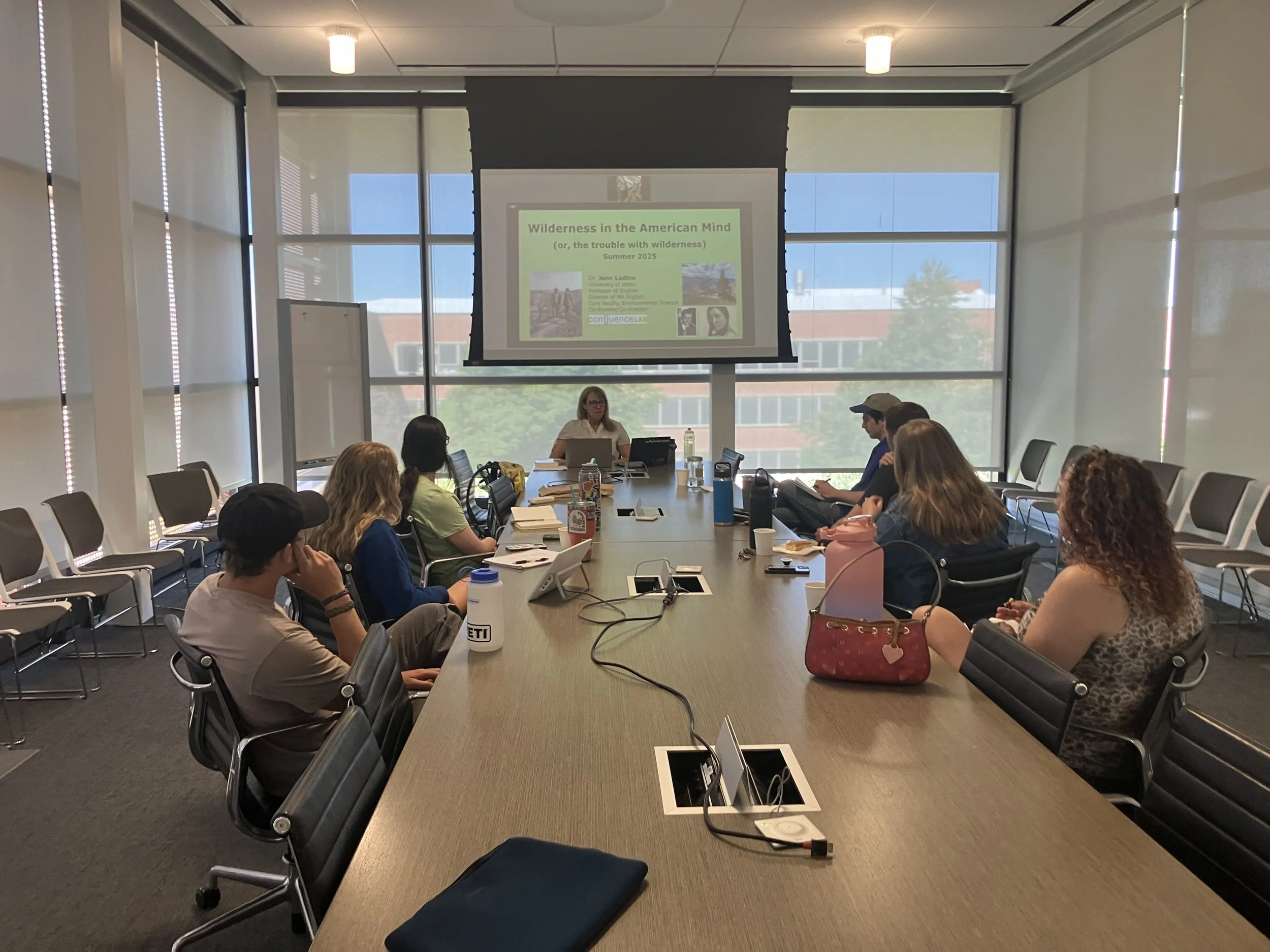
Jenn Ladino speaks to graduate students during classroom learning day

We partner with SBFC (among many reasons) because an essential part of forming a Wilderness ethic is to have a Wilderness experience. This, Bert and I believe, requires a degree of physicality, which our course achieves through the trail work required to keep the Wilderness open and accessible. You must feel your own body within the environment, which is often an uncomfortable experience. This is also in line with the namesake of our course’s funding source, Connie Saylor Johnson, a Wilderness advocate, who believed that all one must do is get out once in the Wilderness to be hooked. Once you see the Wilderness, feel it in your bones and in your soul, you will always care for it.  

Graduate students and Bert taking shelter beneath a large boulder

Our assigned project is to clear trees and brush along Bargamin Creek Trail #502. Earlier in the day, we had to seek shelter under a large rock because the rain was coming down hard. Students cleared trees with the “misery whip” or crosscut saw. They pushed cut tree segments off the trail by sitting four in a row and pushing with their legs. Now, I look up at our camp and see students who are tired, some letting the cold river water run over their aching bodies, eating snacks, journaling. Some are laying on their sleeping pads, hats over their faces, asleep. I think to myself, this is the point.  

As I walk back to camp, a student stops me and begins to cry. The experience is foreign to her, and she feels like her inexperience is holding the group back. I explain that she is achieving one of the most essential deliverables: she has become estranged from a space of comfort and familiarity. Thinking about it, the Wilderness is often described as a kind of homecoming, a return to a natural state that humans have adapted to over millennia, but our everyday world, where we spend most of our time, is increasingly less wild. I remind her of one of our course's pre-lectures when UI faculty member, Nate Moody, explained that one does not get to the Wilderness by mistake. You place yourself in the Wilderness intentionally. 

Graduate students clearing a large tree with a crosscut

The central assignment of the course is to write a Wilderness land ethic based on Aldo Leopold’s famous essay “The Land Ethic” from A Sand County Almanac. I gave students printed copies and notebooks prior to leaving. After trail work is done each day, they must read and write their own Wilderness land ethic. On the last day of the trip, we read these aloud to one another.  

And as we leave the official boundaries of the Frank and pass the riparian meadows of the Red River, we stop in Elk City, Idaho for burgers and shakes. The server jokes that they are “out of food.” An old man waves and say, “Welcome to Elk City.” Waiting for our food, we read the ethics aloud. Here is what strikes me:  

  1. Students can clearly link Wilderness ethics to their research. Architects discuss the principles of rewilding and incorporating natural light and shadows into the built environment. Natural resource students wrestle with non-intervention as a form of intervention. Art students meditate on ecological kinship and honoring the land. English students want to create simulated environments for those who cannot go to nature easily. 

  2. Everyone reframes the Wilderness as a community space. This is important because much of the history of the American West is predicated on the concept of rugged individualism.  

Students reading Leopold and writing their ethics by headlamp

Wilderness, we remind the students, is a collective space. This includes human(s) not just human. It takes the cooperation of government, non-profit groups, and individuals. It also includes the flora, natural processes like weather and fire, and the injured deer we watched limp up the hillside near Yellow Pine Bar, scared but unable to flee quickly as we hiked back to our van.  


About the Author:

Michael Decker is a director in the College of Graduate Studies at the University of Idaho and partners with several non-profits to do Wilderness outreach and education. He has also started the only academic conference on the study and preservation of fire lookout towers, The National Interdisciplinary Lookout Conference, and often discusses their relationship to Wilderness. When he isn't working, you can find him hiking, fly fishing, or trail running with his dog, Trout. 

Sawtoothed Smile

Sam Rardin

Wilderness Ranger Fellow 

Stanley Creek / Alpine Way Trails, Sawtooth National Recreation Area

6/18 - 6/25/2025

Snowy Sawtooths.

This hitch was exciting because growing up in southern Idaho, I've heard people talk about the Sawtooths a lot. I’d never spent much time there before. I was even more excited to hear that since it would be a frontcountry camping situation, I would get to bring a couple of extra luxuries. My coworkers brought camp chairs and blankets; I just brought extra food. I think I ate more than 2000 calories for dinner alone every day. I had given myself about 500 calories per dinner on the previous hitch and lost some of my valuable insulating fat, so I decided it would be bulking season.

The other important change I had made was an additional sleeping bag liner; on the previous hitch I was uncomfortably cold almost every night. Unfortunately this hitch was much colder, getting down to 26 degrees some nights. It even snowed on us for a day or two, right on the summer solstice. It was beautiful and reminded me of being a kid, but it was also wet and cold, and made it wicked hard to get out of bed in the mornings. I'm proud to have worked through it and love seeing the pictures we took.

Sawtooth National Forest- Columbia Spotted Frog

On the first day of work, I saw a tadpole the size of a marble. I asked our USFS project partner, Bryce, about what kinds of frogs lived in the SNRA. He told me that there weren’t many, but that it could have been a spotted frog. The next day I saw two adult frogs hanging out in the water next to the trail we were working on; then I saw the same two in the same spot on our way back to camp at the end of the day.

Seeing wildlife is without a doubt my favorite part of this work. At night we would hear coyotes and sandhill cranes calling, some nights we also heard turkeys and elk. I have never seen as many pronghorn as I did over this last hitch, and I think they are some of North America’s most evolutionarily interesting species, being more closely related to giraffes and okapis than any other American species like deer. On the last day of work the co-leader of our crew, Emma and I spotted a male/female pair of Western Tanagers, and we watched them sit in and spend time around their nest, right along the trail we were working. 

Sawtooth National Forest Bush Cricket on Jack’s glove

My coworkers saw how much I like to take pictures of the bugs I see out here and started calling me over or gently bringing bugs to me throughout the work day, which always made me really happy. 

On the second to last work day we hiked 12 miles, up to Alpine Lake and Sawtooth Lake. We took care of a handful of campsites around them, but the work was easy to forget since the views were so off the chain. 

This was my first time getting to work with packers and I got to meet the most handsome mule I could ever have imagined, Howard.

Sawtooth Lake

Alpine Lake

Howard the mule and me (photo by Jack Whitney)


Sam Rardin

Spokane, WA

University of Idaho- Communication

Sam grew up in Southcentral Alaska, dip netting, hiking, and camping. Finishing high school and college in Idaho provided many more opportunities to enjoy the outdoors, from cycling, skiing, and running in the high mountains of southern Idaho to trail work with the ICC in the north. Sam is always striving to spend more time reading and drawing.

South Fork Lolo Volunteer Project

Kara Knight

Wilderness Ranger Fellow

South Fork Lolo Trail, Selway-Bitterroot Wilderness

6/18/2025-6/25/2025

Morning stretch circle and safety talk! 

I spent this hitch with seven volunteers, one other fellow, Josie, and our crew leader, Martial Jumper. The plan for the week was to work on the last six miles of the South Fork Lolo Trail, heading toward Bass Lake.

It was empowering to witness the strength and perseverance of a group of volunteers who put their lives on hold to join us in tackling this monster of a trail. The trail was in rough shape. Everyone set out on day one eager for the experience. About a mile from camp, we encountered over a hundred downed trees that had to be traversed. We arrived at camp that evening with cuts, bruises, and a very large goal ahead of us. The hitch continued to test us: we faced four days of cold, rainy weather and had a waist-deep water crossing ahead.

Two volunteers: Steve and Jon, moving a large log out of the trail. 

Slow mornings gave us time for coffee, tea, oatmeal, and leftovers from the night before (somehow, it always involved couscous). On those rainy days, we sat together and took the time to appreciate the environment we were in.  Melissa, one of the volunteers, kept morale high by making pancakes. Steve, Dave, and Jon made sure there was always a hot fire to return to, while Josh, Jake, and Janice kept conversations going. It was encouraging to see such a diverse group of people, with a wide range of interests and personalities, come together with the shared goal of improving this trail.

SBFC volunteer Josh taking on the deep cold water crossing! 

The workdays were challenging. Josie and I ran saw teams and loved seeing the excitement and pride from volunteers after a job well done. Everyone persevered through the difficult conditions. We spent the first few days working backward from camp, removing and cutting the trees we had climbed over on our way in. Once that section of trail was cleared, it was time to move forward past the daunting river crossing. The waist-deep water would have been manageable on any other trip, but the cold weather made it tough. After searching unsuccessfully for a log that spanned the creek, we all agreed that the only way across was through it. Once we made it to the other side, we took time to warm up and dry off before continuing up the trail.

Josie, Martial, and I, along with help from some of the volunteers, cooked warm, fulfilling dinners after long days of work. We gathered around the fire to eat and talk about the progress we had made throughout the week. After dinner, we prepared the next day’s lunch, usually stuffing tortillas with whatever dinner had been. The number one thing we learned this week: literally anything can be a burrito, including Alfredo.

Final group picture taken after a job well done. 


Kara Knight

El Cajon, CA

Colorado State University- Fish, Wildlife, and Conservation Biology

Kara Knight grew up in San Diego, California, but spent much of her childhood exploring Yosemite, where she fell in love with wildlife and the great outdoors. Her passion for wilderness conservation led her to Colorado in 2020 to attend Colorado State University, where she earned her B.S. in Fish, Wildlife, and Conservation Biology in 2023.  

Kara is excited to gain hands-on experience and continue developing her skills. She has a deep appreciation for wildlife research and habitat conservation. You can find her hiking, camping, or spending time with her cat Juni when she's not out in the field!

Eight Days on the Main Salmon

Serenade Gorbett

Wilderness Ranger Fellow

Salmon River Trail #96 | Frank Church-River of No Return Wilderness 

6/4-6/11/2025

Berkeley, Nick, and Josh posing on our jetboat headed to the confluence of Bargamin Creek and the Main Salmon River in the Frank Church Wilderness.

We started our hitch at the Vinegar boat ramp east of Riggins, ID. I had been looking forward to this hitch since I found out we would be taking a jetboat. It has been on my bucket list for a while. It was so much fun. Some of the rapids we went through were the height of the boat. I think I preferred it over the plane on our last hitch.

We were headed to the confluence of Bargamin Creek on the #96 trail. Tasked with building a rock wall and digging tread. The trail had a lot of damage from a fire a couple years back. Building the rock wall put about 6 years on my boots and pants. I’m really glad I had my embroidery thread so I could fix the seat of my pants. 

The crew with a rock wall they built on the trail!

The great part about base camping next to the Salmon River is getting to meet awesome people and the free food. One night we met some rafting guides that invited us to dinner. They fed us so much lasagna and cookies. There was even a bowl full of just bread that kept getting passed around until it was empty. It was truly a feast. 

The morning commute to work along the Main Salmon.

The other highlight of this hitch was the wildlife. Halfway through the week, I went on a hike along the river. I noticed a weird stick in the water. It turned out to be a river otter. He waddled onto a sandy beach and rolled in the sand like a dog. We also got to see bighorn sheep on the way back to Vinegar boat ramp. It was an amazing time and I can’t wait to get back out there!

Before

After


Serenade Gorbett

Wallowa, OR

Serenade is from a small town in Eastern Oregon. Her early childhood was spent going on cattle drives and pack trips into the Eagle Cap Wilderness. For the last 8 years, she has been living off-grid with her family. These years spent living in the woods are the foundation of her devotion to the wilderness. Her favorite outdoor activity is trail rides with her dogs and miniature mule (Cocoapuff).  She also enjoys gardening and going on hiking trips with her brother. Serenade’s future plans are to pursue a career in natural resource management.