
Andrew Ehms
Wilderness & Trails Intern
Training, 5/18-5/22/2026
Nez Perce-Clearwater National Forests
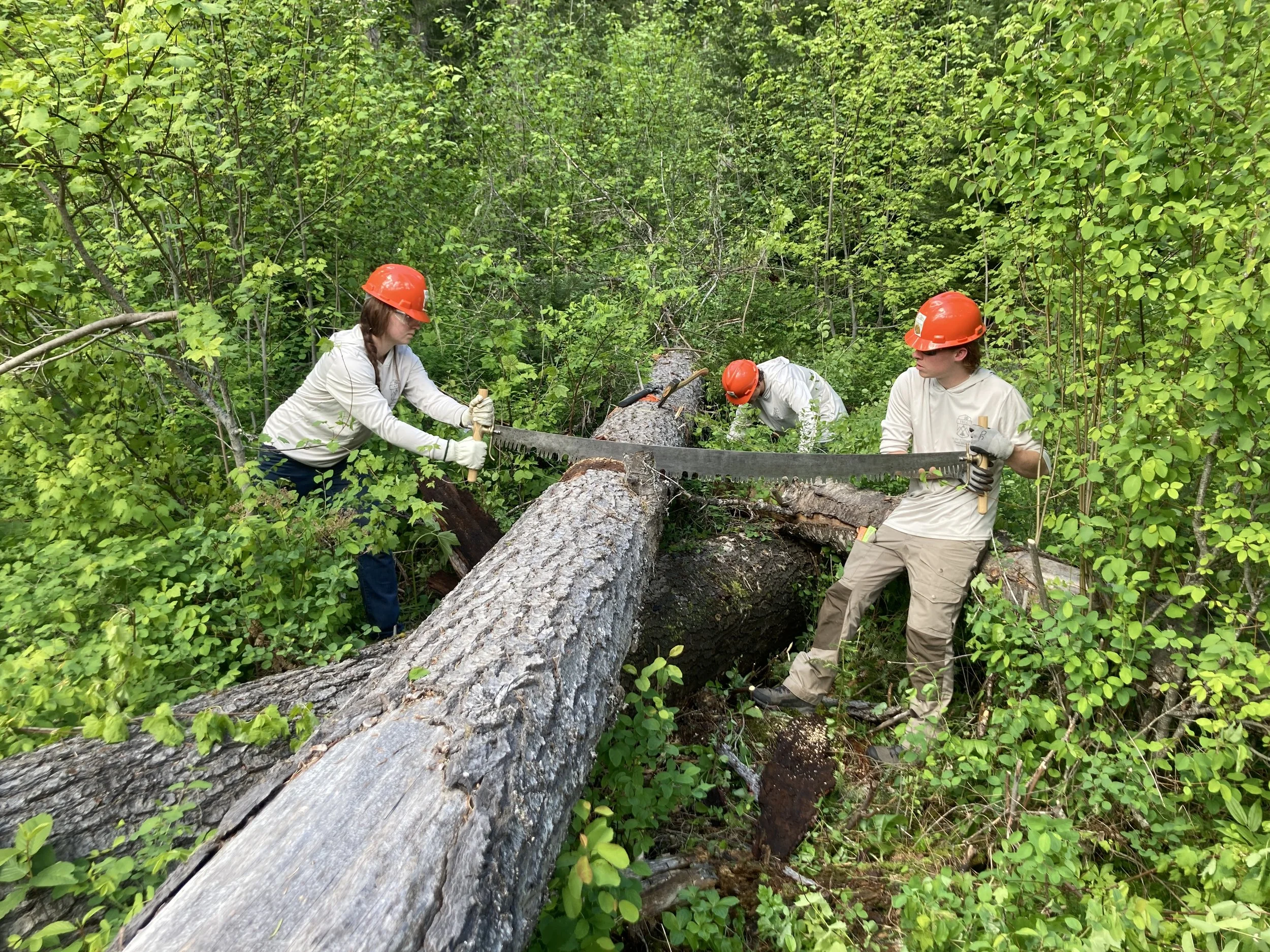
Two SBFC interns learning to use a crosscut saw at the NRWSI in May.
People of all backgrounds came together to attend the Northern Rockies Wilderness Skills Institute at the historic Powell Ranger Station along the Lochsa River, with at least one common interest: dedicating their summer to the conservation of public lands. Recognized for their continued dedication, people like Adam Washbeck, Regional Saw Program Manager for the United States Forest Service, led the instruction of a budding workforce that has arrived for the season.
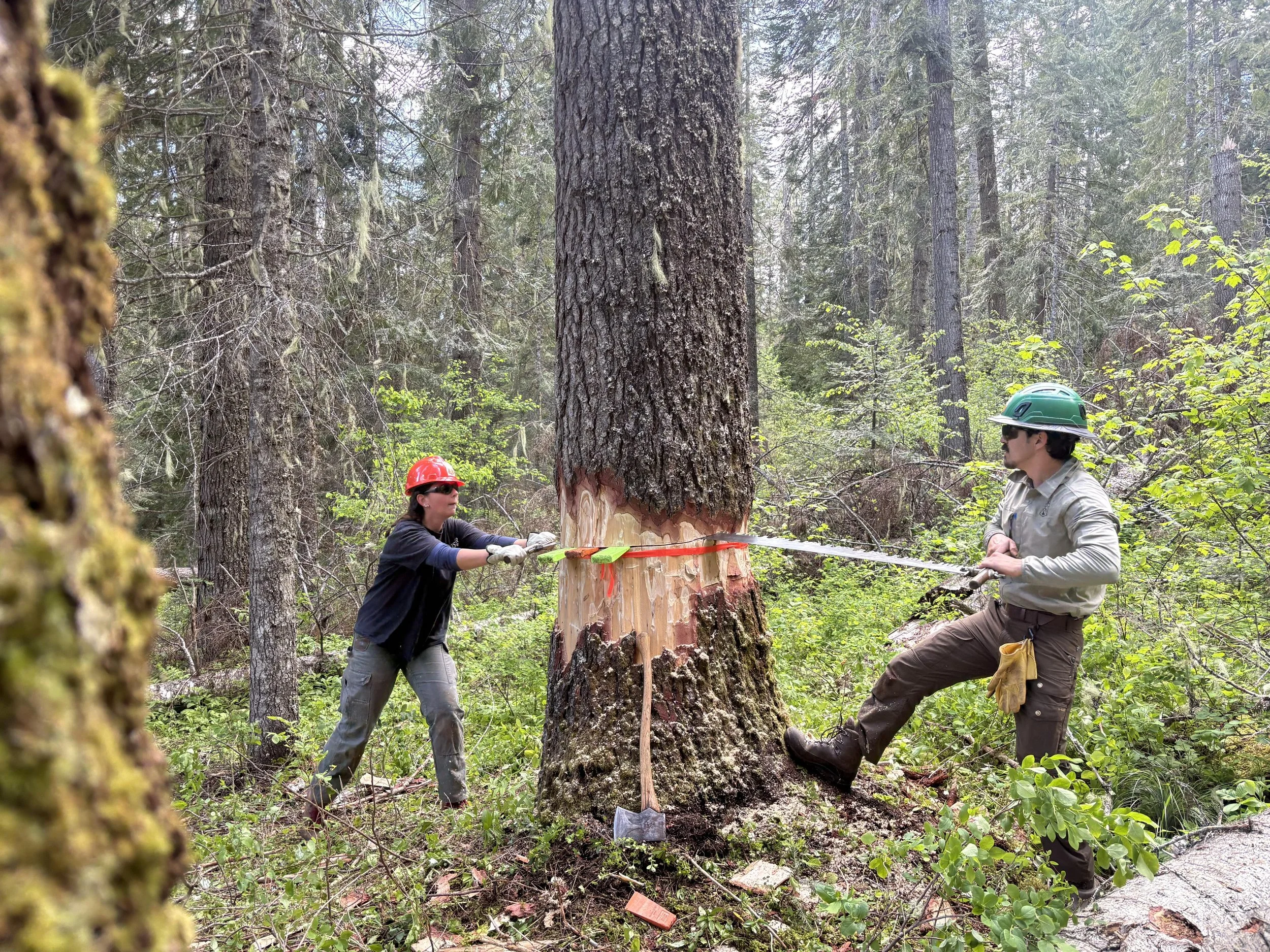
Josh and WTIntern, Darby, near completing the back cut on a large Grand Fir. In rising a little too high for their preferred stump shot, they learn just how much lift wedges can provide!
While the widespread use of chainsaws for logging evolved from the crosscut saw, the crosscut saw survives on a niche in wilderness conservation, cut out for itself by its primitive qualities. The Wilderness Act of 1964 deemed motorized use a threat to congressionally designated wilderness areas, sparing the non-motorized crosscut saw from extinction. Passing on the knowledge of how to use such a tool effectively in the field was critical. Commercial manufacturing of crosscut saws in America ceased during the 1950s. Therefore, the saws we hold in our hands are also relics that need to be maintained properly to ensure their preservation. Without them, the sprawling network of trails leading the public into wilderness would remain inaccessible, by trees that have yielded their position in the sky, but not on the ground, to any force other than a saw.
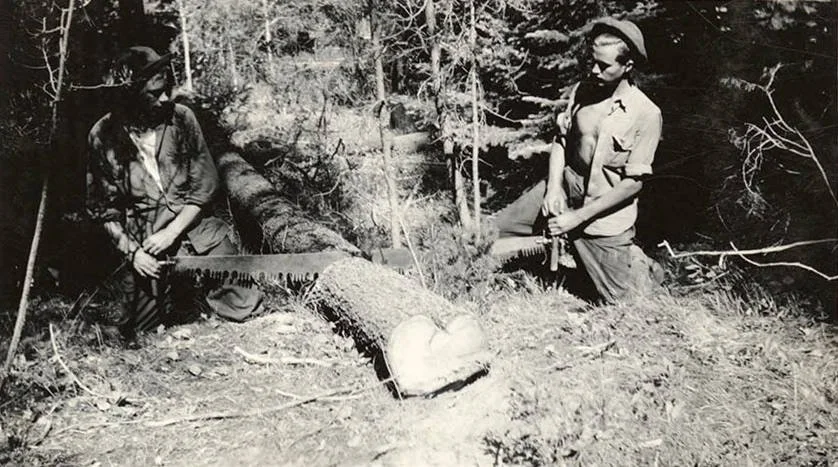
Two CCC men cross-cutting a log with a saw in 1939. ("CCC Men and Crosscut Saw", Civilian Conservation Corps in Idaho Collection, University of Idaho Library Digital Collections, https://www.lib.uidaho.edu/digital/cccidaho/items/cccidaho1007.html”)
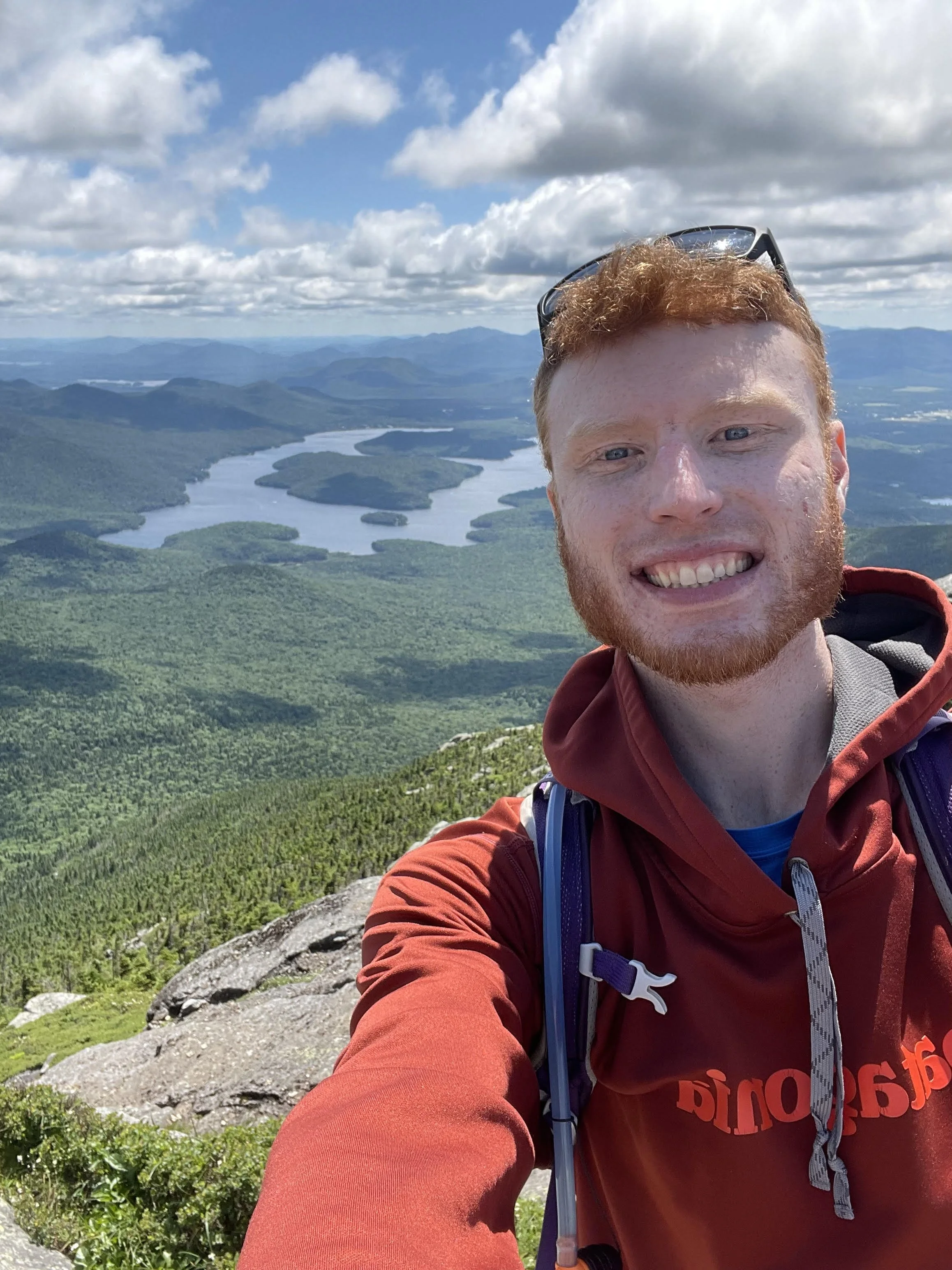
Webster, NY
SUNY: Geology
Andrew attended New York state college to study geology. Field courses required for professional licensure introduced Andrew to Montana for the first time. He is returning to Montana after trail maintenance for the SCA in the Adirondack Park as well as land stewardship for the Appalachian Trail Conservancy in Virginia.