Cam Begley
Wilderness & Trails Intern
Waterfall Creek Trail, Salmon-Challis National Forest
STEEP, NARROW ROAD AHEAD.
TRAILERS NOT ADVISED.
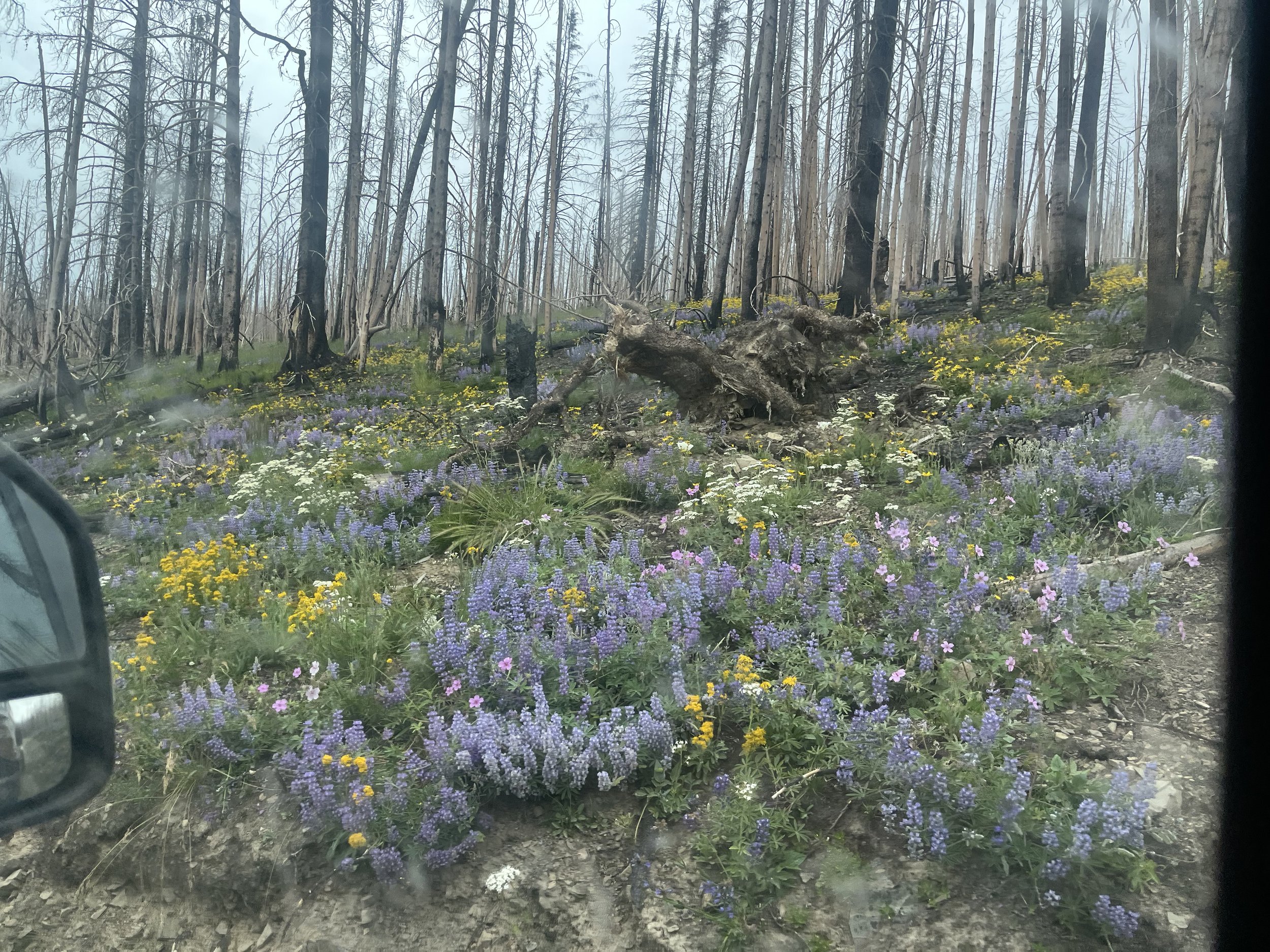
Wildflowers on the road to the Bighorn Crags campground.
The Forest Service sign was less than encouraging, but there were still 11 miles of steep, narrow road between us and the trailhead. Without an alternative, Packer Tyler put the rig into four-wheel drive and sent our crew, plus five pack mules, inching towards the Bighorn Crags. The road wound tight corners and steep washboard sections, but the truck and trailer held firm as we traversed the old burn scars outside the Crags; areas of dead, charred trees that looked lifeless until you could get close enough to see its dense carpet of paintbrush, lupin, and yellowbells.
Eventually, we reached the campground, where nobody was more eager to stretch their legs on stable ground than the mules.
Packer Tyler’s mules walking off their carsickness at the Bighorn Crags campground.
After unloading the rigs and re-packing the pack string’s panniers, the crew was ready to go. Actually, I was chomping at the bit to get started, after spending my off days hearing about the magic of the Crags. Expectations were high, and when we hiked in the next morning, I wasn’t disappointed. That day, we made ten or eleven miles to Terrace Lakes, climbing to well over 9,000 feet of elevation as we slipped through a dramatic mountain pass above the appropriately-named Heart Lake.
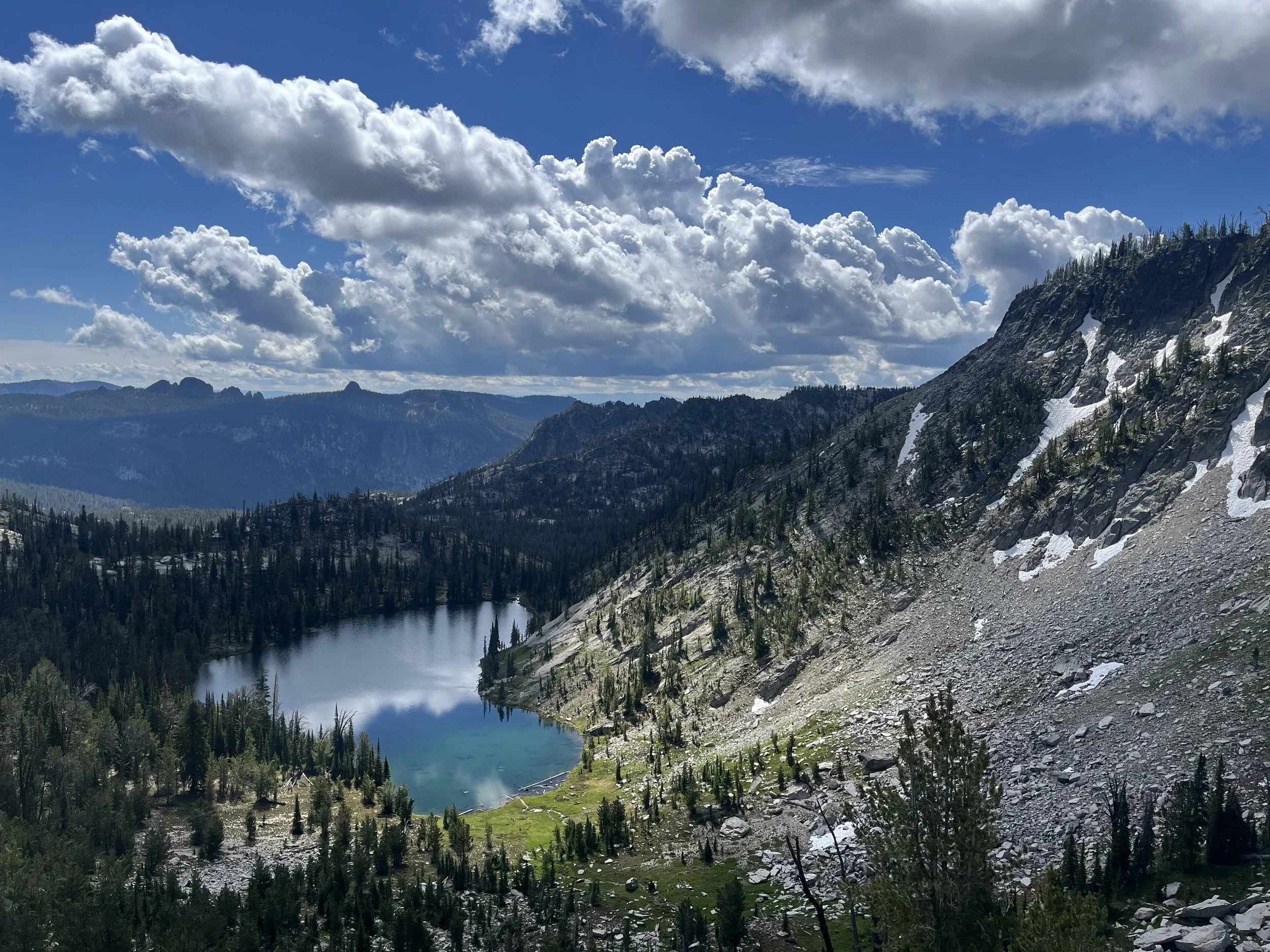
Heart Lake on a clear day. Not a bad day for a swim, either.
Ultimately reaching Terrace Lakes, we were rewarded with a beautiful campsite on a thin land bridge surrounded on either side by two clear, cool alpine lakes. In the evenings, cutthroat trout would sometimes jump two or feet in the air, as if to taunt us for not bringing fishing poles. The pack string arrived half an hour after we did, dropped off our tools and food, and disappeared back up the mountain pass. Time to get to work.
Over the next four days, we worked our way down the Waterfall Creek trail, leaving scatterings of ponderosa samplings and miles of neatly-trimmed trail in our wake. Besides the constant chatter of loppers and hand saws, the work was accompanied by long-winded games of Contact, Would You Rather, and discussions of what songs were stuck in our heads each day (I had a rough three-day stretch of Joni Mitchell’s “California” on mental repeat). I can’t say it didn’t get a little repetitive, but it kept us from going (completely) crazy.
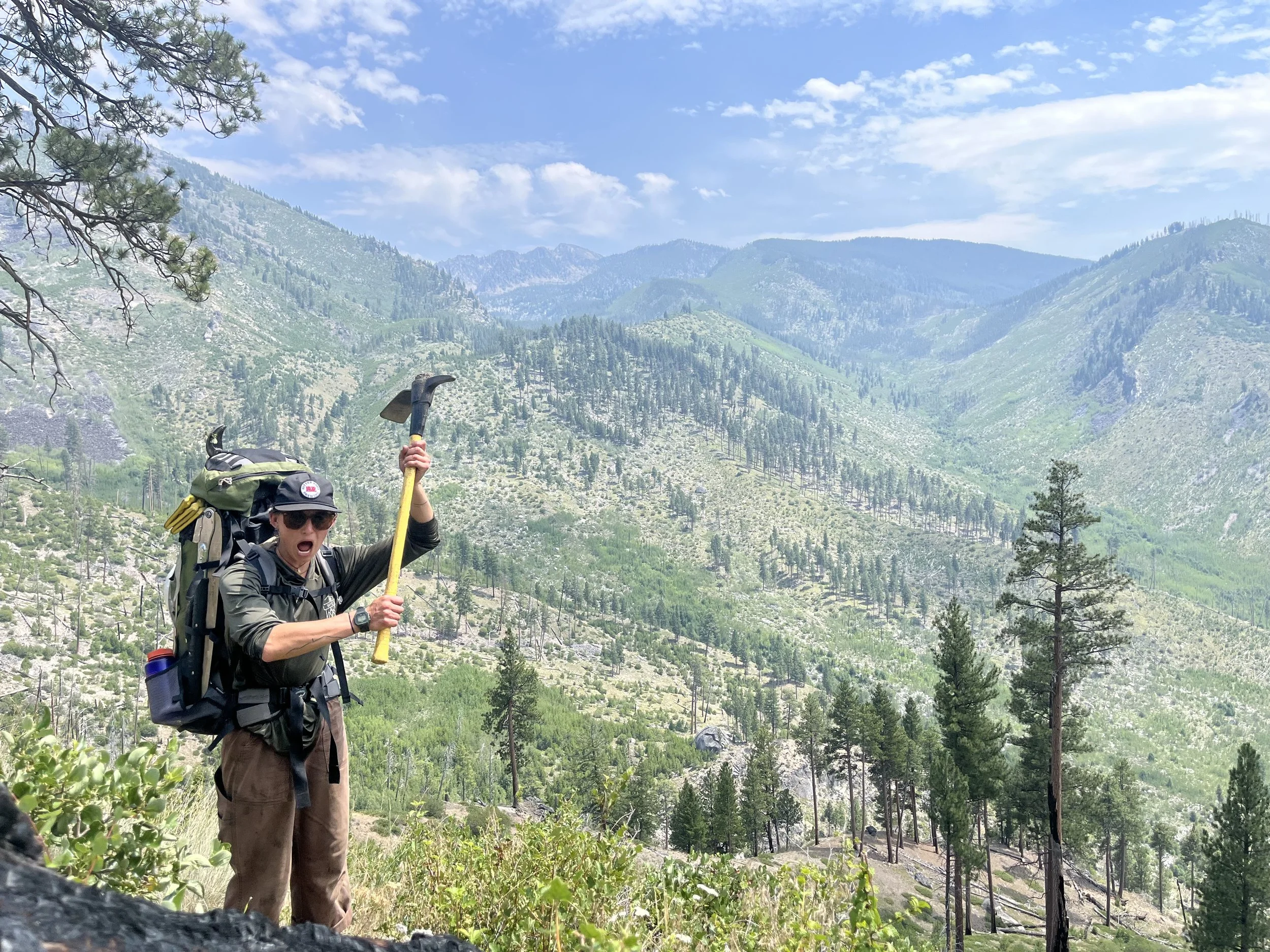
Crew Lead Cait Dillon showing the crew her battle cry on the Waterfall Creek trail.
Bumping camp twice in these days, we often had a new body of water to swim in, and always we’d compare it to the other lakes and creeks at dinnertime (the best is my secret spot at one of the Terrace Lakes. I won’t say which one.)
Finally, on day seven of the hitch, we plummeted nearly 6,000 from the high country down to the Middle Fork of the Salmon River, where River Patrol provided our third form of transportation for the hitch: whitewater rafting. For a day and a half, we floated the Middle Fork, and replaced our usual routine of hiking, clearing brush, and cutting the occasional downed tree with hours of rafting, swimming, and checking out the ancient petroglyphs along the canyon walls. Obviously, it wasn’t a bad trade.
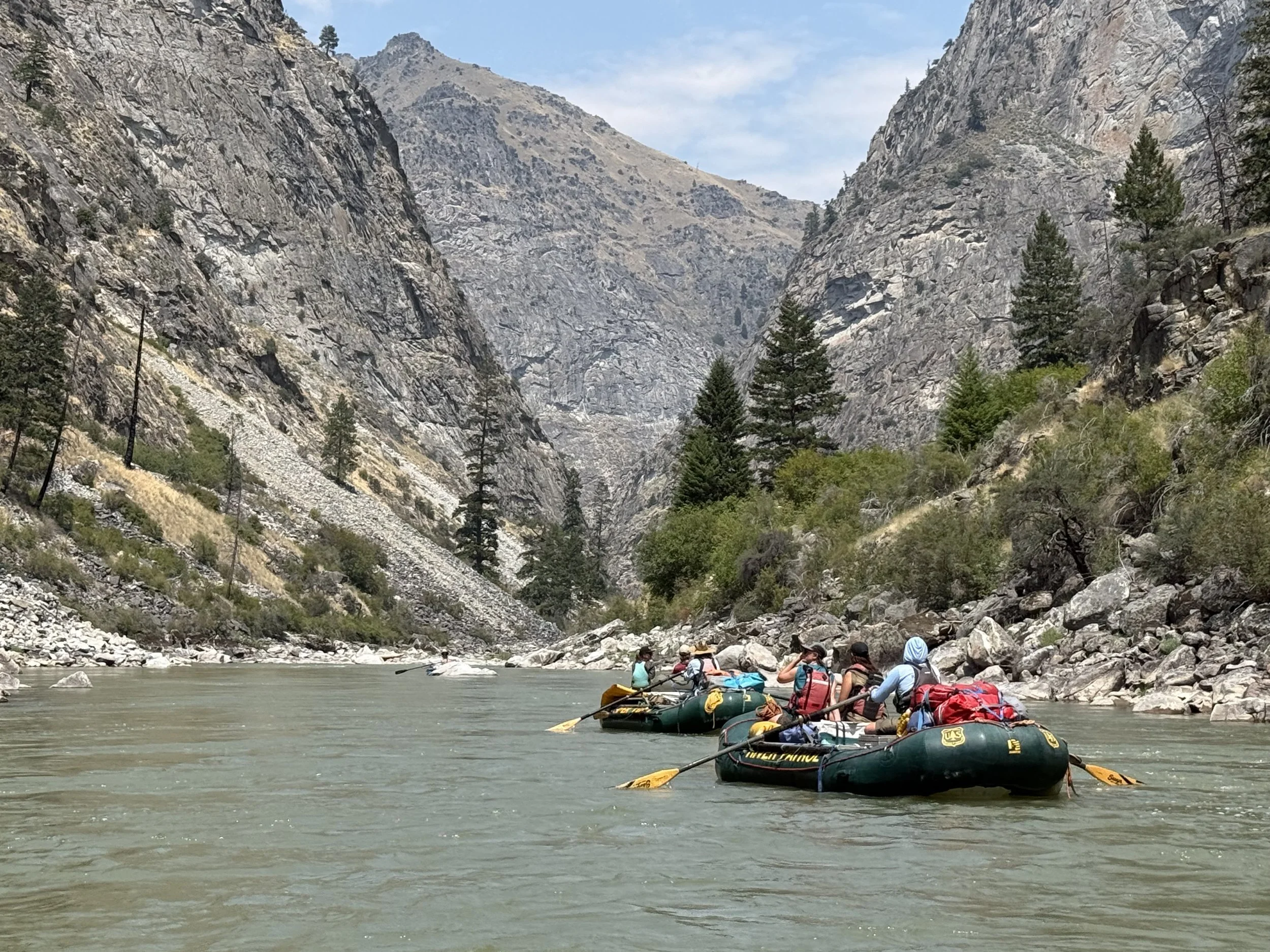
Floating out on the Middle Fork. Thanks, River Patrol!
Nearing the boat ramp and coming to the end of what was obviously the best hitch of the summer, I looked back towards the receding walls of the Middle Fork’s Impassable Canyon with an unfamiliar sadness. Usually on day eight of a hitch, I could hardly wait to get back to town and eat cheeseburgers at the Missoula Club until I started feeling sick. But, truth be told, I could have spent the rest of the summer pulling baby trees and pushing cut logs down the steep hillsides of the Waterfall Creek trail. If you’re ever lucky enough to get the opportunity to hike in the Crags or above the Impassable Canyon, get there as soon as you can.
Just stay out of my secret swimming hole.
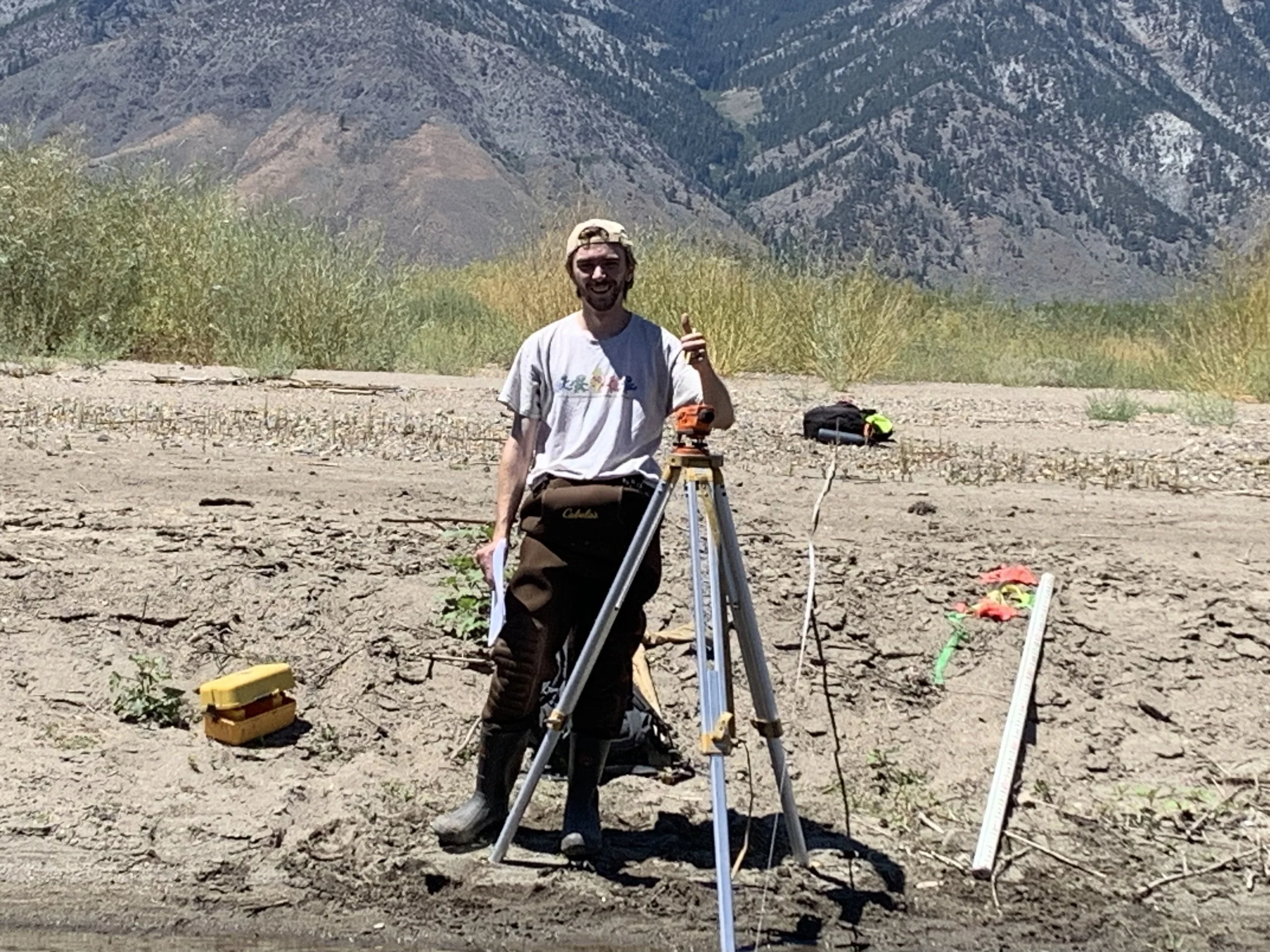
Suffield, CT
Trinity College Dublin: Environmental Engineering
Cam was born and raised in northern Connecticut, where he worked as a summer camp counselor & teacher at an outdoor education center before moving to Dublin, Ireland for college. Now returning to the US with an Environmental Engineering degree, Cam is excited to build his wilderness skills and gain experience in conservation work. In his free time, Cam loves playing guitar, rock climbing, and bass fishing.