Raegan Dick
Wilderness Trail Technician | 2026
When I was offered the Wilderness Trail Technician position with SBFC this summer, I readily accepted, despite feeling a little daunted. I would be working out of the Red River Ranger Station, and I had never lived somewhere so rural. Admittedly, one of my favorite parts of working on a backcountry trail crew has always been returning from hitch and indulging in the sights and sounds of the city. Being hundreds of miles from the nearest "big" city did not sound terribly exciting for my prospective days off. However, it was the job I was offered, so it was the job I accepted.
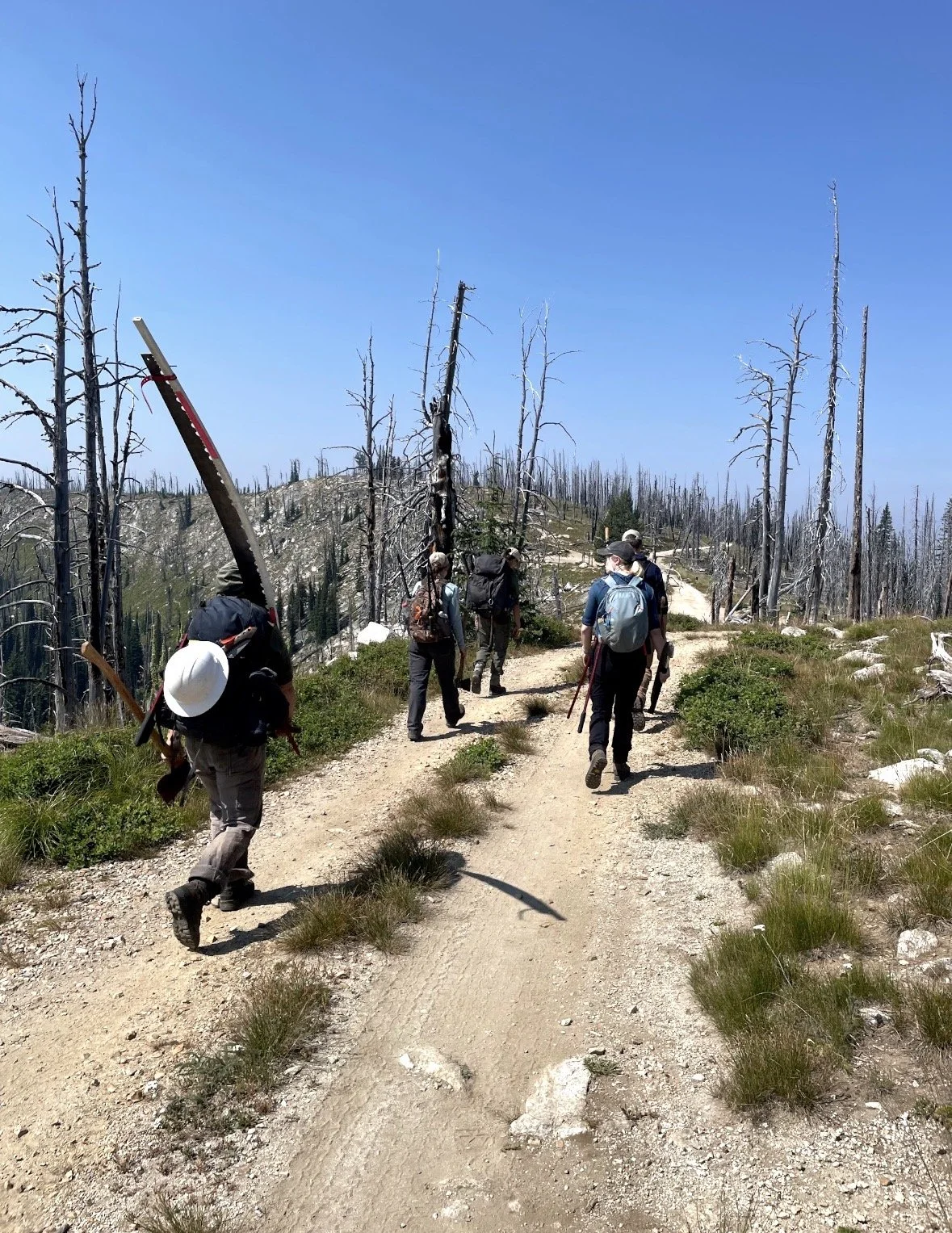
Working out of Red River meant we were living on the doorstep of the Gospel Hump Wilderness and the Frank Church River of No Return Wilderness, two areas where I had seldom worked last season.
For my first hitch out of my new home, my crew and I worked up Crooked Creek, which is generally considered the primary access point from the Salmon River to the high country. During that hitch, it rained, snowed, and hailed on us for most of the week. We would return to Crooked Creek-- and subsequently Lake Creek-- for the next hitch. For the following three hitches, we worked down Cache Creek, making our way down Bargamin Creek. For our fifth and final hitch out of Red River, we worked up Cache Creek from Dry Saddle, almost (but not quite) meeting up with the work we had done earlier in the summer.
It’s safe to say my crew covered a lot of ground this summer. While this was only my second season with SBFC, I learned so much, and the structure of this season out of Red River was the catalyst for much of that learning.
As an intern last season, I worked on a rotating crew of interns and different crew leads, which I found extremely beneficial as I tried to learn as much as possible, as quickly as possible. I had never backpacked or worked on a trail crew before, so working with so many different people exposed me to a wide range of approaches to backcountry living and working. It helped me develop my own skills and figure out what worked best for me.
Coming into this season with a solid foundation and working consistently with the same two people allowed me to further develop those skills and learn from two people with a wealth of experience. I found that continuity invaluable.
My first season brought me to so many different places that it seemed like every hitch took place in a different national forest. This season, we returned to the same two trail systems, as mentioned above. Coming back to the same trails hitch after hitch meant that, first and foremost, our hike to basecamp was clear, thanks to the work we had completed the previous week. However, the easier hike in was not what stood out most about these experiences. It was getting to know the land in a way that I had previously been unable to with only 8 days in a place.
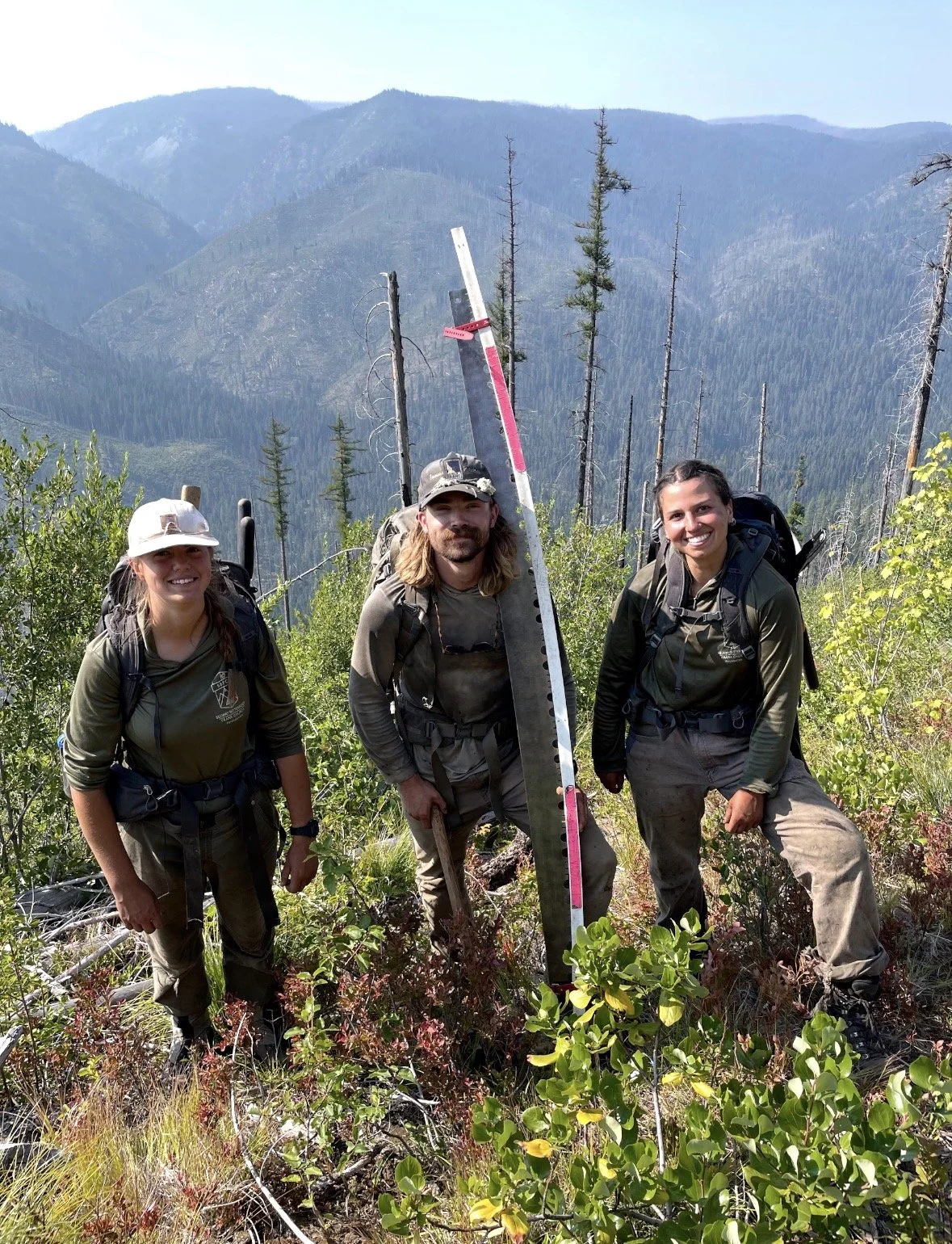
Raegan (right) and her Red River crewmates, Emma (left) and Enzo (center).
While hiking and working, I became constantly aware of the birds around me and the ways they communicated with one another. Western Tanagers, Cedar Waxwings, Ospreys, Lazuli Buntings, and American Dippers were frequently studied in and around the camps where we stayed. I studied the behavior of insects underneath the rocks I removed from the trail. I paid close attention to the ways the trees have grown, because their forms provided clues about the conditions present when they germinated.
I began to see each organism as a single piece of a much larger puzzle-- a cog in a system that has perfected the art of existing. Getting to spend so much time working along the same trails opened my eyes to the natural systems around me, and I learned so much simply by observing.
I also found myself paying attention to the long history of stewardship etched into the trails. The land tells a compelling story of decades of management, reinforcing something I already know to be true: people have cared for this land long before me, and will continue to care for this land long after me.
Old, sun-bleached logs line the trails, and dried piles of previously cut brush still litter the hillsides, dating back 10-15 years, and in some cases, much longer. The evidence left behind by previous trail crews creates a timeline that helps us understand what the land looked like before natural forces like fire, wind, and erosion reshaped it. The camps we've stayed in also reveal a long history of use by outfitters, hunting groups, and backpackers. Old fire rings littered with rusting beer cans, patches of uneven soil where stock was tied, small trees bucked into tent poles tucked almost out of sight, and unofficial, "social" trails winding down to the creek all paint a vivid picture of how people have used and enjoyed this land over the years. While I certainly do not condone leaving behind evidence of our presence- we've packed out plenty of garbage from these camps- I can appreciate that generations of people have experienced this wilderness in such an intimate way, miles from the nearest road. On particularly difficult days, it's easy to lose sight of the bigger picture and forget why we're doing this work. Remembering that I'm part of something much larger than myself is what motivates me to keep pushing forward and working hard to keep these places accessible for everyone. As incredible as it would be to have these breathtaking landscapes entirely to yourself, there is also something meaningful about seeing so many people enjoy them. After all, how can we expect people to care about places they've never experienced? Once you've stood beneath towering cliffs, crossed an alpine meadow, or watched a river carve through a canyon, it's much easier to understand why these landscapes deserve protection.
I'm not sure what next summer will bring as I consider grad school and explore different career opportunities, but if there's one thing I know for certain, it's that I've never felt more like myself than I do out here. Wherever next season takes me, I'm excited to keep growing into the person this work is helping me become.
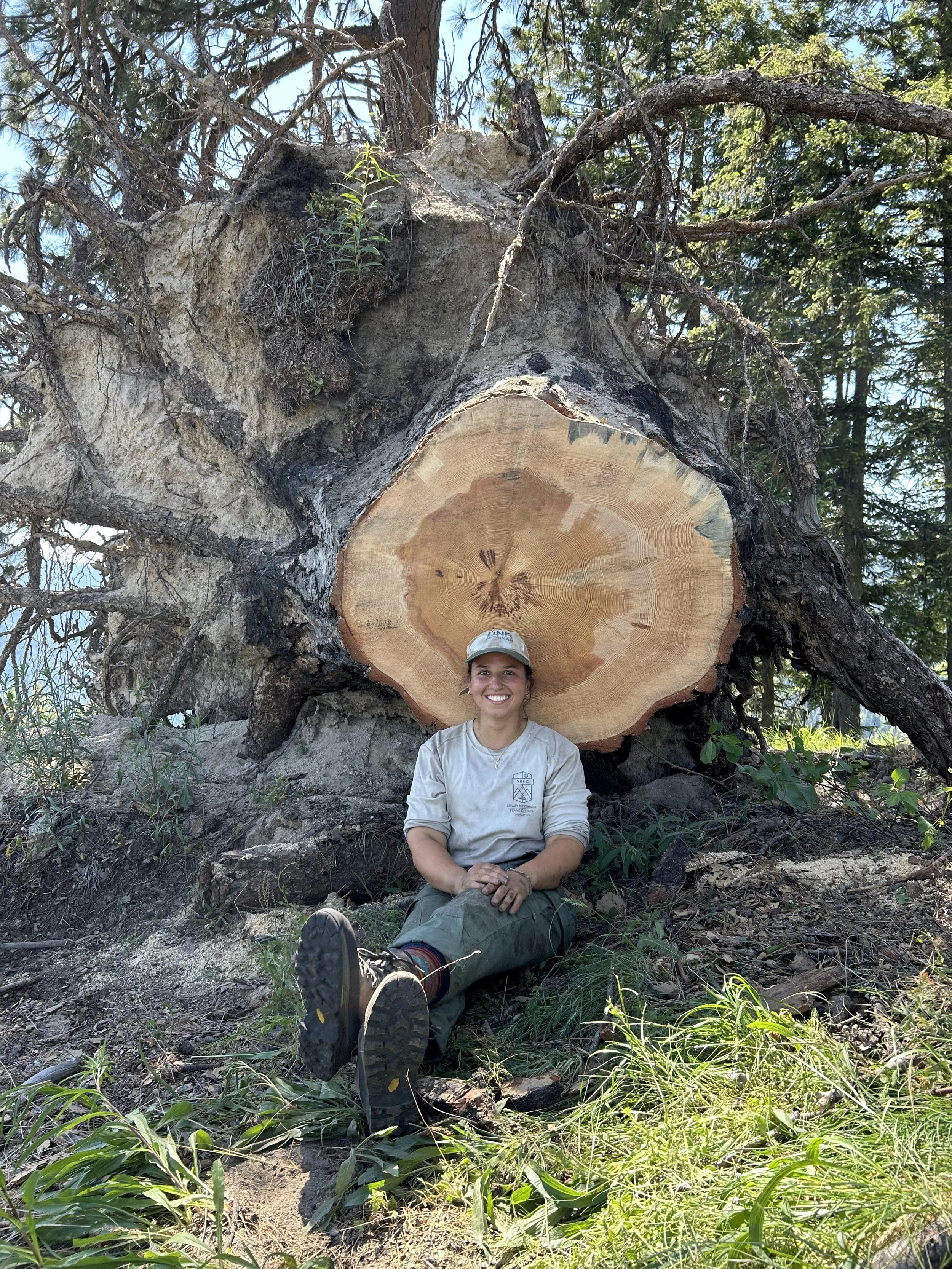
Raegan Dick, Trails Technician
Raegan is entering her fourth year as a dual major in Forestry and Wildlife Ecology at Michigan Technological University. She has a profound love and appreciation for the Earth and its natural systems, which was reinforced after her first season on a trail crew in the Selway-Bitterroot and Frank Church Wildernesses. She is stoked to spend another summer in the wildest places in the lower 48, stewarding the land and opening up pathways for more to appreciate the land.
Raegan was a Wilderness Ranger Fellow with SBFC in 2025 (and was chosen by her peers as the recipient of the 2025 Warren Miller Wilderness Skills Award). She returned to SBFC in 2026 as a Wilderness Trails Technician.