Name: Claire Voris
Wilderness Ranger Fellow in what year?: 2016
College Credentials (if you went to college!):
BA Anthropology, Washington University in Saint Louis 2011
MFA Creative Nonfiction Writing, University of Montana 2017
Career path since you were a fellow/intern:
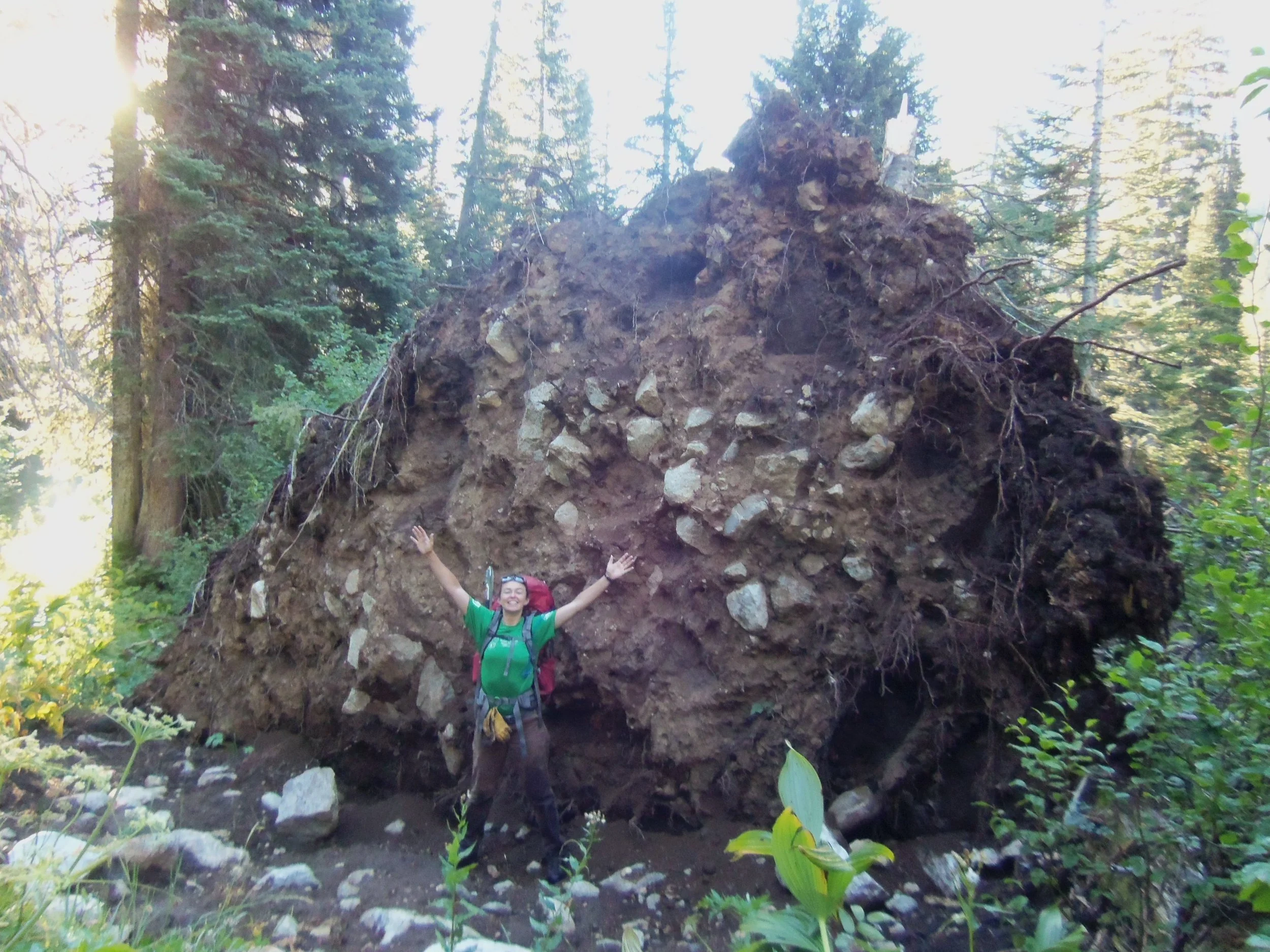
Claire in front of an extraordinary root wad following a microburst up Blodgett Canyon in 2016
Following my time at SBFC, I went on to work for Bob Marshall Wilderness Outfitters, formerly operated by Mack and Connie Long. For two seasons, I had the opportunity to learn from some amazing teachers (human and equine alike) and explore “The Bob” on horseback while packing mules and guiding guests to some of Montana’s most beautiful and least-visited wilderness landscapes. When my partner John was assigned to do his medical residency in Washington State, we moved to the Kitsap Peninsula where I landed a job working for local land trust, Great Peninsula Conservancy. Since 2019, I’ve helped to build the nonprofit’s community engagement programs, including their outdoor education program, Land Labs, which connects youth from Title I schools and local Tribes with opportunities to get outside on conserved lands to participate in community science and service learning. What better teacher than the land itself? It’s a lesson I learned at SBFC and am privileged to pass along. Most recently, I’ve transitioned to work more on the fundraising side of the land trust’s operations, to ensure that we have the resources necessary to protect more ecologically valuable habitat and get more people outside to steward and appreciate it.
What experiences stood out to you the most during your time as an SBFC Fellow? Most memorable, or most poignant?
As a fellow with SBFC, I had the opportunity to shadow Wilderness Ranger Adam Washebek in the Bitterroot National Forest. While working with Adam’s short string of Forest Service mules, I witnessed for the first time the many benefits that stock support could offer Forest Service trail crews and volunteer work parties hoping to get further into the backcountry and get more done. Our hitch with Adam’s mules, though short and perhaps a little more exciting than planned, was totally eye-opening. I loved it and was hooked! (Thanks for the meaningful experience, Adam!) Following my time at SBFC, I’ve continued my education in packing through a variety of professional and recreational pursuits. For the last few years, I’ve been training my first mule, Cricket, to pack and ride in hopes of one day getting back out there to volunteer stock support for our local backcountry trail crews. We’re not there yet, but we’re on our way!
Did you have an “ah-ha!” moment as a fellow? A favorite memory?
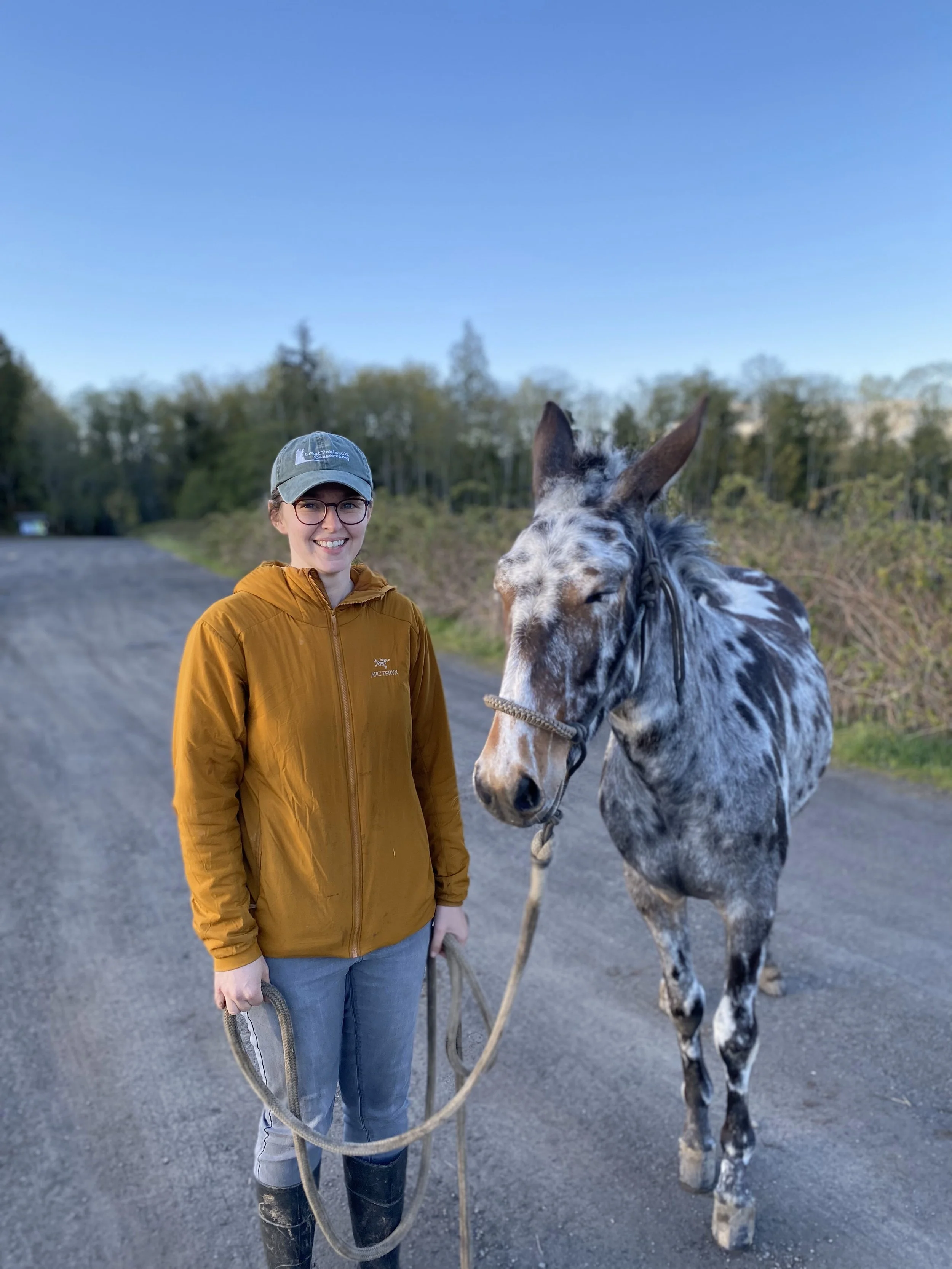
Claire with her mule, Cricket.
I think my biggest “ah-ha” moment was the realization that there’s no going back – I am changed knowing that the wilderness is out there. Although these days I spend more time sitting at a desk than I do in the backcountry, I still take measure of myself as a being in relation to crooked mountains, cold creeks, sharp smell of pine, and the rustling of leaves at the edge of the campfire’s light. Because of wilderness I better understand those corners of the woods where there is no time but the present tense, where ten-thousand years and tomorrow may well share the same breath. Knowing wilderness is an education in ancient migratory compulsions and an appreciation for the wild places within us that can only be accessed at trail’s end where awe and discomfort, gratitude and fear intersect. May we all be so privileged to wake up safe in our beds itching for a return to soft fiddlehead greens, bear tracks, granite. I am confident that the more people have the chance to experience and get to know the wilderness, even for a short time, the less threatened our shared future becomes.
How did the SBFC fellowship play a role in landing your next job out of college?
Being able to rehandle an axe may not have specifically landed me my next job, but it definitely didn’t hurt. The professional candidate who is a problem-solver, a team-player, who can communicate well, keep a cool head in a bind, and can get a little gritty when the conditions aren’t ideal will thrive in any professional workplace (deskbound or not). To those considering an SBFC fellowship: I can firmly say that my time with SBFC provided me with lots of easily transferable professional skills that aided me during my job hunt. And knowing how to rehandle an axe, well that’s just a cool conversation starter anywhere you go.
Any advice for people who want to work in wilderness or related fields?
“Wilderness work” isn’t just accomplished by backcountry rangers and trail crews – although of course we appreciate them! Wilderness advocacy requires artists, writers, economists, scientists, and passionate communicators from diverse backgrounds. Your skillset, whatever it is, is much needed. If the idea of wilderness speaks to you, don’t let a lack of traditional pre-requisites keep you from reaching out, learning more, digging in, and finding a way to get involved.
Anything else you’d like to share?
Many thanks to the SBFC supporters who donate to make the Wilderness Ranger Fellowship possible! Having the opportunity to learn from so many incredible teachers and to steward so many amazing trail systems most definitely informed and inspired my professional trajectory. Many former fellow’s stories echo that same sentiment and they are out there doing phenomenal work, coast to coast, because of members like you. Thank you for your investment in wilderness and the next generation of stewards!