Broadening Horizons: Backcountry Food Decoded

Riley Sterling

Wilderness & Trails Intern

62 Ridge Super Crew

6/17/26 – 6/24/26

Selway-Bitterroot Wilderness

Boots on the ground are the backbone of trailwork. But what gives those boots the strength to leave their sleeping bags in the morning? Food. The longer I’ve spent at SBFC the more I’ve noticed people bringing one or two items that some ultralighters would consider heinous crimes. When asked, my coworkers often deem these items utterly essential for an eight day hitch. This is not to say that we are bringing things that we don’t need. In reality, after working a 10+ hour in the backcountry, our needs become very specific, and sometimes peculiar. Before each hitch I still weigh the pros and cons of every item. However, I often come to the conclusion: after a long day of hiking or trail work, that one extra pound seems like a good trade for a gourmet, non-dehydrated, meal. 

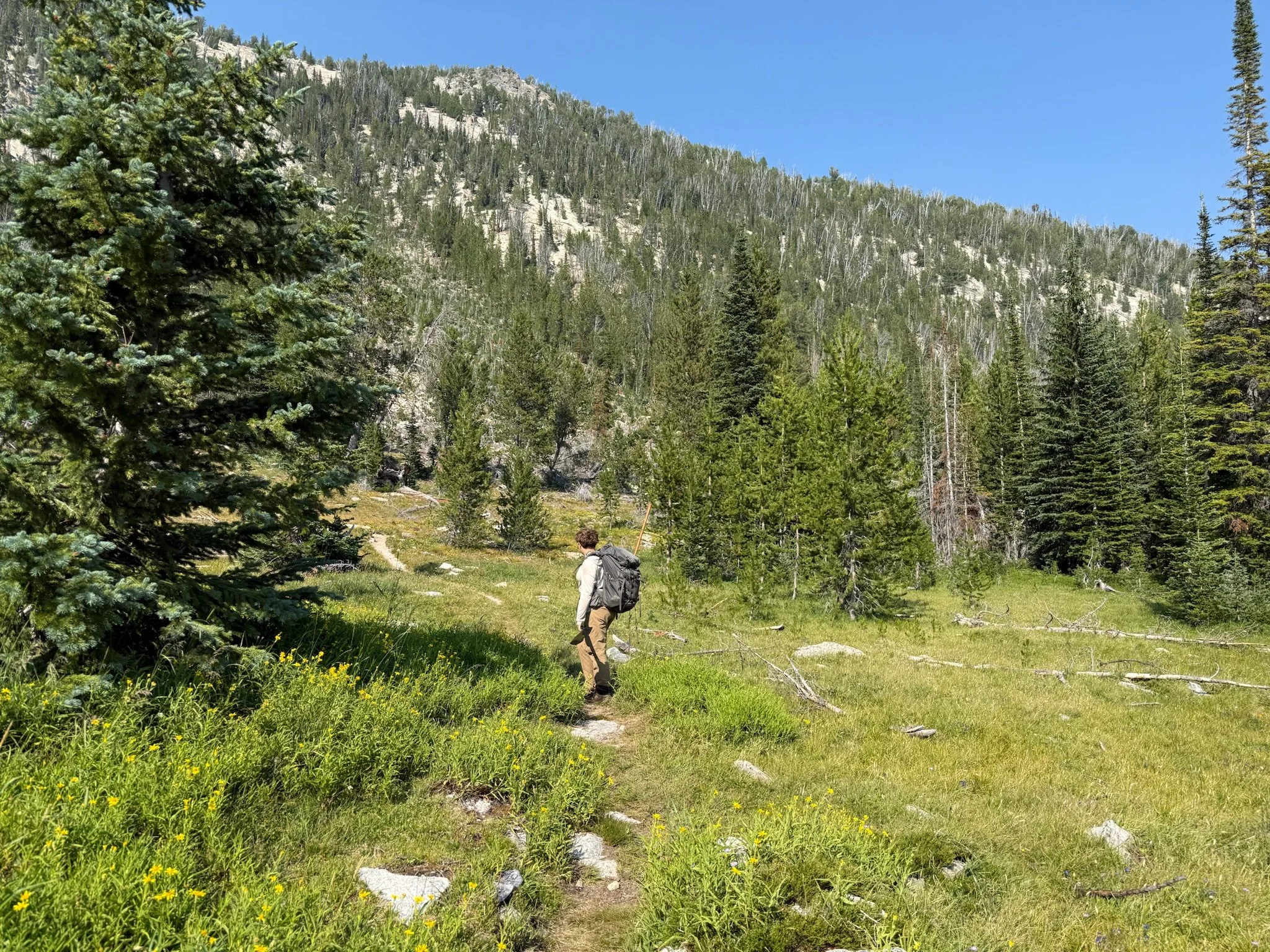
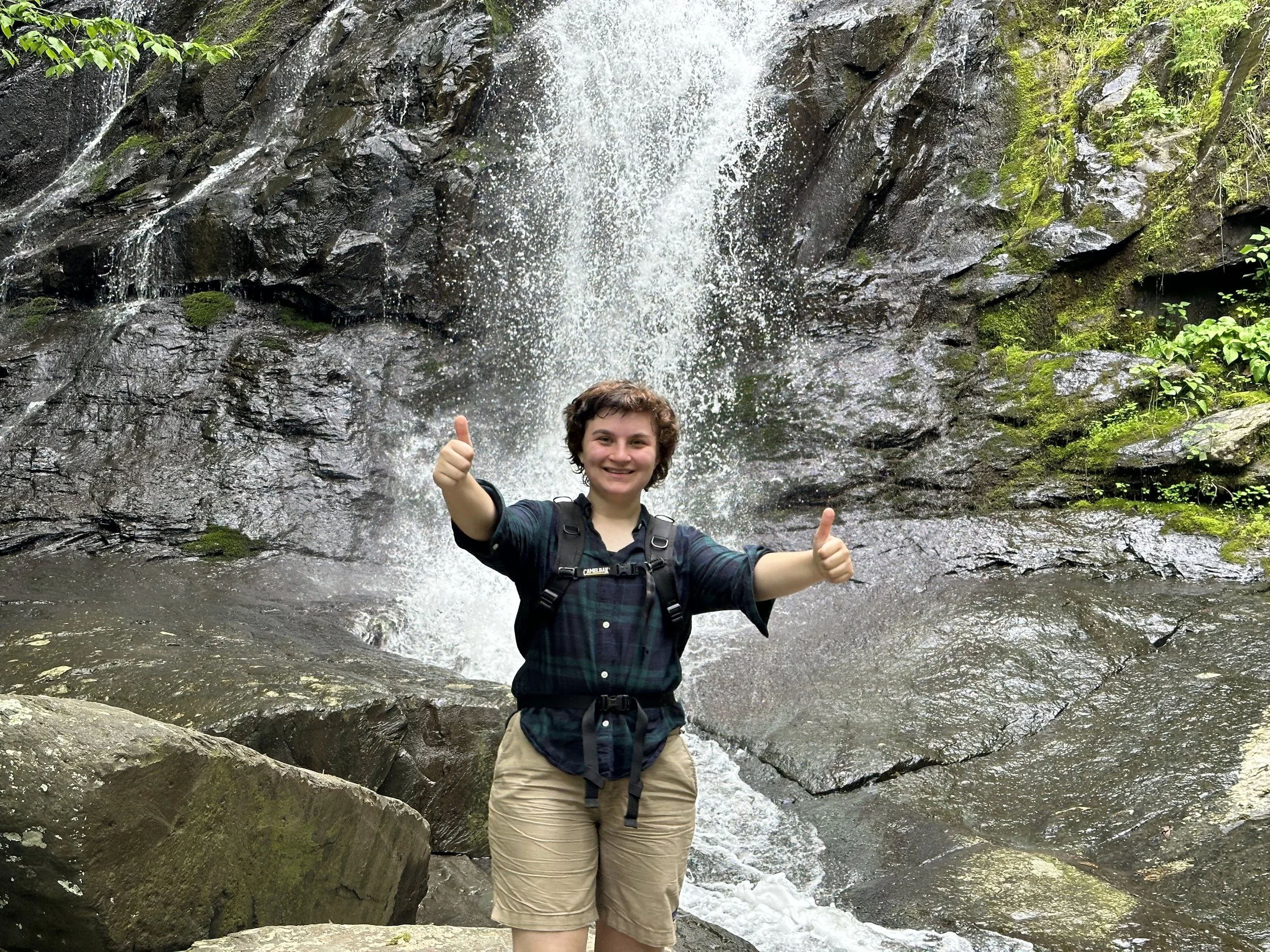
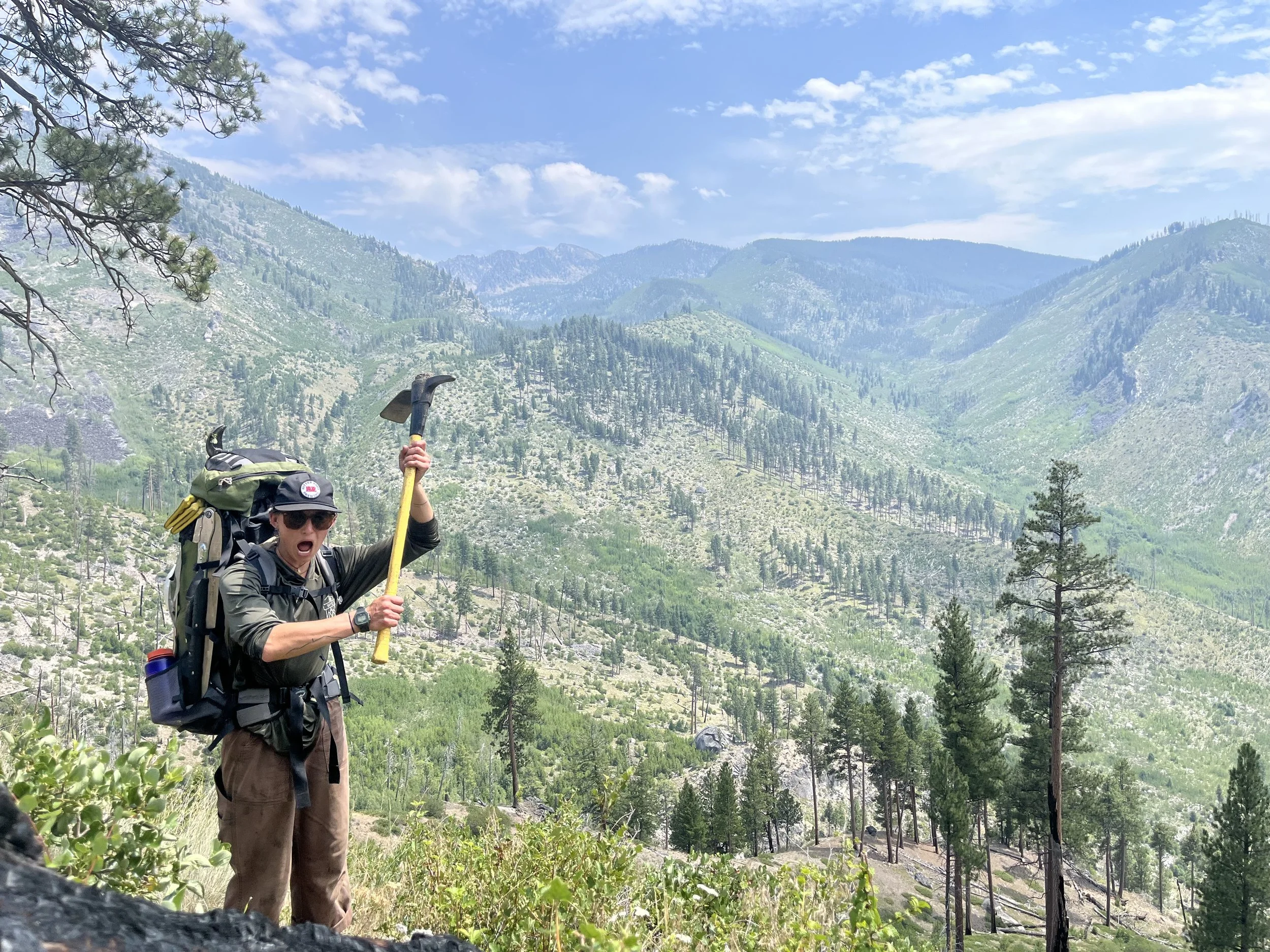
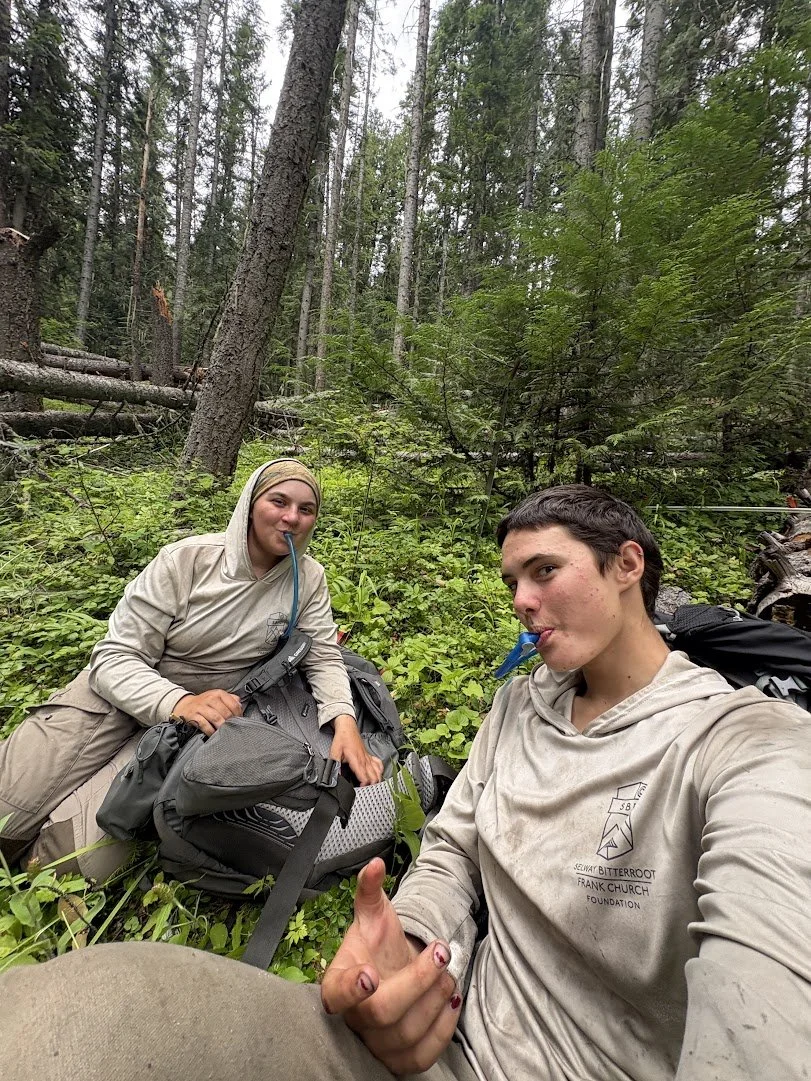
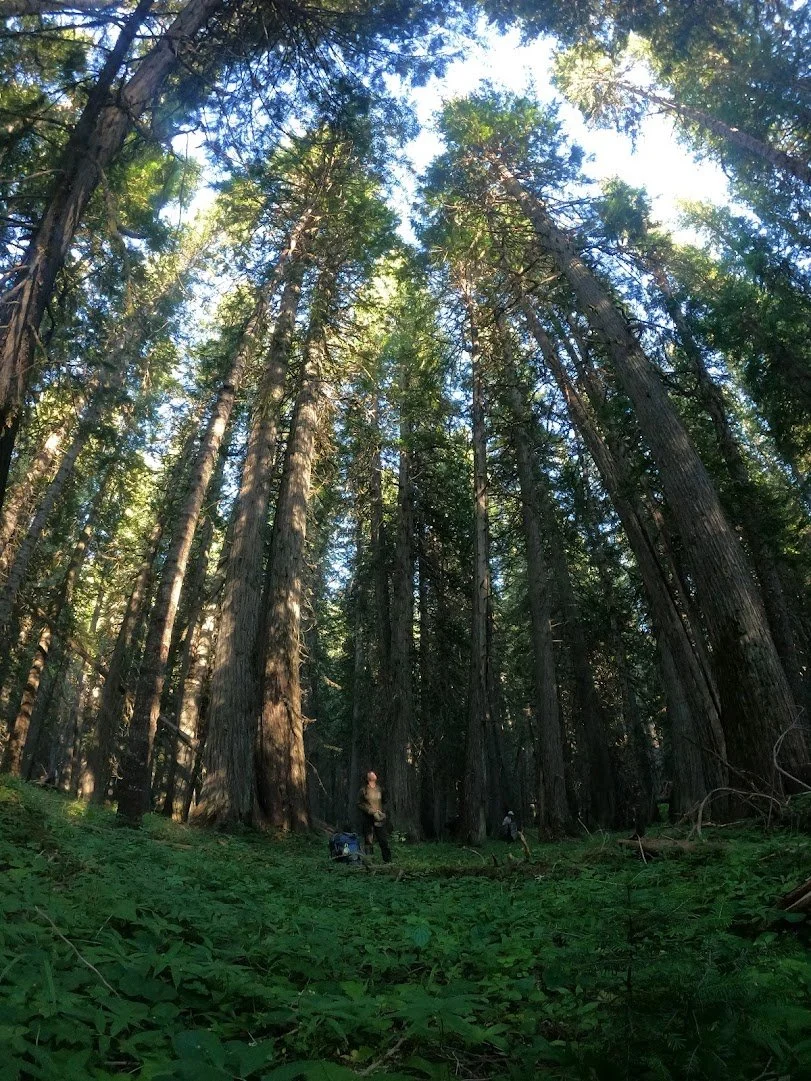
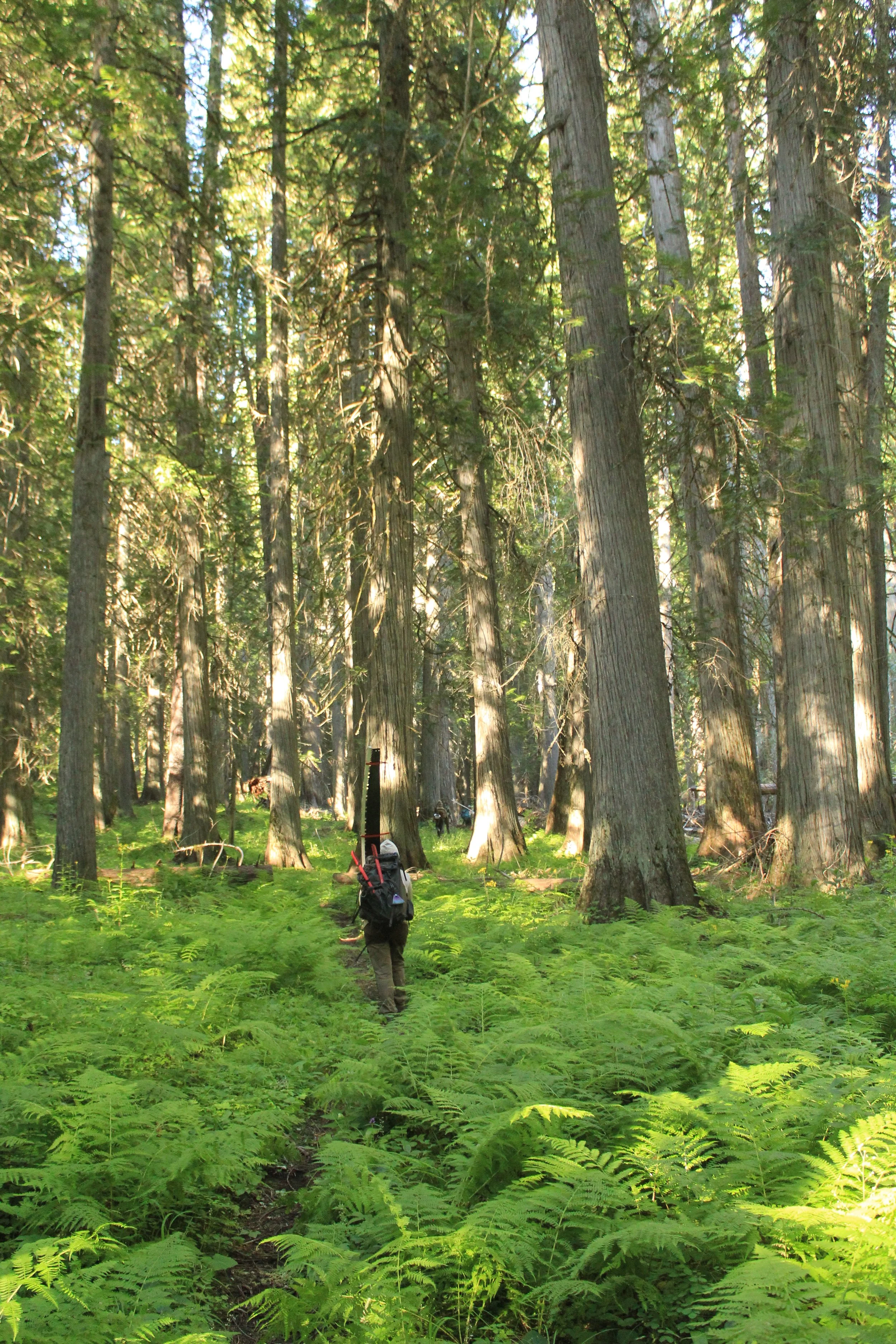
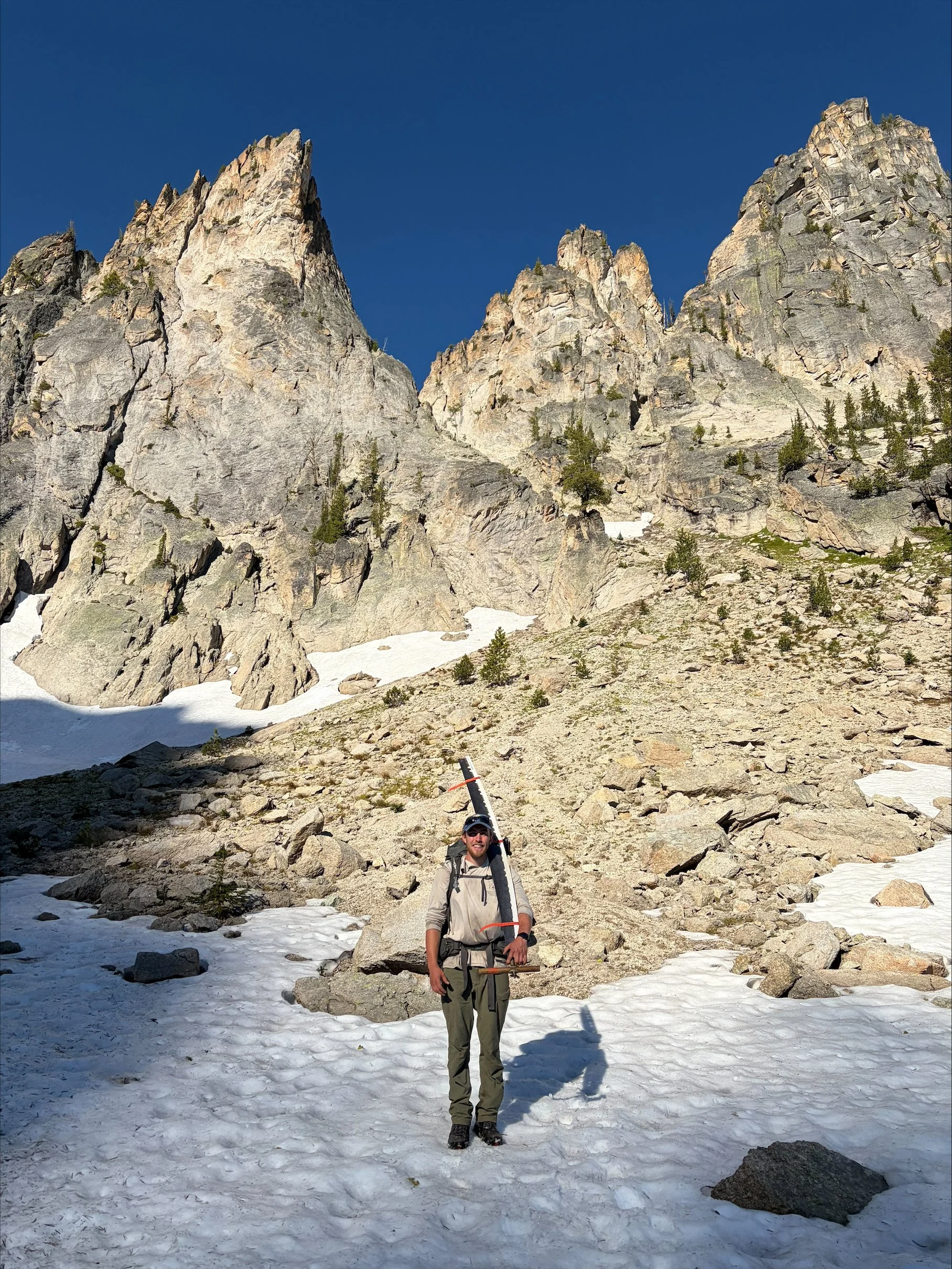
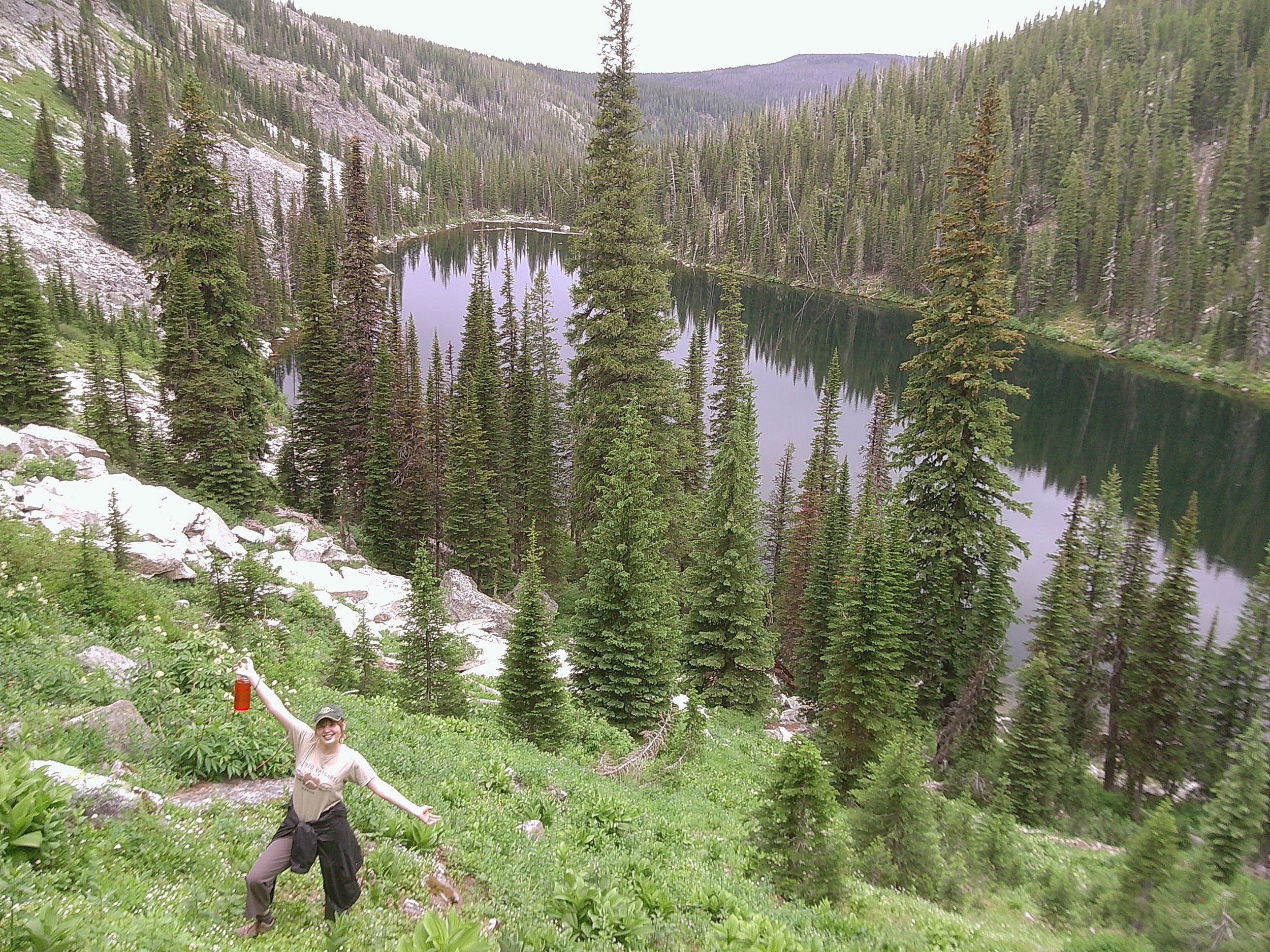
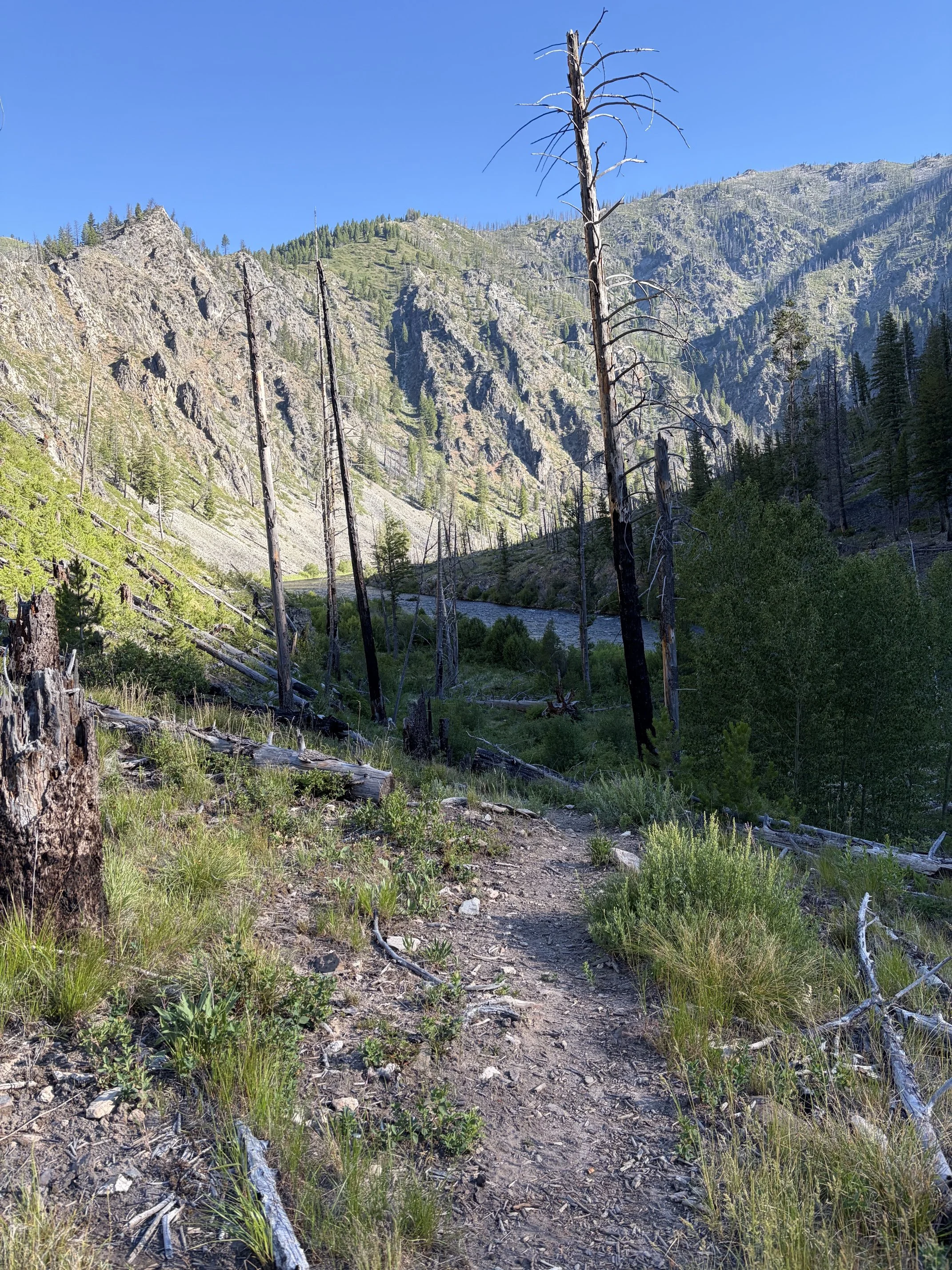
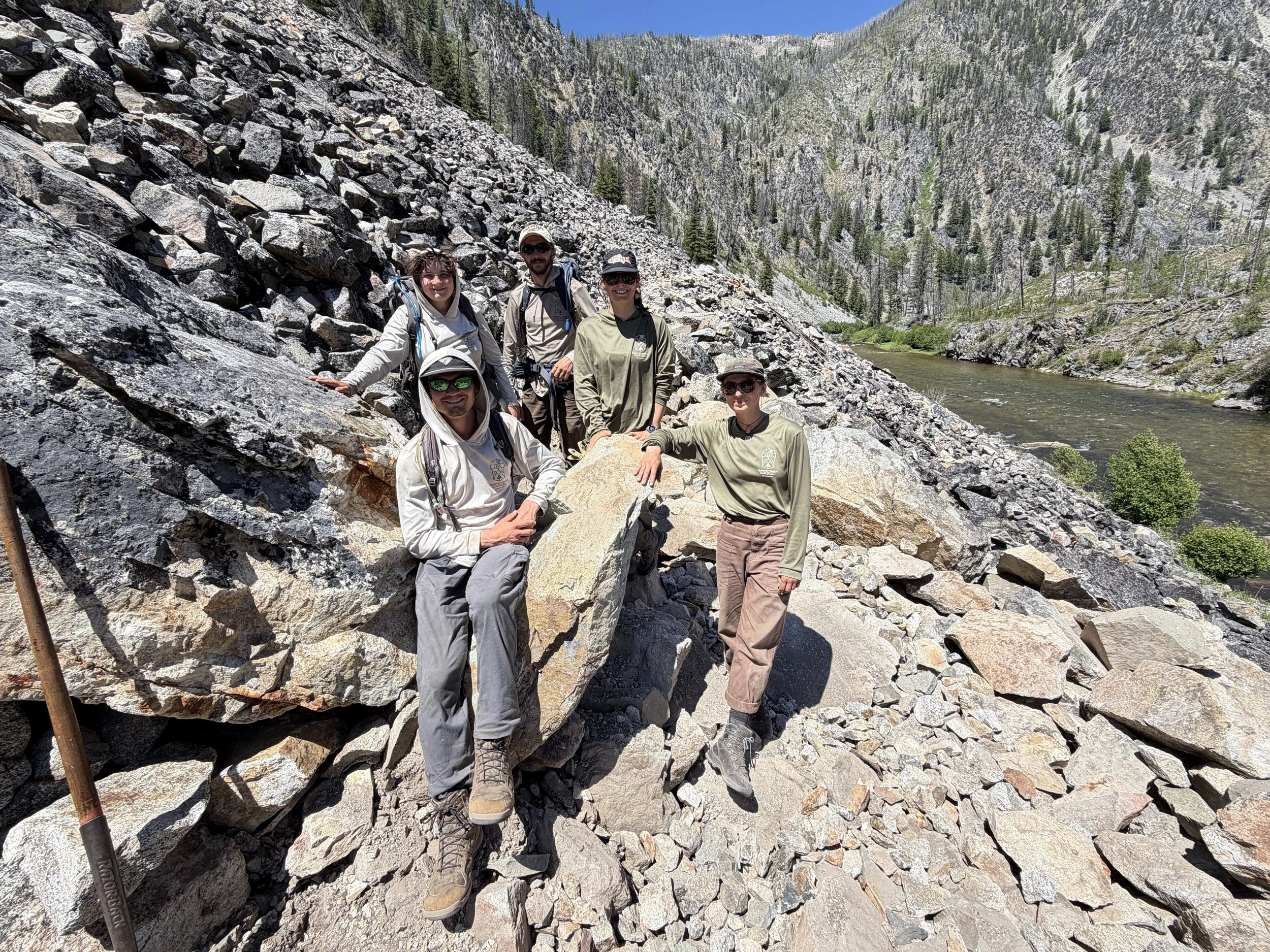
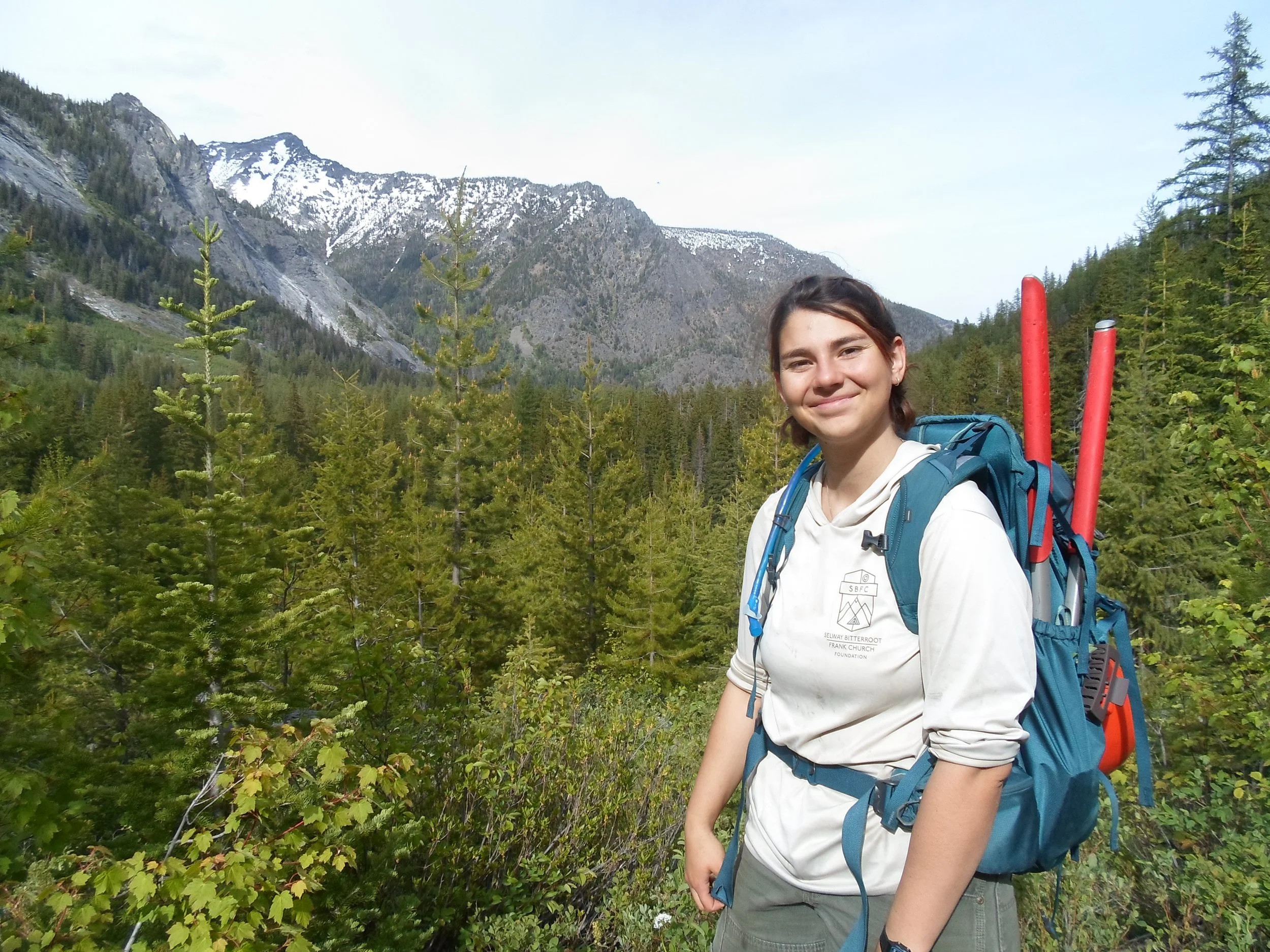
Abe Wilkinson hiking up 62 Ridge to our campsite at Bear Wallow on Day 2 in the Selway Bitterroot Wilderness. We started down by the river! Photo Taken by Riley Sterling

Some go for the freeze dried backpacking meals, some surf the bulk food section at WinCo, and others eat exclusively ramen. And no one judges because we all know what it feels like to get back from a long day of work only to find that you only have the one meal you don’t want. The trick is to find what works, and sometimes it takes a little creativity and (*gasp*) a bit more weight to my pack.  

After a deep dive on Reddit, and trial and error on a couple backcountry hitches I have come to the conclusion that the internet is not helpful, and word of mouth offers the most creative ideas.

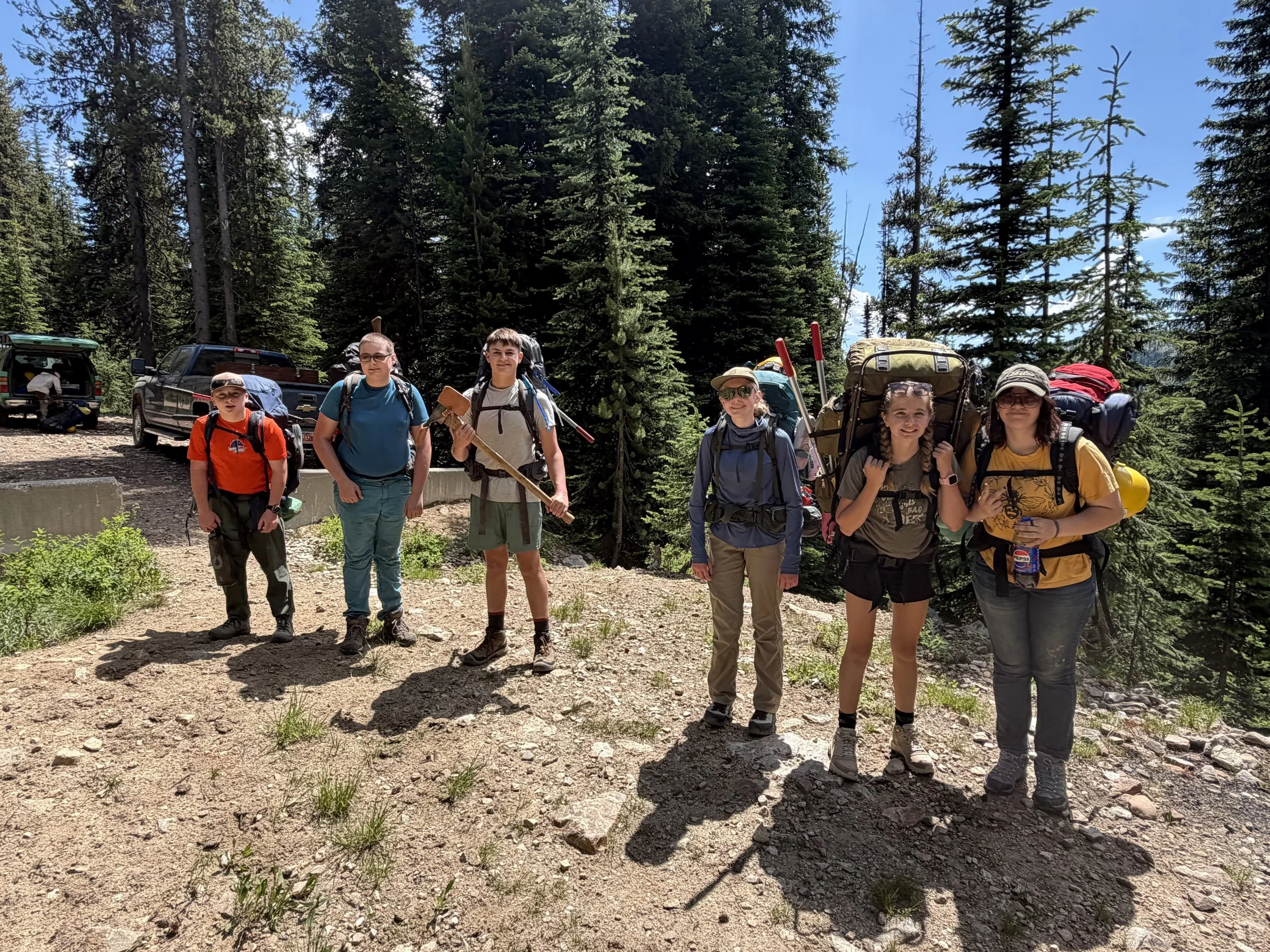
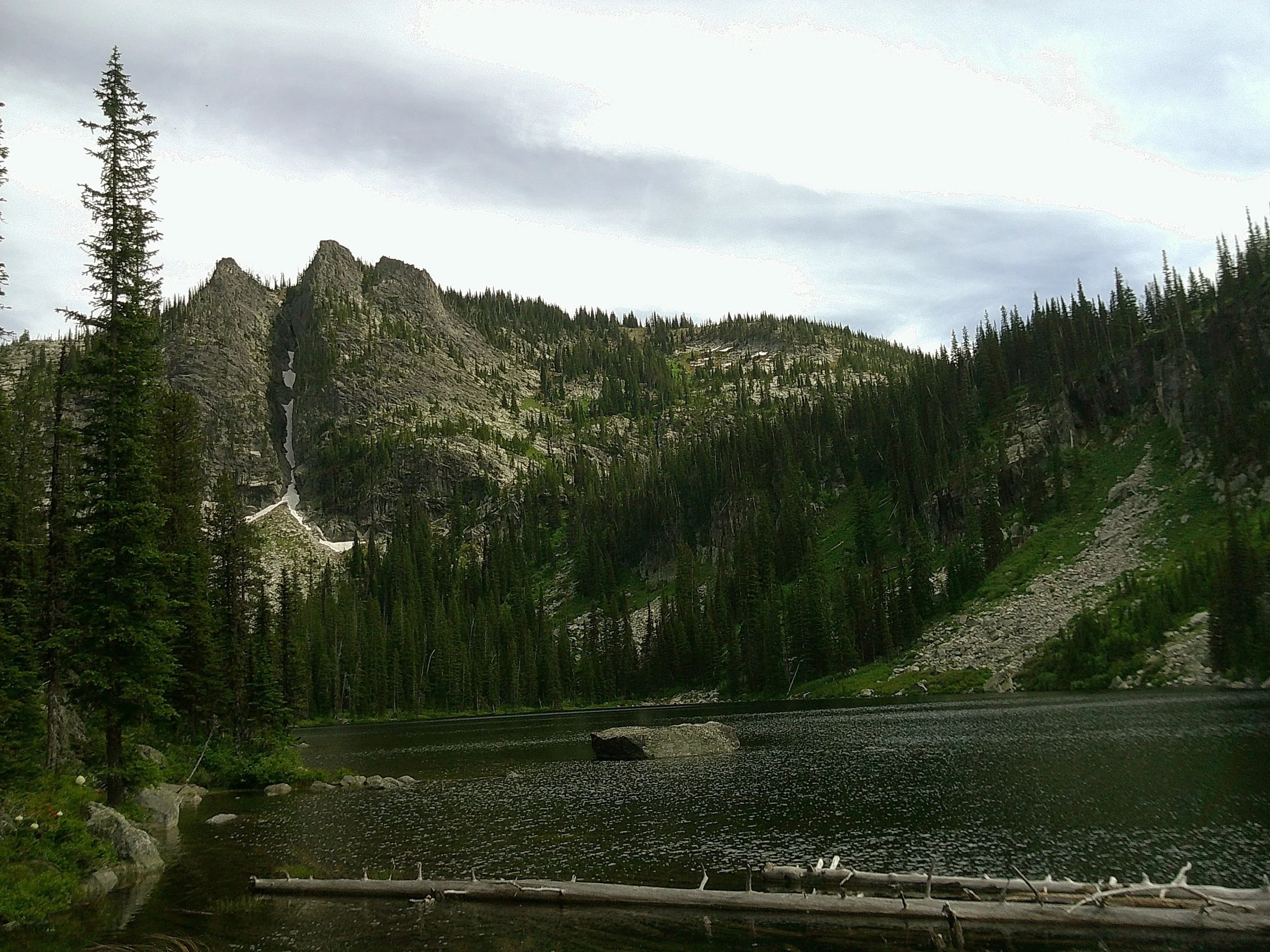
This hitch, 11 of us hiked deep into the Selway Bitterroot Wilderness up to 62 Ridge to clear a section of the Idaho Centennial Trail. I asked my crew what unique items they brought, and the following list was the outcome. 

1. A full rack of ribs

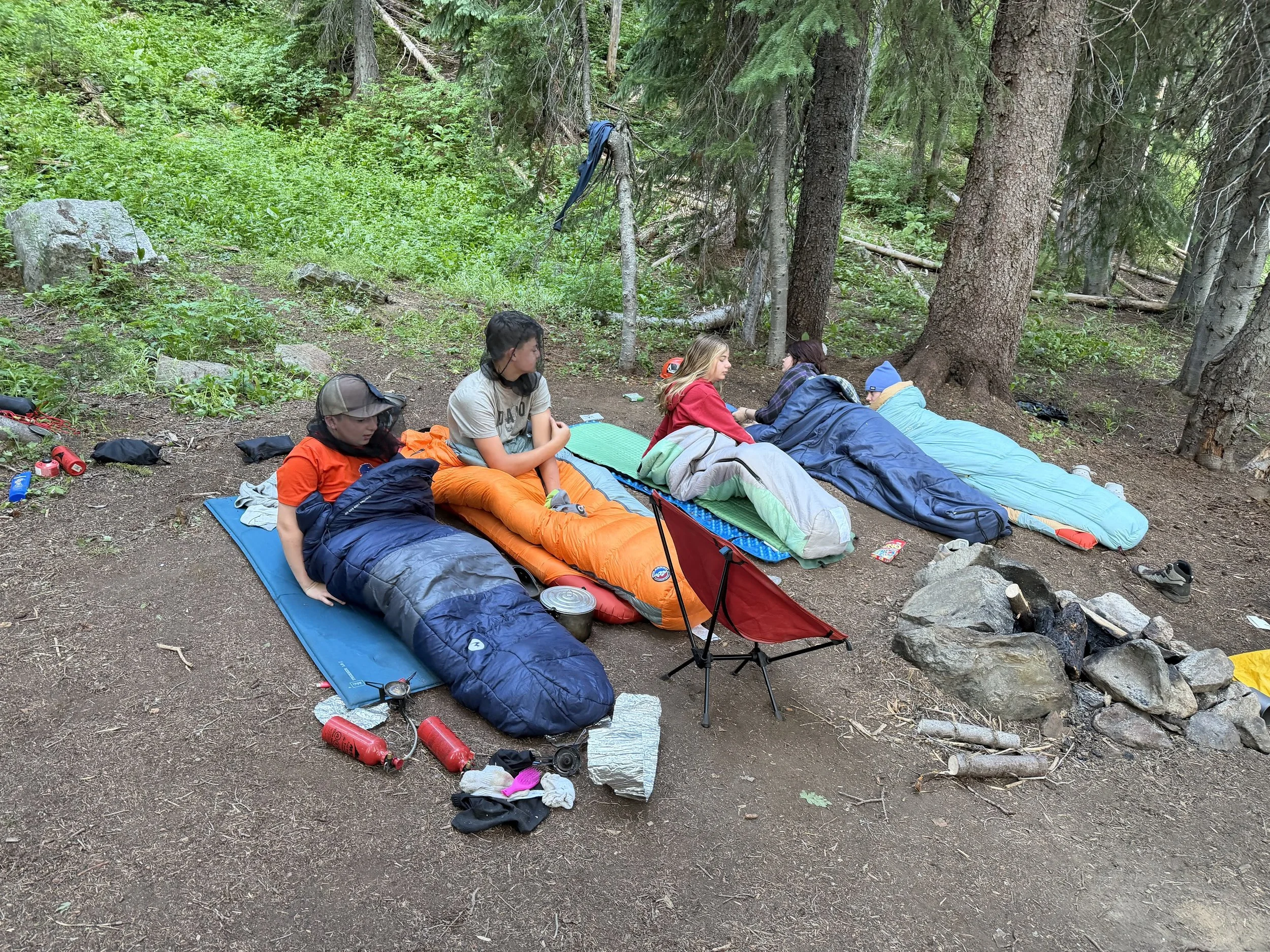
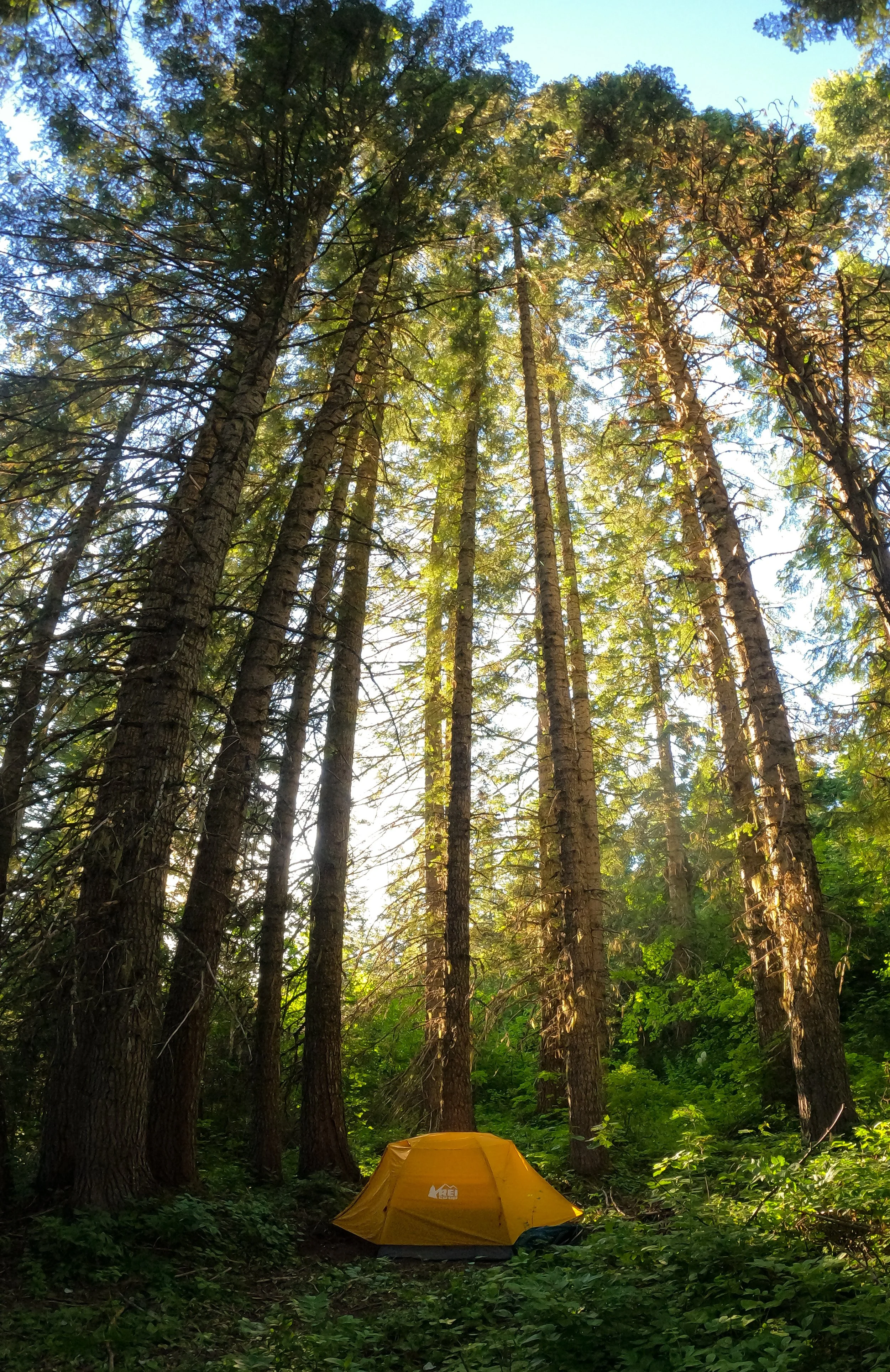
My tent at Bear Wallow on 62 Ridge in the Selway Bitterroot Wilderness. We stayed here almost every night on our 8-day hitch.

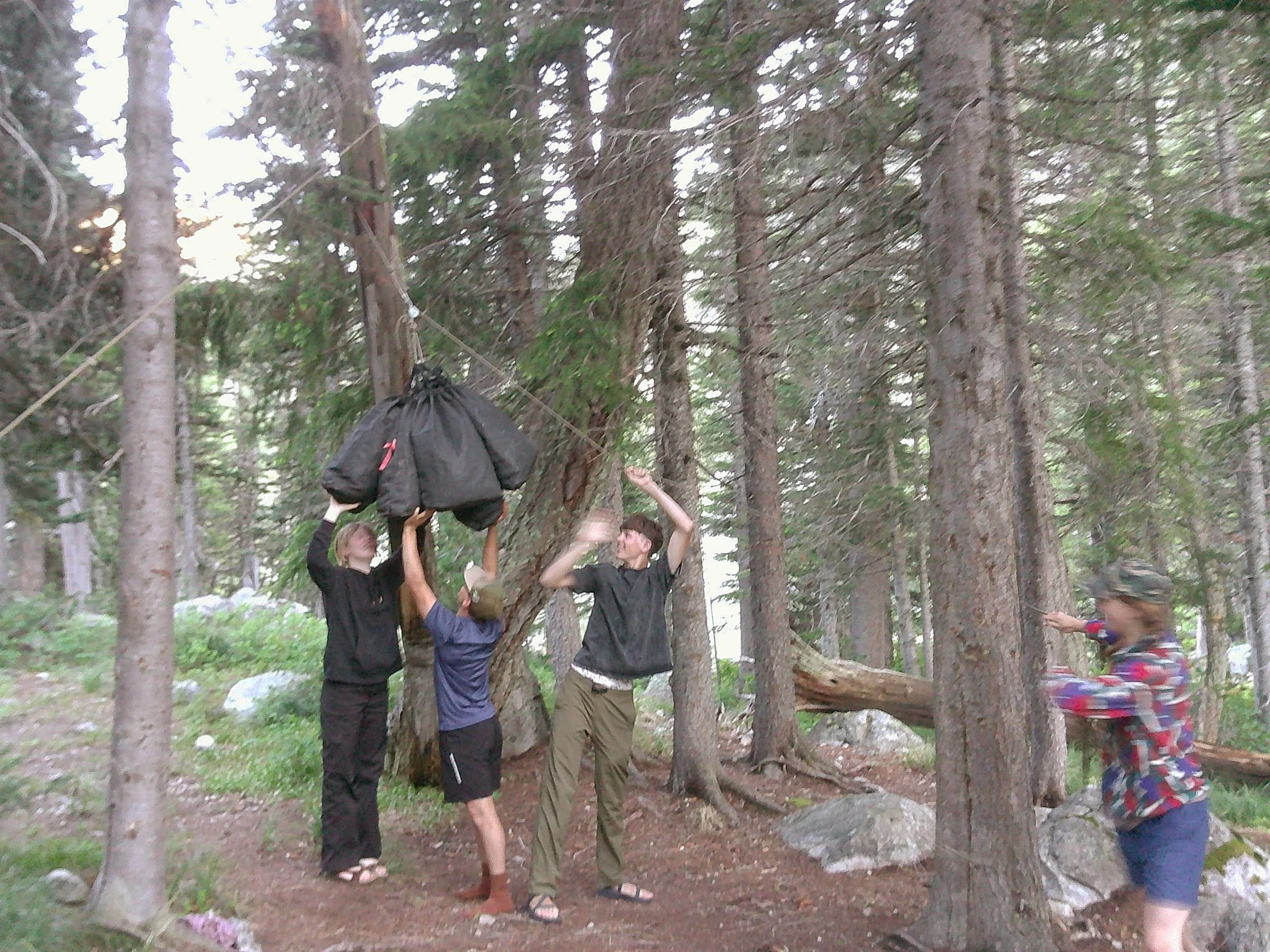
We spent the first two days of hitch hiking 17 miles into the Selway Bitterroot Wilderness. When we arrived at our campsite for the week, my crew lead pulled out a gallon Ziploc bag full of Costco ribs for dinner. Yes, they were bone-in, and yes, he carried the bones out. Let this serve as a reminder that backpacking food can be whatever you want it to be, and lighter isn’t always better.  However, hikers beware! Cleetus (sasquatch expert and reliable source) says this may entice a sasquatch into your camp!

2. Trail sushi

Sophia Evans preparing “trail sushi” for lunch on 62 Ridge in the Selway Bitterroot Wilderness.

There are only so many options for lunches in the backcountry… If you aren’t creative enough. Much of the work we did on this hitch was brushing, and the amount of lopping we did demands something to look forward to throughout the day. One trail tech braved the daunting unknown and brought seaweed, packets of smoked salmon, furikake, mayo, and sriracha for every lunch. She cold soaked instant rice in a small container as well. Consider me impressed! Suffice to say, Reddit is not as all-knowing as I thought. 

3. Olives and Sardines

Hydrated? Yes. Messy? Probably. Worth it? Assistant Crew Lead Nathan seemed satisfied. This was a part of another creative lunch idea. Why have another packet of bland tuna on a tortilla when you can have canned sardines and olives in a wrap instead. During my first two hitches, one of my biggest takeaways is that aggressive flavors can get you through anything, so I don’t blame him for these bold flavors 6 hours into a day of lopping. 

4. Baby carrots

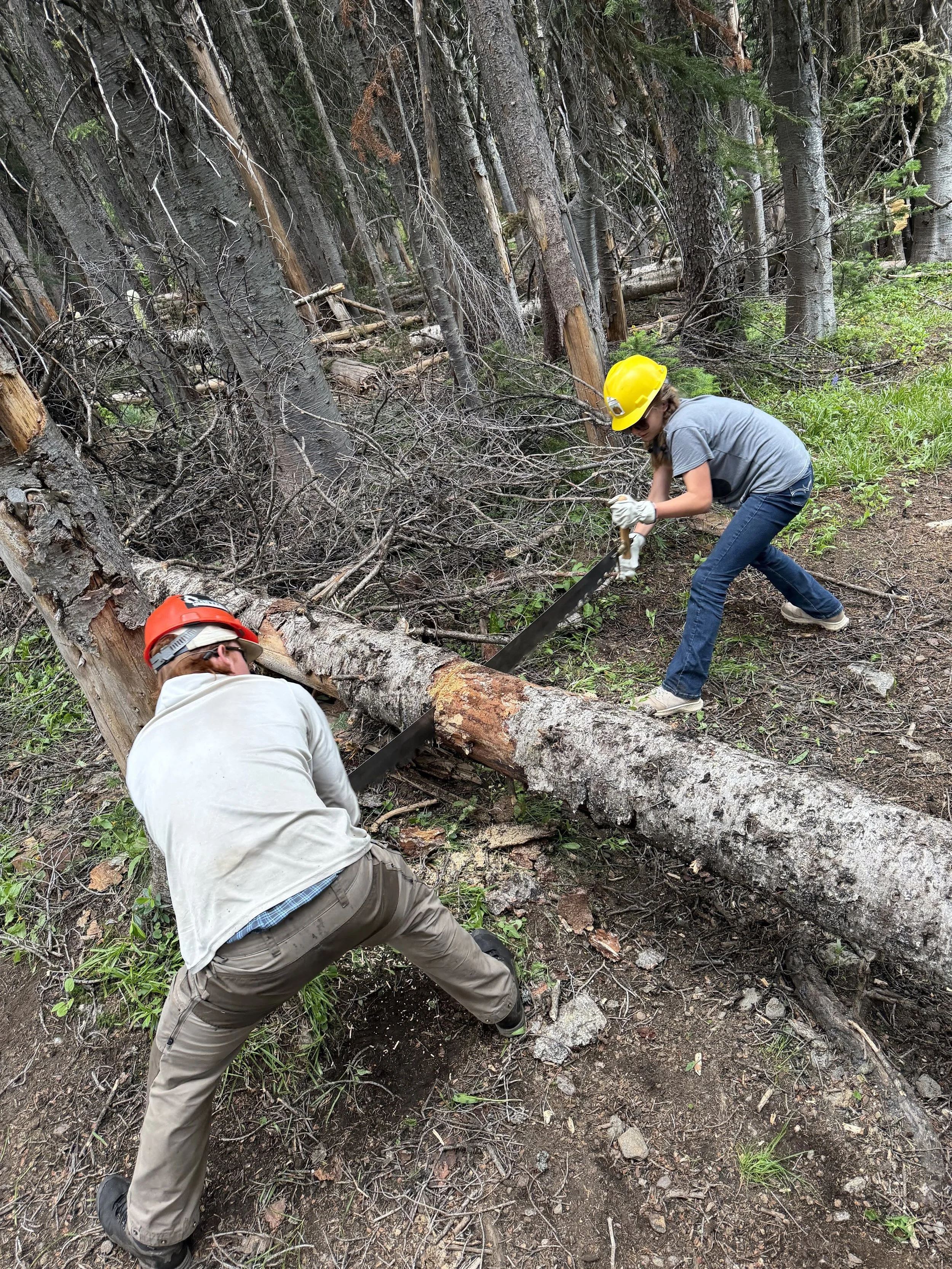
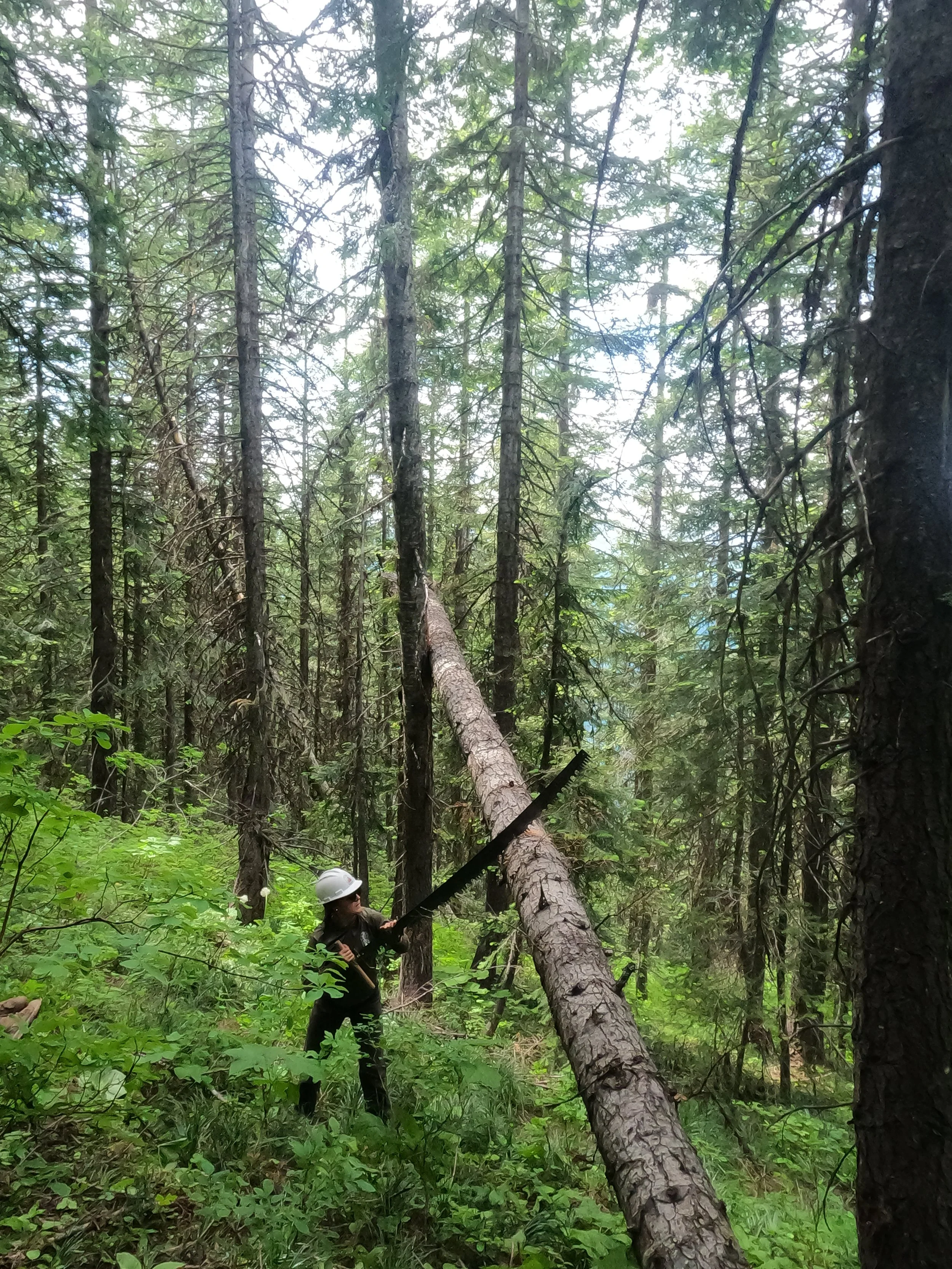
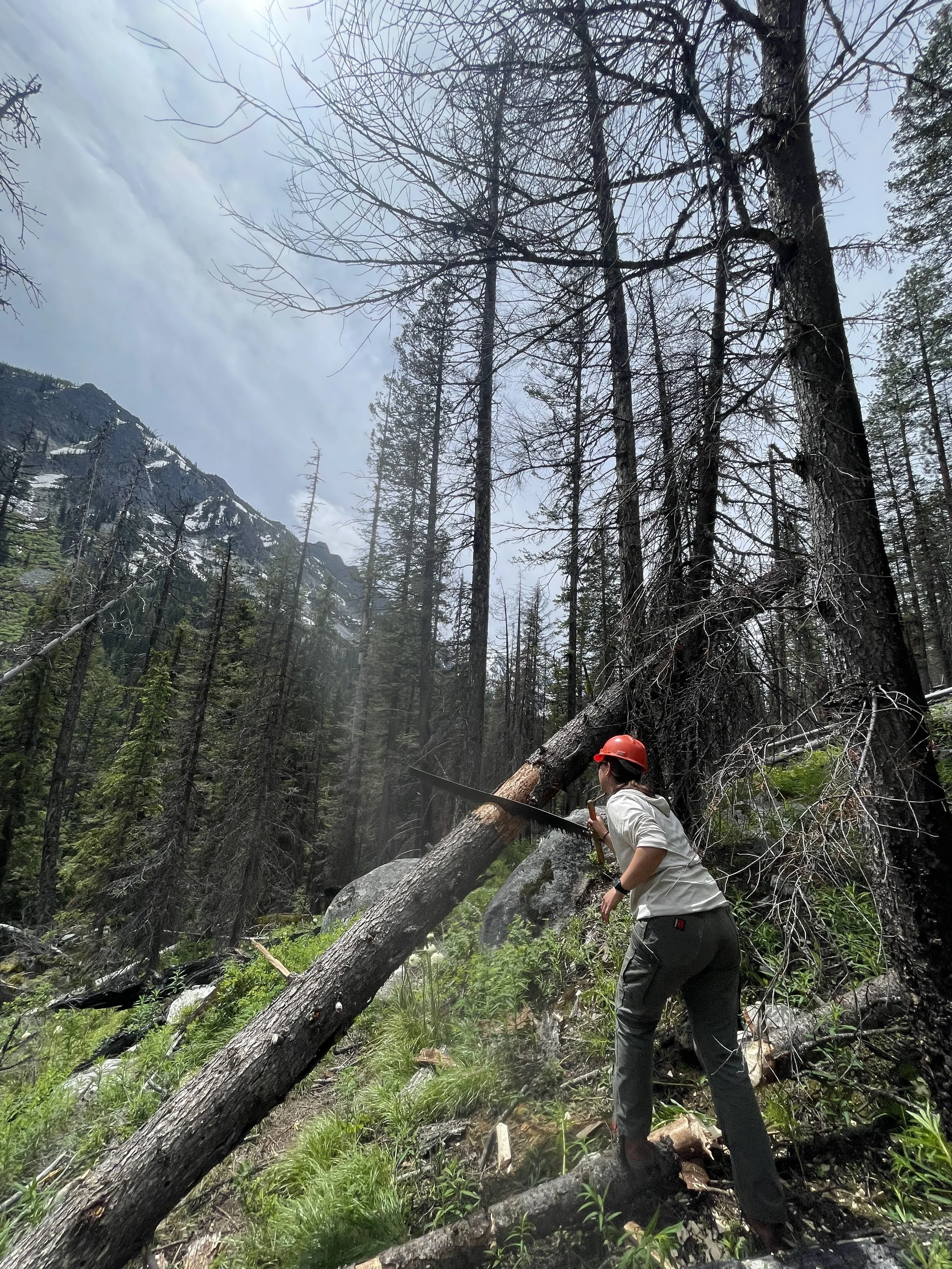
Emma Cianek single bucking a hang-up to clear the 62 Ridge Trail (#606)

The crunch. The freshness. The opportunities. My crew lead, Emma, and I spent a day cutting trees separate from the rest of the group, so we had a separate lunch break after we successfully cleared a big pile-up. Emma put carrots into her wrap, along with a few other forms of nutrients, and as the crunch echoed through the trees I found myself wishing I had something to munch on with that much crunch. Additionally, I have literally never seen baby carrots go bad. I don’t know how that works. What I do know is they are a great backcountry option. With days pushing 90ºF, many things end up being gross by the latter end of the hitch but Emma’s carrots stood the test of time. Carrots may weigh more than dried fruit, but having some reliable fresh veggies to snack on seems worth it to me. 

5. 3lbs of peanut butter

Need I say more? It's nearly half a pound of protein-packed calories per day. And interns gotta eat.

6. Ramen

I know what you are thinking. 

“Riley, that is literally a textbook grocery store backpacking dinner.” 

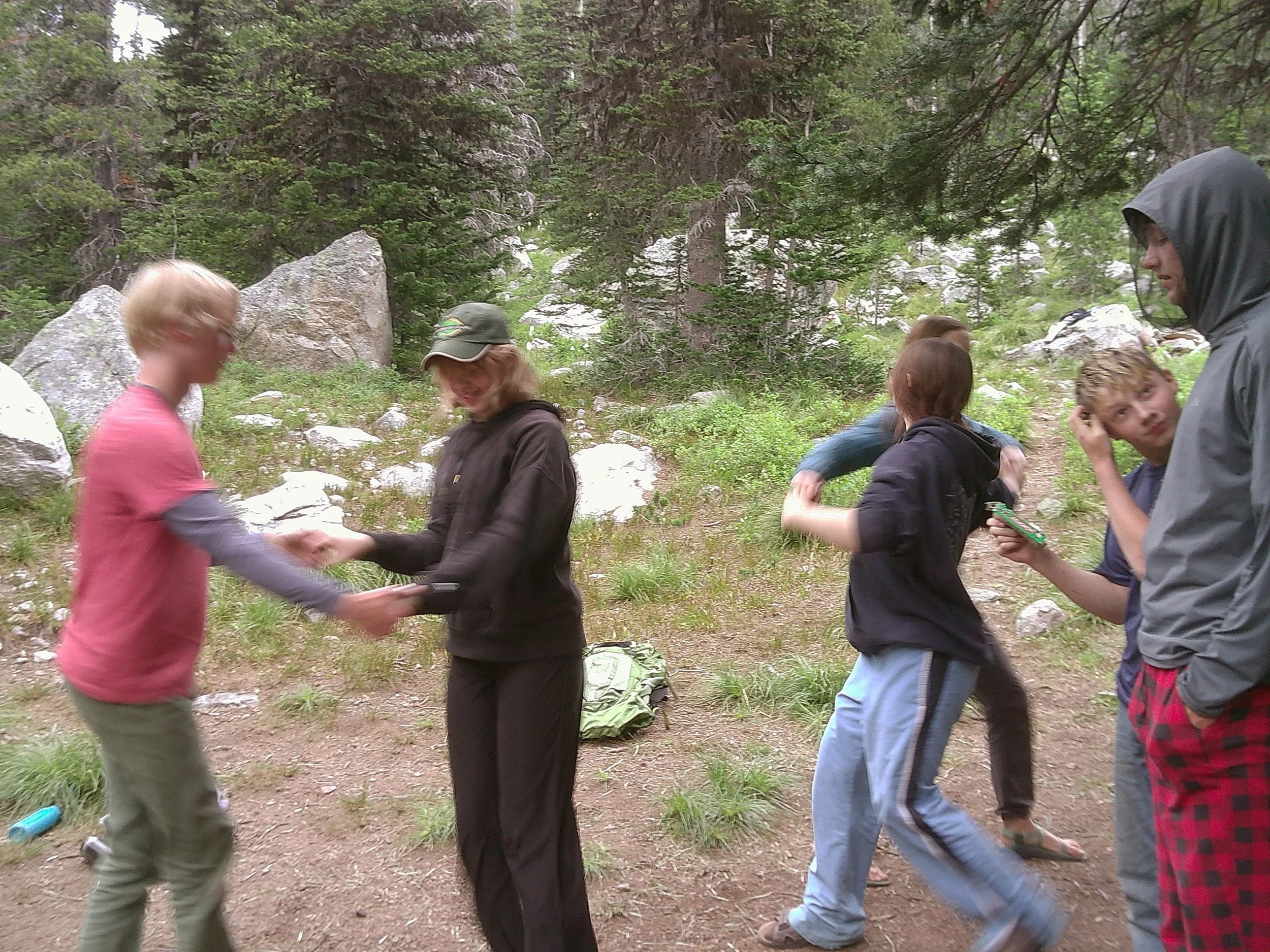
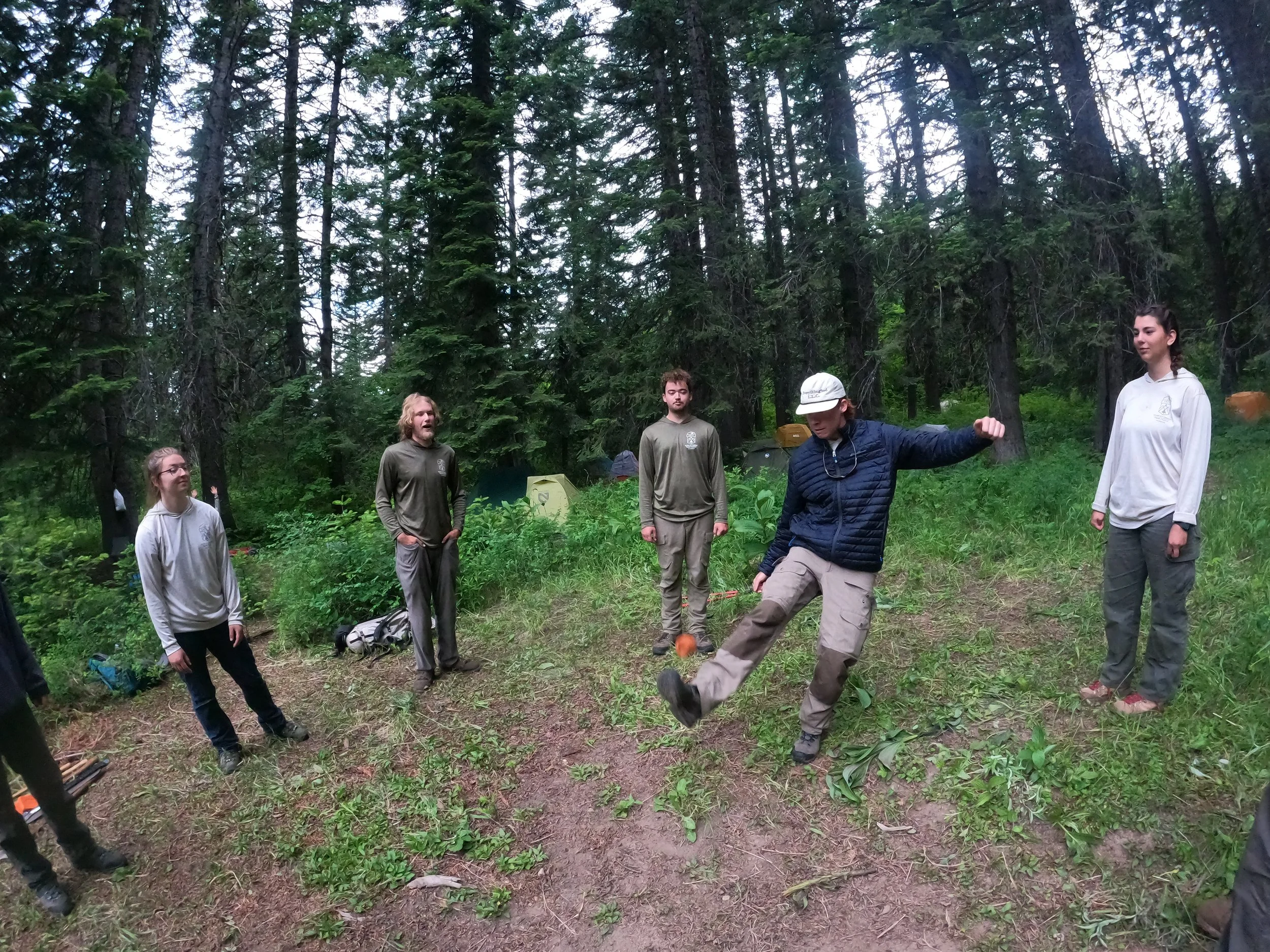
Andrew Geiselhart keeping the hacky sack circle alive at Bear Wallow while Amelia Green, Nathan Grooms, Abe Wilkinson, and Darby Hannon watch with anticipation.

Yes, that is true. However, previous to this job I had never thought of it as a breakfast option. If you are tired of oatmeal or you just like a savory breakfast, ramen is the same weight and is just as fast to make in the morning. And when your crew lead says to try something, you try it (so I did). I will say, after the ramen breakfast I felt like I added more to our daily morning hacky sack than usual. 

While this is not a comprehensive list of the uncommon food items that we brought, it gives a look into the vast options you have when you apply a wider lens to backcountry calories. I now feel I have a lot more to choose from when I’m heading to WinCo on the Tuesday before a hitch. Going forward, I feel much less trapped in the endless loop of oatmeal, ramen, and bagged tuna.


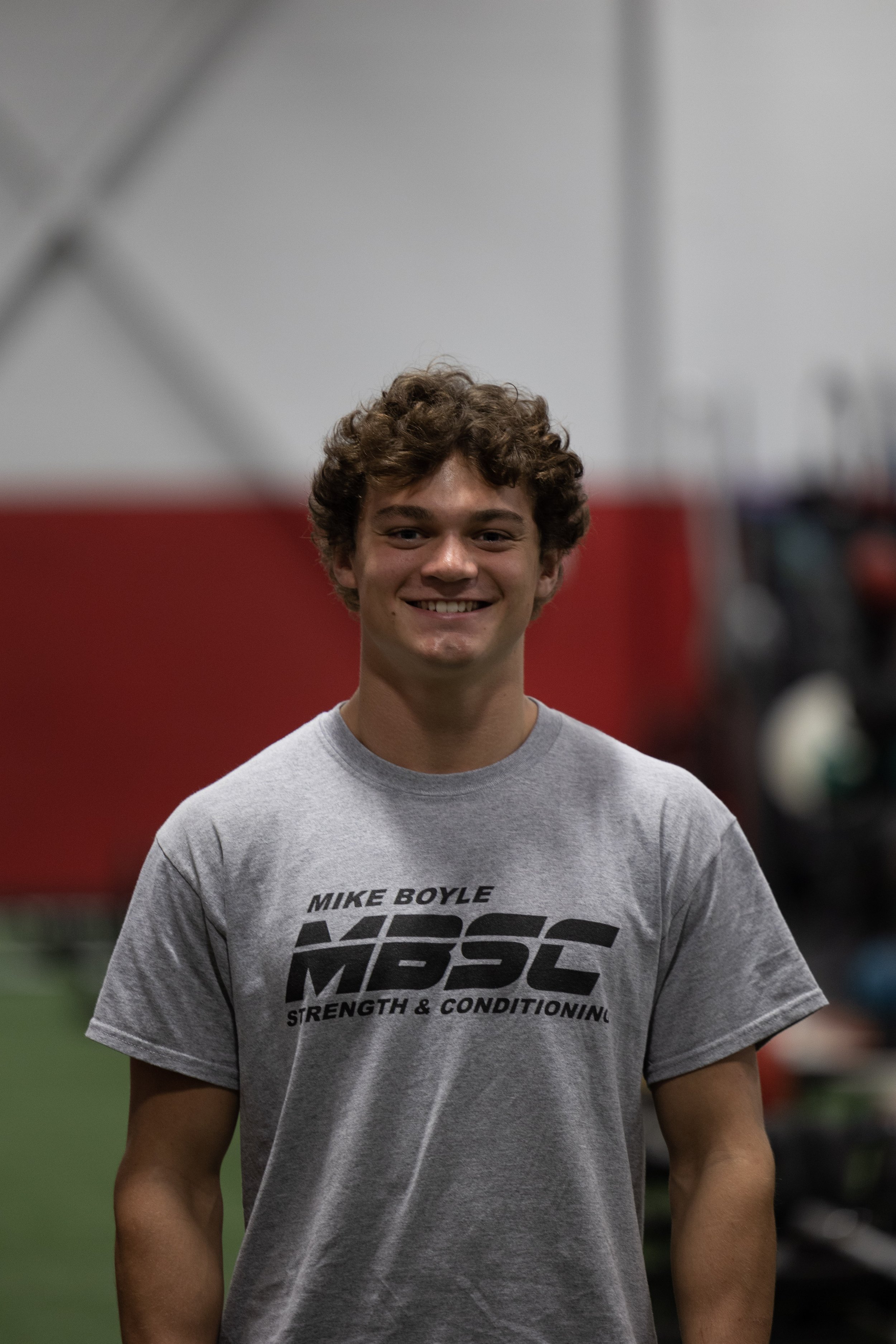
Riley Sterling

Mountain View, CA

Colorado College: Ecology and Organismal Biology

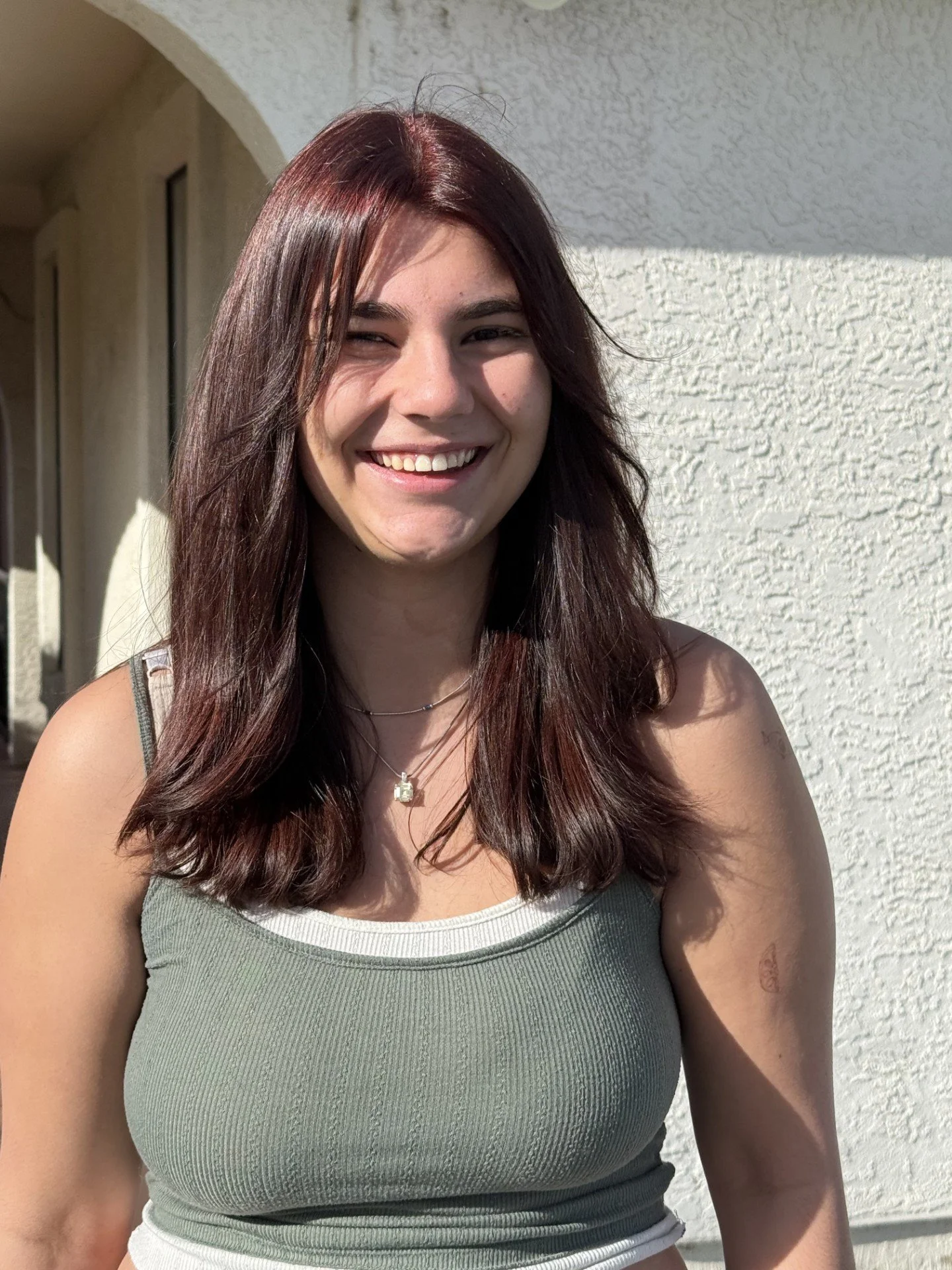
Riley was introduced to the outdoors through canoeing and backpacking trips in Maine, where she grew up. These experiences sparked her interest in ecology and conservation, which she now studies in college. As she got older, she began to see how time spent outdoors contributed to her personal growth, leading her to guide wilderness trips for youth over the past two summers. Through this work, she learned firsthand how access to wild places can broaden perspectives and support conservation efforts. She is excited to help provide outdoor access in a new way this summer!
A Day on the Middle Fork

Cal Osterberger

Wilderness & Trails Intern

Middle Fork River Trail, Salmon-Challis National Forest

6/17-6/24/2026 

It's somewhere between 3 and 4 in the morning. I am about 8 miles into the Frank Church nestled along the Middle Fork of the Salmon River. I wake to the patter of rain on my tent, the lullaby it creates does not soothe me back to sleep. In a bit of a frenzy, I fumble around with the zipper of my sleeping bag, make it out of my tent, and scramble around gathering my boots and clothes I had left to dry out overnight. Once I am back in my bag I sit wondering if my morning will be one of wet boots and soggy clothes. With this on my mind I quickly fall back asleep; nothing I can do now but pray. I wake next at 6 to my lovely alarm, I quickly shut it off, no snooze button for me this morning. I instead opt for setting an alternate alarm at 6:30, breakfast is not in the cards for me this morning. 6:30 comes quicker than I hoped. I stare at my tent for another 5 minutes before getting ready for work. Socks first, mostly dry, are slid onto each of my battered feet. The rest of my clothes follow before I venture out into the damp world of trees and dirt. Time to throw on the boots, my mad dash last night was not in vain. The boots are definitely damp, but dry socks go a long way in the fight for comfort. I grab my backpack, sit down with the rest of my crew (most enjoying a coffee and oatmeal) and begin packing for the day. Lunch, tools, and plenty of water take up about 10% of the space in my 80-liter pack. A quick stretch and briefing from my crew lead follow, retread day. After grabbing a pulaski, shovel, and small hand saw (the famed big boy) I set out with the rest of the crew to start the day.

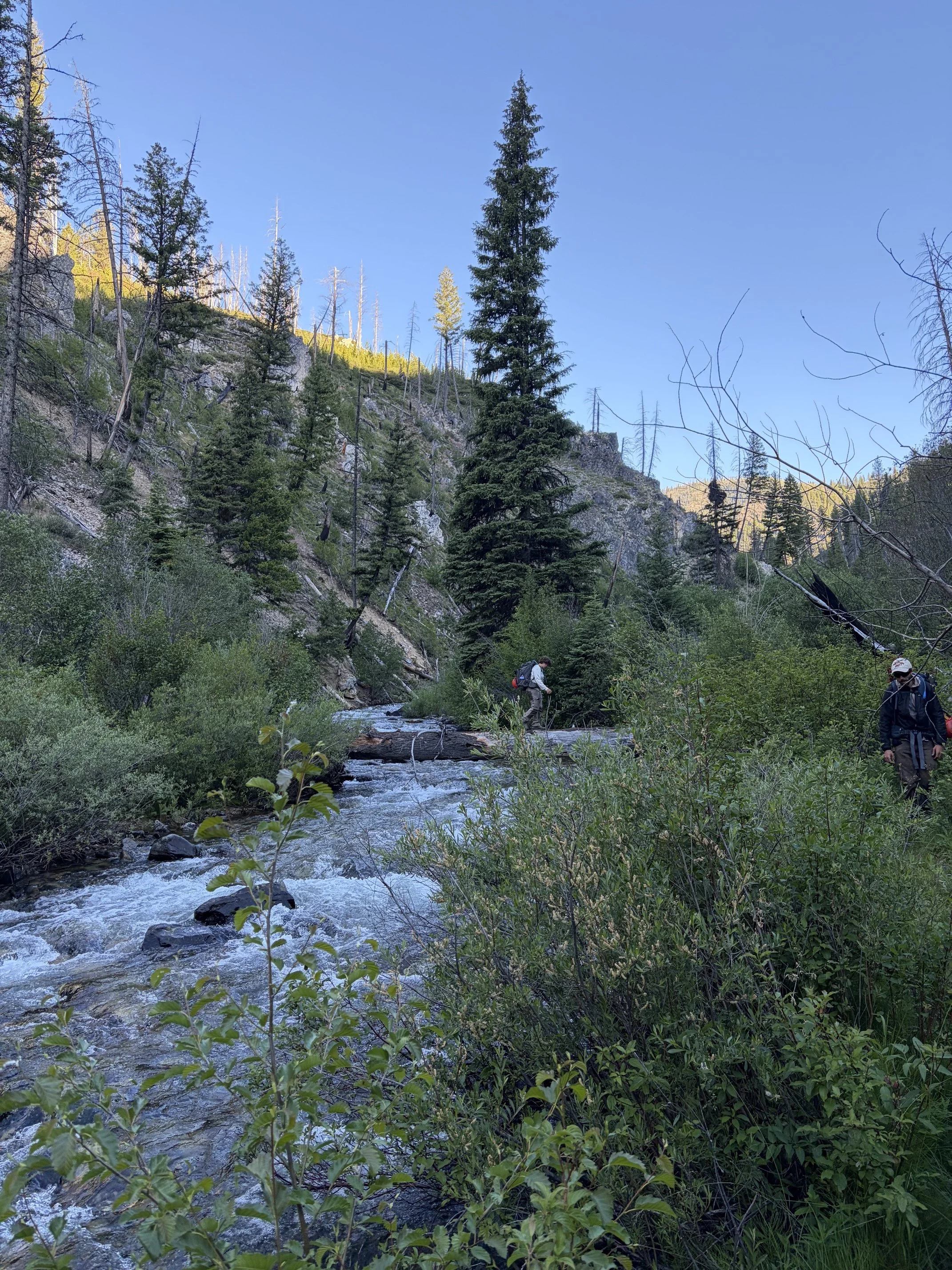
Photo of the creek crossing we did in the morning in order to get to the section of trail we were working on

The day begins with about an hour long hike to get to the point where work stopped last night. A few creek crossings and a caffeinated Clif Bar later and I am starting to fully come back to life. One of my coworkers and I will be a two man retread machine today, powered by watermelon sour patch instead of gas; every piece of blown-out trail in the vicinity is shaking with fear. After a discussion on the proper way to retread a trail, work begins. The tread of a trail is what you actually walk on. Overtime, lengths of tread will deteriorate and sluff off into the abyss below the trail. We are working in a river canyon where the tread is cut into a mountainside. Tread blows out here for various reasons: water, gravity, time, and heavy mule traffic are the primary culprits. In certain sections, small rock slides turn the trail into an uneven rocky sidehill situation for those using it; this is where the shovel comes into play. My morning is spent one scoop at a time, throwing a shovelful of rock from the trail. Progress comes fast, and before I know it, about a hundred feet of tread has been rid of rock and returned to its former, much flatter, glory. Future trail goers will not need ankles of steel for this section anymore, and pack strings will glide by without hindrance. My coworker is alongside me with the Pulaski, a sort of shovel/axe combo tool. His focus is on the sections of tread where it could be said that there isn’t much trail left. He digs, swing by swing, back into the mountainside to reestablish the trail and remove some earth on the uphill side of the tread. If he does his job well, the next group that comes through here will only need to do a little shovel work to get the trail back into shape.

Several hours later, it is lunch time. The damp chill of morning is gone, now replaced by a blazing sun. We are covered in dirt from our toil, and shade is on the mind. After finding refuge from the sun under a Ponderosa, we take a seat. Today’s lunchtime discussion: underrated Saturday nights. Much discussion follows and I chase a tuna packet tortilla with a scoop of peanut butter to settle my empty stomach. We decide that, among other things, hitting your local bowling alley is a heavy hitter in the world of underrated Saturday nights. Lunch culminates in a quick trip to filter more water for the afternoon. Back to work.

Photo of the Middle Fork Trail where we worked, much of this section was where our retread work was focused

5 PM comes, and the rest of our crew meets up with us after a full day of cutting trees out of the trail. We join them for the hike back to camp. Solid progress was made today, and the hike back to camp is now closer to two hours than one, a sign of a solid day’s work. Once we are back at camp, we assemble in a rough circle in the “kitchen” (a somewhat shady patch of dirt) to cook dinner. Tuna mac is on the menu tonight. I fire up my stove, boil my pasta, and before long, dinner is served. Some hot sauce puts the chef's kiss on the meal, and I chow down while we recount the more inconvenient parts of the day. I clean my stove and pot, stow my food for the evening, and head to the river. The end-of-the-day swim is a vital component of my day. It's something I look forward to all day in the blazing sun, but now, as I stand in the frigid Middle Fork, I am having second thoughts. Before I have too much time to reconsider, I lay down in the water. Soon it's over, and I am headed to my tent for the evening, clean (relatively), in a fresh (relatively) set of clothes, and ready for bed. Once in my tent, I lay in my sleeping bag reading a book until I am rudely awoken by said book falling on my face. Seems to happen every night; today we made it about twenty pages before I dozed off, solid work.

The same routine will be repeated for another four days until I hike out and return to a world where Frank does not rule. In the end, I am a gambling man– boots, socks, and work clothes stay out of the tent to air out. Surely it won’t rain two nights in a row.*

(*Editor’s note: It did NOT rain. Boots were dry!)

Group photo of a section which required heavy shovel work to remove rock which had slid into the tread


Cal Osterberger

Boise, ID

University of Utah: Biomedical Engineering

Cal is from Boise. His childhood was spent developing a love for all things outdoors, a time during which the Frank Church Wilderness left a profound impression on him. After spending the last 7 years living outside of Idaho, he craves nothing more than to experience the Frank as an adult who can fully understand how special it is.

Big Creek Trail Adventures

Darby Hannon

Wilderness & Trails Intern

Big Creek Trail, 6/3/26 – 6/10/26

Selway-Bitterroot Wilderness: Bitterroot National Forest

Day 1:

We started the day at 5:30 a.m. to make it to the tool cache by 6:30. When I got to the cache, I set down my pack and notice my tent was not strapped to my backpack. I called my boyfriend, freaking out, and begged him to look for it at his house. After a couple minutes, he retrieves the tent, and races to the cache therefore saving my hitch.

My boss describes the main objective for the week at the trailhead: rerouting a creek that shifted and is now flooding the trail. We hike in and immediately start work on the creek. We finished the day by digging out the original creek bed. When sitting down to eat dinner, my fuel runs out. Then I curled up in my sleeping bag and read the first Hunger Games book until I fell asleep.

Day 2:

We continued working on the flooded creek and completed our objective, uncovering about 50 feet of trail!

Day 3:

Darby Hannon single bucking a hung up tree to clear the Big Creek Trail in the Bitterroot National Forest. Photo taken by Crew Leader, Berkeley. 

We bumped camps, with a new objective of clearing the trail all the way up to Big Creek Lake. 

Day 4:

Today was the best day. We had two saw teams for both saws: Berkeley (crew lead) and I were on a team, and Nathan (assistant crew lead) and Forrest were on the other to clear the trail, while Katie and Andrew spent the day de-limbing trees and lopping. We had lunch as a group on a ridge, with a beautiful view, where we sang “Boogie Wonderland” and laughed the entire time. We made it to Big Creek Lake, where we spent time taking photos, assessing the agenda for tomorrow, then hiking back.

Day 5:

This morning after deciding we weren’t bumping camps, I exited my tent to find it was snowing. We hiked to the last tree on the trail and decided to cut it into three-foot sections to clear the corridor.  We sing songs, specifically from Frozen, and take turns sawing to stay warm. After deciding not to cross the creek crossing due to the waterfall, we work backwards to help Forest Service employees clear their trail. While I was lopping by myself, I heard rustling and looked up to find a moose near me. A couple minutes later he reappears in a clearing downhill from me, where he is eating and we lock eyes for about a minute before leaving to avoid getting charged.  

Katie, Nathan, Berkeley, and I singing a song from Frozen, in the Bitterroot National Forest, during the Big Creek Trail hitch 1. 

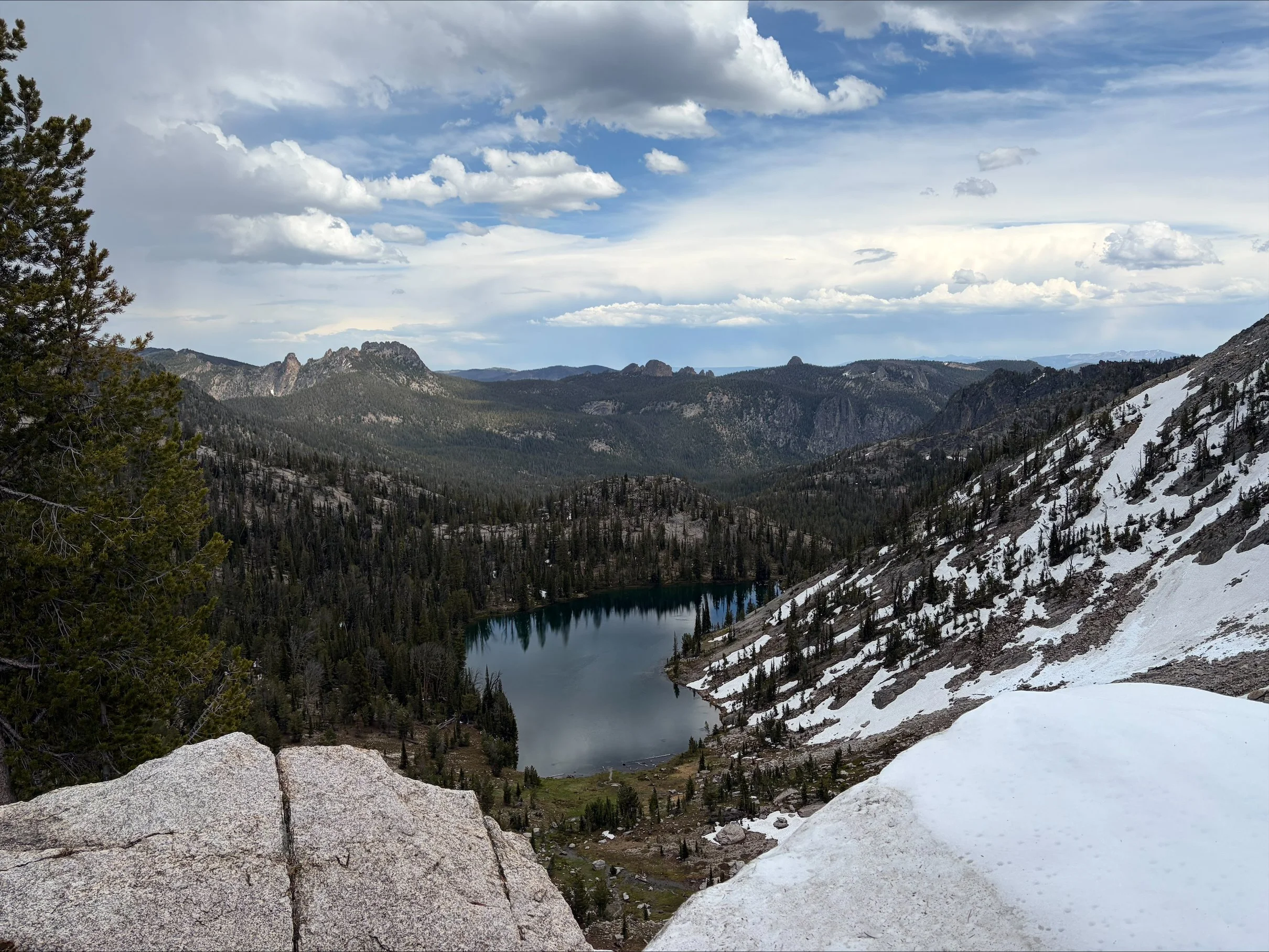
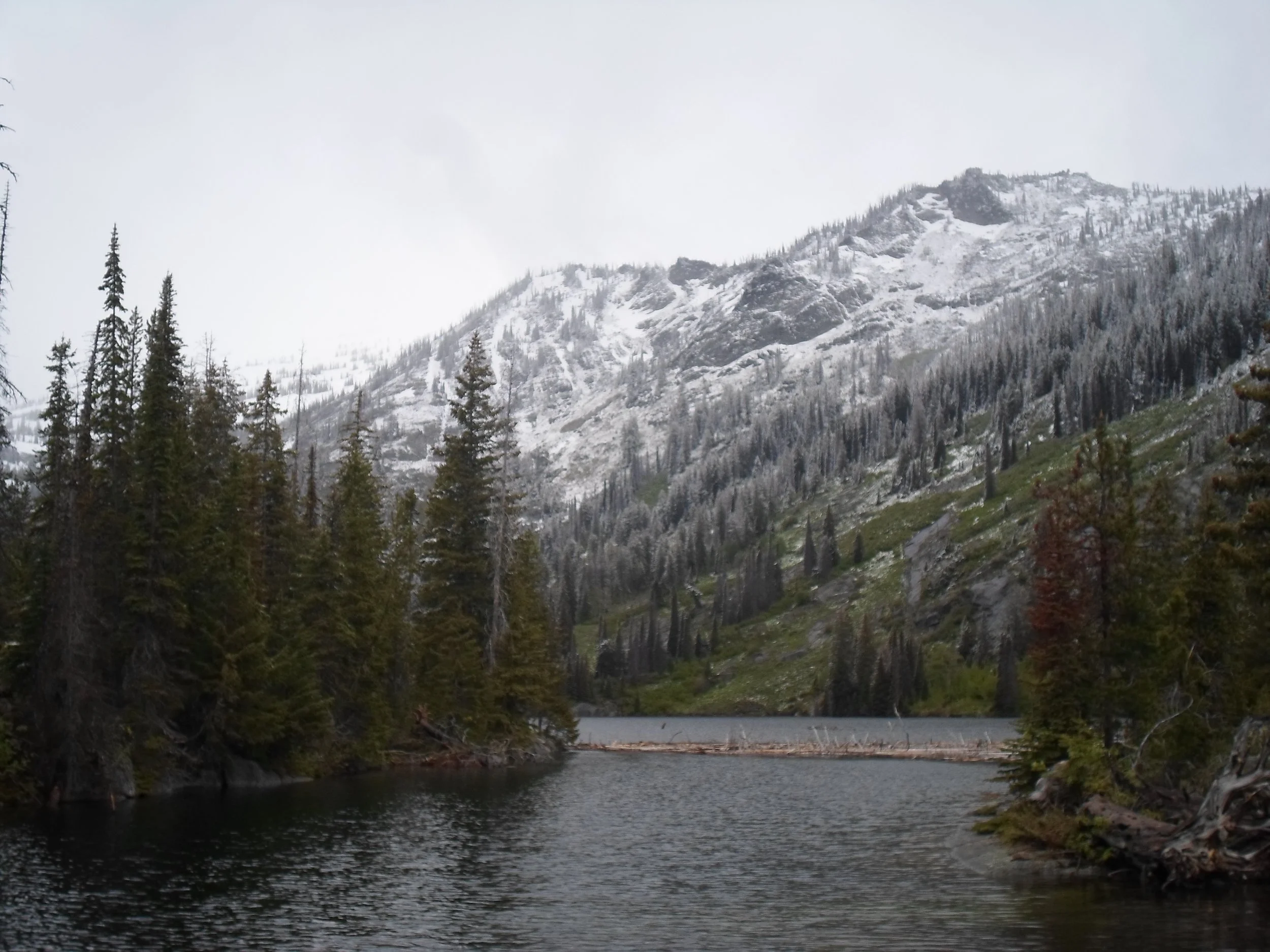
Photo of Big Creek Lake on June 7, 2026, by Darby Hannon on the Big Creek Trail hitch 1. This was taken after sawing the big tree seen in the video. To the right of the photo was a creek crossing with a giant waterfall below it. 

Day 6:

Today I spent ten hours lopping with Forrest on the other trail. After the workday, I spend the entire duration of dinner laughing because Katie kept making me cackle about everything. Before going to bed, I finished the Hunger Games.

Day 7:

Darby Hannon standing in front of a mountain on the daily commute from work to the campsite on the Big Creek Trail in the Bitterroot National Forest. The photo was taken by Katie. 

Today I spent another eight hours lopping back to the original campsite. It was raining on us the entire day, so all of my clothes were wet, making it hard to maintain warmth. We made it back to camp and spent some time eating to regain energy and warmth before joining the group in making a staircase out of rocks. We ended the day and I quickly ate my dinner so I could go change into warm sleeping clothes and get in my sleeping bag.

Day 8:

I was having a hard time staying warm, since we were cleaning tools in the rain before the packers arrive. We played hacky sack to kill time before hiking back to the cars. While we waited, I enjoyed a pickle and got warm. On the drive home, the only thing on my mind was a hot shower.

Hitch #1 in the books!


Darby Hannon

Darby, MT

University of Montana: Forestry

Darby was born in Arizona, and moved to Missoula, Montana to start her forestry degree at the University of Montana. She grew up taking trips to go camping, fishing, and hiking, where she first fell in love with the great outdoors. Darby has experience backpacking, where she discovered her love for nature. This is her first experience working on a trail crew, but she hopes to pursue a similar career in her future.


Wisdom of Wilderness

Jaxon Caufield, Wilderness & Trails Intern

June 3-10, 2026

Selway-Bitterroot Wilderness | Nez Perce-Clearwater National Forest

Day 1: Last night I fell asleep to the white noise of the fan in my apartment bedroom, but tonight I will fall asleep to the white noise of white water. I’ve already met so many new plants that I’ve studied in university courses. The river is gorgeous, but I look forward to getting up the mountains. 

Linnaea borealis, Twinflower, found near the Selway River in the Nez Perce-Clearwater National Forest. Photo taken by Jaxon Caufield.

Day 2: The mountain seemed to keep rising every time I met what I thought was the top a few switchbacks before. The final mile to the campsite was more of a vague line of dirt through overgrown shrub than a trail. I developed a belated appreciation for every foot of maintained trail I had traveled in my previous 21 years. I had fully realized the importance of this work and began the first hours of trail clearing with a determination to spare future travelers from the grip of shrubs on 62 Ridge. 

Day 3: Now that we have arrived to camp, our primary goal was to clear the mile of trail we had scraped through. The hours of lopping brush leaves plenty of time to think, now that I’m many miles away from the constant tide of distractions that my phone could give me. 

Overgrown shrubs and fallen trees blocking the tread on 62 Ridge. Photo taken by Jaxon Caufield.

Day 4: It’s getting colder. The only signs of humanity were the crew, the trail we reform, and the occasional buzz of a bushplane through the valley. I became especially aware of the lack of civilization in the night, where one step out of my tent threw me into an unrecognizable black void illuminated only by the glow of the lantern in my tent and the flashlight in my hand that scanned the trees for bears.

Day 5: This morning I awoke to the patter of precipitation. Accepting that I had to do my morning routine in a drowsy rain, I shoved myself from my tent only to step into snowfall. Then the snow became rain that fell from above and whipped up the mountain, drenching me at all sides as the crew and I fought through the last corridor of brush. A spot of a clear-blue beyond the ridges gave us hope, and that hope flourished when the sky opened up and freed the sun. 

Snowfall on Bear Wallow. Photo taken by Riley Sterling.

Day 6: Today was chilly, but yesterday left me grateful for every moment that it wasn’t snowing. In honesty, in the earlier days of this hitch, I was counting down the days I could return to the easy routines of society. But now, walking to my bear hang for food has made me more grateful for meals than shuffling a couple of feet into my kitchen. 

Erythranthe guttata, Seep Monkeyflower, found near the Selway River in the Nez-Perce Clearwater National Forest. Photo taken by Jaxon Caufield. 

Day 7: The forest was not ready to let me go without drenching me a few more times. With our tasks complete, the crew decided to make one, strong push to our vehicle rather than spending another wet night on the river. As I marched through the trail, I reminisced on a summer camp of my youth during my last summer living in McCall, Idaho. The forest drenched me then as it does now, and I found at a young age that, once I had accepted the discomfort of wet socks and held out for the warmth of the indoors I would inevitably return to, I respected the rain. Such is the way of not just tramping the outdoors, but traveling through the experiences of life. What a privilege to be taught by the forests of Idaho then, and such an honor it is now. 

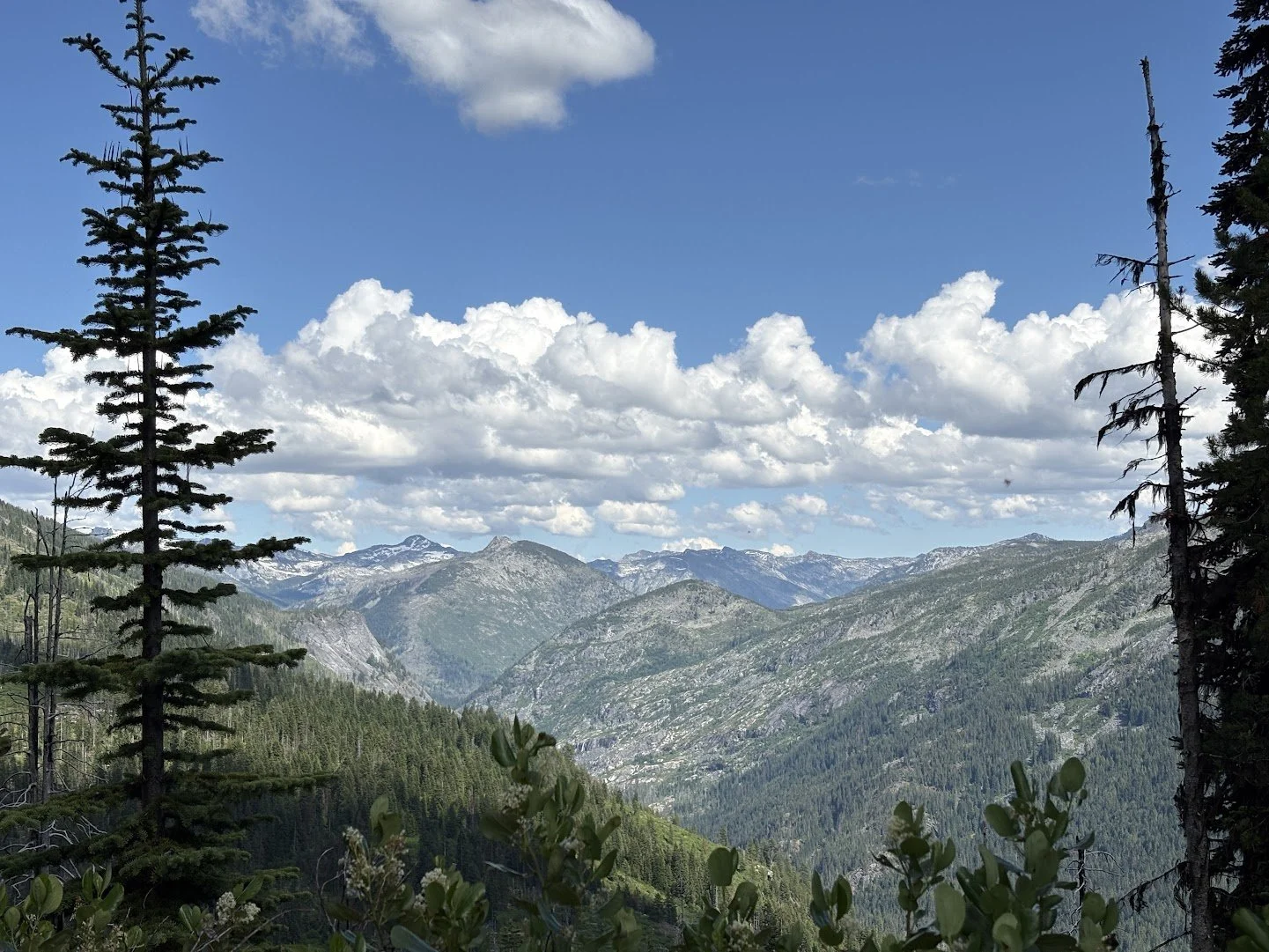
View of the mountains of the Nez-Perce Clearwater National Forest from the cleared trail. Photo taken by Jaxon Caufield. 


Jaxon Caufield

Missoula, MT

University of Montana: Wildlife Biology

Jaxon was born and raised in McCall, Idaho, just west of the Selway-Bitterroot Wilderness Area. Today, he is a student at the University of Montana studying wildlife biology and political science. Jaxon has previously been an intern for the State of Montana Arboretum and Comal Conservation, primarily hosting their social media accounts. He expresses his love for the outdoors through long-distance running and painting, and has long dreamed of spending time in the wilderness of Idaho, which led him to the Wilderness & Trails Intern Position.

Students of the Crosscut Saw

Andrew Ehms

Wilderness & Trails Intern

Training, 5/18-5/22/2026

Nez Perce-Clearwater National Forests

Two SBFC interns learning to use a crosscut saw at the NRWSI in May.

People of all backgrounds came together to attend the Northern Rockies Wilderness Skills Institute at the historic Powell Ranger Station along the Lochsa River, with at least one common interest: dedicating their summer to the conservation of public lands. Recognized for their continued dedication, people like Adam Washbeck, Regional Saw Program Manager for the United States Forest Service, led the instruction of a budding workforce that has arrived for the season.

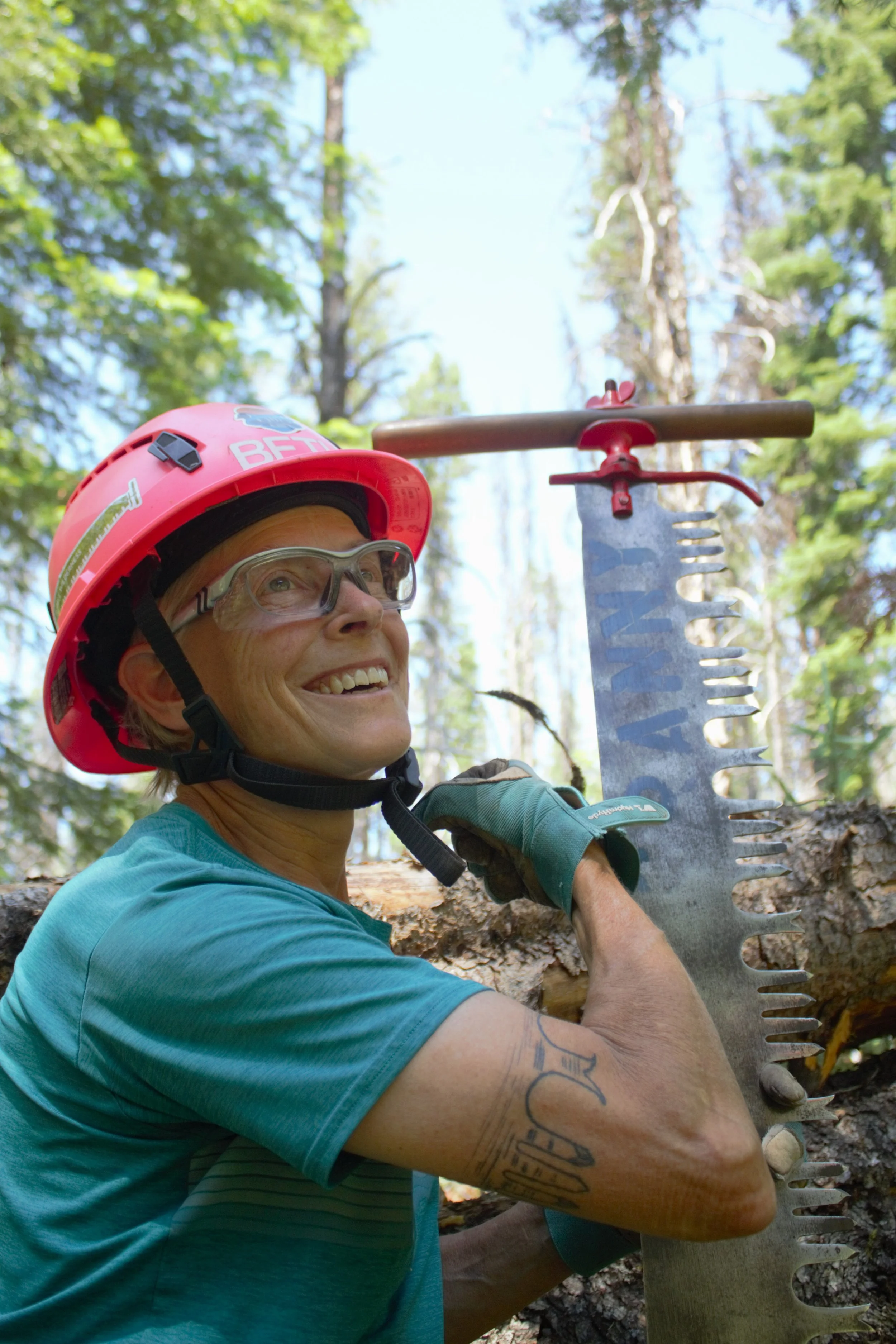
Josh and WTIntern, Darby, near completing the back cut on a large Grand Fir. In rising a little too high for their preferred stump shot, they learn just how much lift wedges can provide!

While the widespread use of chainsaws for logging evolved from the crosscut saw, the crosscut saw survives on a niche in wilderness conservation, cut out for itself by its primitive qualities. The Wilderness Act of 1964 deemed motorized use a threat to congressionally designated wilderness areas, sparing the non-motorized crosscut saw from extinction. Passing on the knowledge of how to use such a tool effectively in the field was critical. Commercial manufacturing of crosscut saws in America ceased during the 1950s. Therefore, the saws we hold in our hands are also relics that need to be maintained properly to ensure their preservation. Without them, the sprawling network of trails leading the public into wilderness would remain inaccessible, by trees that have yielded their position in the sky, but not on the ground, to any force other than a saw.

Two CCC men cross-cutting a log with a saw in 1939. ("CCC Men and Crosscut Saw", Civilian Conservation Corps in Idaho Collection, University of Idaho Library Digital Collections, https://www.lib.uidaho.edu/digital/cccidaho/items/cccidaho1007.html”)


Andrew Ehms

Webster, NY

SUNY: Geology

Andrew attended New York state college to study geology. Field courses required for professional licensure introduced Andrew to Montana for the first time. He is returning to Montana after trail maintenance for the SCA in the Adirondack Park as well as land stewardship for the Appalachian Trail Conservancy in Virginia.

Diving In!

Ella Pattison | Wilderness & Trails Intern

Internship Training- Weeks 1 & 2

I landed in Missoula the day before we started (from Tennessee/Georgia), and I was able to meet almost everyone before we began work the next day.

Ella during Wilderness First Aid training at the SBFC office with a fake eye impalement - taken by Krissy Ferriter

The next morning, we all piled into a couple cars and went to orientation. The first few days were filled with Wilderness First Aid and CPR training. We learned how to stop bleeding, take care of snake bites, make splints, and just generally be awesome.

After WFA and CPR training, we continued our education at the Northern Rockies Wilderness Skills Institute (NRWSI) at the Powell Ranger Station. Early in the week at NRWSI, we learned how to properly clear a trail and use tools like loppers, hand saws, and pulaskis. During the second half of the week, we learned how to use crosscuts and axes, and we practiced cutting logs and felling trees. Outside of learning how to maintain a trail, we spent most of our time at Powell Ranger Station, in the game room playing ping pong, foosball, and pool. We closed off the NRWSI training week with a barn dance and a bonfire.

NRWSI: Ella and Forrest during NRWSI training using a crosscut saw to fell a tree - taken by Emilia 

After our week at Powell, we separated into two groups and went on a short overnight backpacking trip to test gear and learn about how hitches will work. My group hiked up Fish Creek, along the Lochsa River. The views were wonderful and we were able to camp right by an abandoned cabin. After a good night's rest, we hiked back to the van and embarked on our long journey home. After a nice long nap, we made it back to Missoula.

We had a day off before jumping back into things with tool maintenance and rehandling, and the next day we worked on our leadership skills.

So far this has been an extremely fun and informative experience and I cannot wait to work hard, learn more, and see where this summer takes me!

Forrest playing pool at Powell Ranger Station after crosscut training. - Taken by Riley

From left to right Riley, Ella, Amelia, Andrew, Jaxon on a bridge during the shakedown hitch in Fish Creek. - Taken by Riley


Ella Pattison

Johnson City, TN

Dalton State College

Ella Pattison grew up in the Appalachian Mountains, kayaking, climbing, and camping. A 110 day cross-country camping trip cemented her love for long days, new places, and wild adventures such as rafting the full 280 miles of the Grand Canyon and trekking in the Andes. Her love of the wilderness has led her to participate in environmental research, studying light pollution, and native entomology. When she is not outside, she is often found on stage acting, fiddling, or playing the piano - skills that are only occasionally useful in the backcountry. She is looking forward to a summer of hard work, learning, and good miles at SBFC.

Spring Break in Hells Canyon

Levi Armichardy

College of Idaho Student / Trail Crew Leader

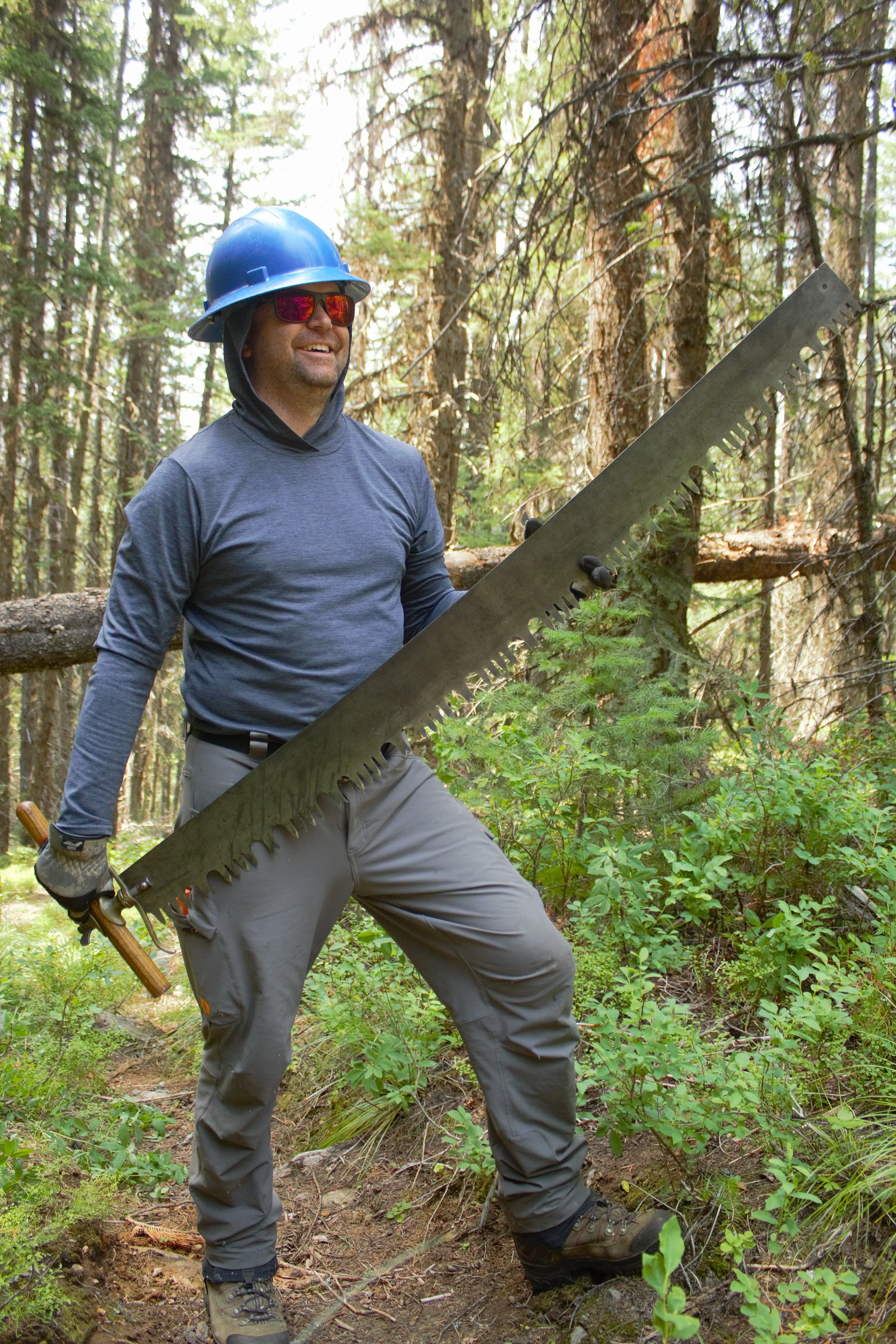
Another one? Oh boy! Most people might feel something like frustration or anger when they see the trail disappear into a tangle of brush, branches, bark, and wood. However, there are a few crazy people who get excited, who for some reason find some enjoyment in muscle fatigue and a faceful of brush. We’re called “trail crews.” We tend to work in the background, but if you’ve ever hiked on a trail without having to climb over logs or fight through brush, you’ve seen our work. Down the trail behind me, two of my crewmates pulled a crosscut saw through a massive log, while 4 others worked on cutting back the brush that engulfed the trail. I personally was armed with loppers, a Katanaboy handsaw with a formidable 3-foot blade, and a pulaski (a combination of an axe and a hoe). I set down my pack and went to work.

On March 21, I woke up in a dorm room at the College of Idaho in Caldwell. I went to bed that night in a tent on the banks of the Snake River in Hells Canyon. I was the leader of a 7-person trail crew, a joint effort by the Idaho Trails Association, the Selway Bitterroot Frank Church Foundation, and College of Idaho Outdoor Program. Our objective: clearing the Little Granite Creek Trail, which climbs 6000’ in 7 miles from the mouth of Granite Creek to Hibbs Cow Camp in the Seven Devils. Since I first scouted the trail in 2022, several ITA crews had worked from the top and bottom to re-open it. Over the course of a week, we’d build on the efforts of those previous crews, pushing upward.

It took me an hour of clearing brush and branches just to reveal the 30-inch trunk of the ponderosa. Full-sized saplings grew in the trail beneath it, indicators of just how long this log had laid here. I felt a pang of regret as I cut them down, leaving their white stumps bleeding sap. What right do I have to determine who lives or dies? I thought as I tossed the saplings out of the trail corridor. Why should these trees die just so I can walk easily down a trail? It’s a question of ethics that’s occurred to me before while pulling a saw through a rotten log and watching ants crawl out or wielding a pair of loppers in a thicket of brush. How is disrupting or ending the lives of other beings an act of stewardship? The answer I’ve settled on for now (though I’m still pondering it) is this: if killing saplings to clear a trail creates opportunities for more people to access the area, then perhaps those people will feel some sort of connection to the land, and through that connection they will be more inspired to care for it. In sacrificing a few, I’m working toward the protection of the entire ecosystem. At least, that’s what I tell myself as I continue lopping brush.

Camping on the river afforded us the luxuries of a wall tent, fresh food, and easy fishing access. It did not make for an easy commute to work. We started up the trail each day around 8:30 AM, just as the sun brushed the top of the canyon wall with orange. In a mile we came to our first creek crossing at the old Hibbs Ranch. Another mile, another crossing. On our first day up, knowing we’d be doing this a lot, we’d taken some time to build a temporary bridge of alder logs. Another steep mile, another crossing. This is where we’d officially begun work on the first day, improving the crossing by digging tread, building a rock wall, and clearing brush. No bridge for this one, just a series of slippery moss-covered rocks. We rest for a bit before continuing up. Another mile, another crossing. On our first day of work on this section, we’d cleared most of the plentiful logs and brush that had obscured the trail here on the north side of the creek. Our second day brought us to the fourth creek crossing (more slippery rocks) and through a landslide on the other side. In these two days, everybody learned the basics of crosscut-saw-pulling, pulaski-swinging, and brush-lopping. We’d built rock walls, re-opened the trail through the landslide, and cut some pretty tricky trees on steep hillsides. Turns out, all that was just a warmup for the third day. 

I finished prepping the log just as two of my crewmates arrived with the crosscut after finishing the previous “big one,” the second one of the day. We discuss the cut plan - two cuts, angled to allow the log to drop and roll out of the trail. I take a position on the downhill side, and my partner hands me the saw across the log. We line the saw up with our planned cut. A few short strokes start the kerf (the gap formed by the saw), then we move to full strokes as the saw stabilizes. We move our whole bodies in a back-and-forth rocking motion with the saw, each of us in turn pulling the length through then guiding it back as the other pulls. It’s hard to describe the sound a well-sharpened crosscut saw makes as it cuts through a log. A sound of abrasive metal on wood, punctuated by brief pauses as the saw changes directions, with a faint ringing sound throughout, a song to those who pull. I let myself be absorbed by the song and the movement of the saw. My focus narrows to the teeth, the sawdust, and ever-deepening kerf. 

Trailwork is repetitive. Pull, guide, repeat. Raise, swing, repeat. Lop, throw, repeat. Back and forth, up and down. It’s not all completely mindless physical work - each log is a puzzle of how to move it with the least amount of effort and danger - but there are undeniably long periods of repetitive motion with no music or TV or social media or anything else to distract you from your own thoughts and movements. I suppose some people might find it boring. Some might be driven crazy by the silence inside their head. Me? I love it. All of my worries and troubles fade away. The homework waiting for me in the frontcountry doesn’t matter. How I look doesn’t matter. What somebody said about somebody else doesn’t matter. Even larger things like the state of the global economy seem distant. Worries about things I can’t change disappear, replaced by a focus on the things I can change. Individual actions are re-empowered. I can’t end an international war, but I can master the next pull of the saw, the next swing of the pulaski. There’s a certain purity in such striving. I think that perhaps some of the value of trailwork lies in the forgetting of things that don’t matter and the remembering of some of the things that do - hard work, a good crew, and the satisfaction of a job well done.

Kneeling on the downhill side, I can’t see my partner pulling the saw on the other side. We’ve finished the cut on one side of the log and are now three-quarters of the way through the other. I watch the kerf for signs of widening, ears straining for the crack that indicates the beginning of the end. I don’t want to be here when the log breaks free - it’d steamroll me in an instant. So I watch and listen and communicate with my partner. We stop to pound the wedges (four of them!) deeper into the kerf. Back to sawing. “6 inches left on my side.” “Same here.” Finally, a crack. A few more strokes. More cracks. Time for me to leave. I take the handle off my end of the saw and retreat down the trail a few feet, out of the fall line. My partner finishes the log “single-bucking,” pushing and pulling the big saw from the uphill side. When, at last, he breaks through, the log rolls nicely down and out of the trail. By that time, it was late afternoon, and the others had returned from brushing farther up the trail. Having cleared 3 big trees and several hundred feet of thick brush, we called it a day and started the trek back to camp.

Two days later, I watched the flat that had been our home for a week disappear around the bend as the roaring jet boat motors pushed us upriver. The final stats for our trips were as follows: 51 trees cut, 960 feet of brushing, 660 feet of treadwork, 3 drains dug, and 1.5 total miles of trail cleared. Across four work days, we hiked 24 miles with over 10,000 total feet of elevation gain and loss. Statistics don’t get everything though. They don’t capture the satisfaction of hiking back down the trail each day and seeing the work we’d done, nor the excitement of the 34 times we crossed Little Granite Creek on slippery rocks and logs. You can’t reduce the grandeur of Hells Canyon in the spring to mere numbers: green hillsides dotted with blooming syringas, snow on the upper elevations, and blue sky above. And stats completely miss the little moments of community: stretch circles in the morning, fishing after work, sharing meals in the wall tent, playing cards in the red glow of our headlamps. There just aren’t any numbers to capture the fulfillment of doing good hard work with fun people in beautiful places.


Levi Armichardy is a horseman, backpacker, hunter, and trails person who grew up in the Idaho backcountry. He is currently an Environmental Studies major and Outdoor Program Trip Instructor at the College of Idaho. In addition to being outside, Levi enjoys reading, writing, and playing guitar.

Moose Creek Bears Witness

Moose Creek Bears Witness

Sarah Bates

Moose Creek Volunteer Host

June 24 – July 6, 2025


Perhaps you’ve heard of “witness trees”—centuries-old trees living near sites of historically significant events and documented in a Library of Congress archive. People visiting these sites often feel moved to touch the ancient trees and marvel at their persistence.

Scarred ponderosa pine near the confluence of Moose Creek and the Selway River, taken by Sarah Bates, Moose Creek Ranger Station Volunteer Host, June 2025.

I’m drawn to witness trees in the wild, undocumented in official registers. These gnarled giants with fire scars, lightning-struck crowns, and ancient peeled bark remind us that we’re all visitors in the long arc of time that plays out on a dynamic landscape.

Over the past two years, I’ve considered how human-built structures might serve this same purpose. As a volunteer host at the 100-year-old Moose Creek Ranger Station in the middle of the Selway-Bitterroot Wilderness, I step briefly into a remarkable corner of living history, where a rich wilderness story continues to evolve.

The log structures comprising the historic Moose Creek Ranger Station supported the Forest Service’s vigorous fire suppression policies that emerged after the 1910 Big Burn, as well as more recent priorities for wilderness protection. Recognizing its significance, the U.S. Department of the Interior added the site to the National Register of Historic Places in 1990.

Moose Creek was a learning lab for the early Forest Service fire program. Rangers, lookouts, and smokechasers sought to snuff out fires before they grew to conflagrations. With a new grass runway in 1931, the agency experimented with aircraft to support fire suppression efforts, and the first-ever team of smokejumpers launched from Moose Creek in 1940.

Selway Bitterroot Frank Church Foundation Trail Crew Leader, Enzo, heading off hitch at Moose Creek Ranger Station, taken by Sarah Bates, Moose Creek Ranger Station Volunteer Host, July 2025.

The Forest Service recognized the Moose Creek Ranger District’s superb wilderness characteristics by managing it as a primitive area starting in 1936, and Congress included the Selway Bitterroot Wilderness in the original 9.1-million-acre National Wilderness System in 1964. Wilderness designation prohibits motorized and mechanized equipment and transport, so this designation sparked a revival of near-lost skills like clearing trails with crosscut saws.

Thanks in part to its historic role in Forest Service aviation, the 1964 wilderness legislation allowed aircraft to continue to land at Moose Creek. Today, private airplanes are frequent visitors to Moose Creek, often flown by people with long histories here. Several private pilots serve as long-time SBFC volunteer hosts; many volunteer for work parties to maintain the facilities.

A volunteer host’s responsibilities include tracking airfield landings, monitoring informal campsites, facility maintenance, and encouraging visitors to see themselves as wilderness stewards. During the Selway River floating season, boaters walk up from the river to tour the historic ranger station, hike to the nearby Shissler Peak lookout, pet the stock in the corral, and visit with trail crew members resting between hitches.

This past June, I met Sven Magnuson and Debbie McElroy, who backpacked into Moose Creek over a rough, steep trail from Elk Mountain. Arriving at the Ranger’s house (now the volunteer host’s residence), Sven remarked that this was his first visit since he was a baby, when his dad, Bill Magnuson, served as the Moose Creek District Ranger in 1960-61. Anyone who has seen the excellent PBS documentary “Higgins Ridge” is familiar with the remarkable presence of mind and leadership the elder Magnuson displayed when two crews of smokejumpers were caught in the middle of a raging fire in 1961. Our moving conversation reminded me that every historic event is someone’s family story.

Sven Magnuson (son of former Moose Creek District Ranger William Magnuson) and Debbie McElroy visiting Moose Creek Ranger Station on June 28, 2025, taken by Sarah Bates, Moose Creek Ranger Station Volunteer Host.

Throughout my stay, I marvel at the ingenuity and self-sufficiency of those who built the ranger station structures by hand from local materials and maintained them with whatever they had on hand. It’s a rare experience to live and work off-line and off-grid, and it feels good to know that this small effort helps the Forest Service keep this remarkable historic site protected and open to the public.

As dusk arrives and I sit quietly enjoying the changing light, I think of all who have experienced this place and contributed to its history. And I can’t help but see Moose Creek Ranger Station itself as a silent witness to a century of evolving lessons in how to co-exist with a wilderness landscape.

More Info:

SBFC’s role in stewarding Moose Creek: https://ppolinks.com/forestservicemuseum/2021_5_60.pdf


Sarah Bates is a volunteer lookout host at the Moose Creek Ranger Station in the Selway-Bitterroot Wilderness.